
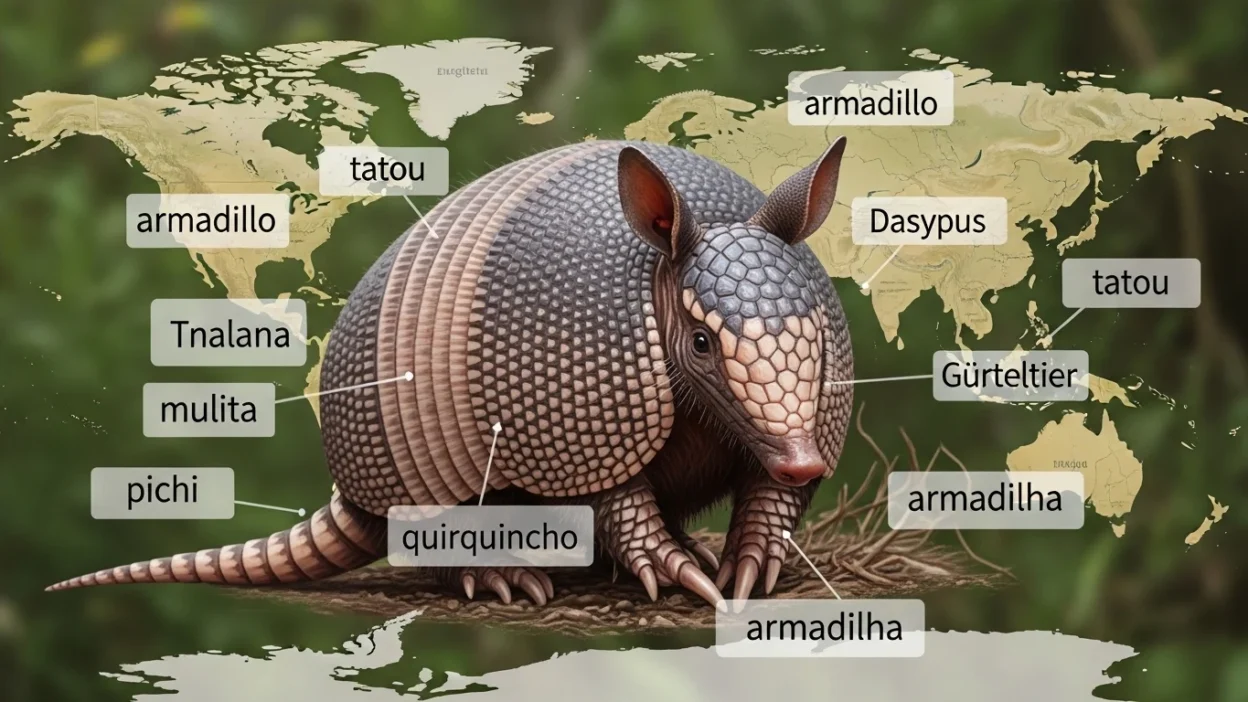
If you’ve ever wondered how to say armadillo in different languages, you’ve come to the right place. Armadillos are unique creatures known for their armored shells, and learning their names in various languages can be fun, educational, and useful for travelers, animal enthusiasts, or language learners.
In this guide, we’ll show you armadillo translations, provide pronunciation tips, and give real life example sentences to help you understand how the word is used around the world.
Here’s a comprehensive list of 70 languages, including pronunciations and example sentences, so you can explore armadillo in all languages effortlessly.
Armadillo Translations in 70 Languages
| Language | Pronunciation | Example |
| Spanish | armadillo | El armadillo corre rápido. |
| English | ˈɑːrmədɪloʊ | The armadillo runs fast. |
| French | tatou | Le tatou se cache dans le désert. |
| German | Gürteltier | Das Gürteltier rollt sich zusammen. |
| Italian | armadillo | L’armadillo è un animale notturno. |
| Portuguese | tatu | O tatu escavou um buraco. |
| Dutch | gordeldier | Het gordeldier is schuw. |
| Russian | броненосец (bronenosets) | Броненосец ищет еду ночью. |
| Chinese (Mandarin) | 犰狳 (qiú yú) | 犰狳在沙漠中行走。 |
| Japanese | アルマジロ (arumajiro) | アルマジロは夜行性です。 |
| Korean | 아르마딜로 (areumadillo) | 아르마딜로가 땅을 파고 있어요. |
| Arabic | أرماديلو (armadilo) | الأرماديلو يحفر في الأرض. |
| Hindi | आर्मडिलो (ārmḍilo) | आर्मडिलो धीरे-धीरे चलता है। |
| Bengali | আর্মাডিলো (armadilo) | আর্মাডিলো রাতের খাবার খুঁজছে। |
| Urdu | آرماڈيلو (armadilo) | آرماڈيلو زمین میں سوراخ بنا رہا ہے۔ |
| Turkish | armadillo | Armadillo yuvasını kazıyor. |
| Greek | αρμαδιλλο (armadillo) | Το αρμαδιλλο τρέχει γρήγορα. |
| Thai | ตัวอาร์มาดิลโล (tua armadillo) | ตัวอาร์มาดิลโลอยู่ในป่า. |
| Vietnamese | tê tê gai | Tê tê gai ăn côn trùng. |
| Polish | pancernik | Pancernik jest zwierzęciem nocnym. |
| Czech | pásovec | Pásovec se skrývá ve dne. |
| Hungarian | földimalac | A földimalac lassan mozog. |
| Romanian | armadillo | Armadillo trăiește în pădure. |
| Swedish | bältdjur | Bältdjuret rullar ihop sig. |
| Danish | bæltedyr | Bæltedyret graver huller i jorden. |
| Finnish | panssarisiili | Panssarisiili nukkuu yöllä. |
| Norwegian | beltedyr | Beltedyret er nattaktivt. |
| Hebrew | ארמדילו (armadilo) | הארמדילו חופר באדמה. |
| Malay | armadillo | Armadillo berjalan perlahan. |
| Indonesian | armadillo | Armadillo menggali lubang. |
| Filipino | armadillo | Ang armadillo ay nagtatago sa gabi. |
| Swahili | armadillo | Armadillo anakimbia haraka. |
| Zulu | i-armadillo | I-armadillo iyazifihla emhlabeni. |
| Xhosa | i-armadillo | I-armadillo iyakuhamba kancinci. |
| Serbian | армадила (armadila) | Армадила се крије у шуми. |
| Croatian | armadillo | Armadillo se skriva u šumi. |
| Bosnian | armadillo | Armadillo spava danju. |
| Slovak | pásavec | Pásavec hľadá jedlo. |
| Slovenian | oklopnik | Oklopnik se premika počasi. |
| Ukrainian | броненосець (bronenosec) | Броненосець шукає їжу. |
| Lithuanian | šarvuotis | Šarvuotis slenka naktį. |
| Latvian | bruņurupucis | Bruņurupucis meklē ēdienu. |
| Estonian | soomusloom | Soomusloom varjab ennast liivas. |
| Icelandic | beltadýr | Beltadýrið hleypur hratt. |
| Maltese | armadillo | L-armadillo huwa annimal mitluq. |
| Georgian | არმადილო (armadilo) | არმადილო უკვალოდ ქრება. |
| Armenian | աղվեսաձի (aghvesadzi) | Աղվեսաձին թաքնվում է գիշերը. |
| Kazakh | броненосец (bronenosets) | Броненосец түнде қозғалады. |
| Uzbek | armadillo | Armadillo yer ostida yashaydi. |
| Kyrgyz | броненосец (bronenosets) | Броненосец түнү тамактанып жатат. |
| Tajik | броненосец (bronenosets) | Броненосец дар шаб хӯрок меҷӯяд. |
| Pashto | آرماډيلو (armadilo) | آرماډيلو ځمکه کينوي. |
| Sinhala | ආර්මඩිලෝ (ārmadiḷō) | ආර්මඩිලෝ බිම්වල යයි. |
| Nepali | आर्मडिलो (ārmḍilo) | आर्मडिलो बिस्तारै हिँड्छ। |
| Mongolian | бронетой амьтан (bronetoy amtan) | Бронетой амьтан шөнийн хоол хайж байна. |
| Tibetan | ཨར་མ་ཌིལ་ལོ (armadillo) | ཨར་མ་ཌིལ་ལོ་གློག་ནང་འགྲོགས། |
| Burmese | အာမဒီလို (armadillo) | အာမဒီလို မြေကြီးထဲ လှည့်နေသည်။ |
| Khmer | អារមាឌីឡូ (armadillo) | អារមាឌីឡូដើរទៅក្នុងព្រៃ។ |
| Lao | ອາຣມາດິໂລ (armadillo) | ອາຣມາດິໂລກ້ວງຄົບ. |
| Malay (Brunei) | armadillo | Armadillo bergerak perlahan. |
| Somali | armadillo | Armadillo wuu dhuuqaa. |
| Haitian Creole | armadillo | Armadillo ap kouri vit. |
| Irish | armadillo | Rith an armadillo go tapa. |
| Scottish Gaelic | armadillo | Tha am armadillo a’ falach. |
| Welsh | armadillo | Mae’r armadillo yn cerdded yn araf. |
| Basque | armadillo | Armadillo mendiak zeharkatzen ditu. |
| Galician | tatu | O tatu busca comida no bosque. |
| Catalan | armadillo | L’armadillo s’amaga al desert. |
Why Learning Armadillo Translations Matters
Knowing how to say armadillo around the world isn’t just fun, it’s practical. It helps travelers, zoologists, and language learners communicate effectively while exploring wildlife.
Plus, armadillo translations provide cultural insight into how different societies view this fascinating animal.
Tips on How to Say Armadillo in Different Languages
- Focus on pronunciation: Many translations look different but sound similar.
- Use example sentences: They help remember the word in context.
- Combine with related wildlife vocabulary to enhance memory retention.
- Practice aloud to improve fluency.
Fun Facts About Armadillos Worldwide
- Armadillos are mostly found in the Americas but are known globally through folklore and zoo exhibits.
- Their armored shells inspired various cultural references, making the word unique in each language.
- Learning armadillo in all languages can help with multilingual storytelling or writing about wildlife.
Conclusion
Exploring armadillo in different languages opens a fascinating window into global language diversity and wildlife knowledge.
Whether for travel, study, or curiosity, this guide with 70 languages, pronunciations, and examples equips you to confidently discuss armadillos anywhere in the world.
FAQs
1. How do you say armadillo in French?
Armadillo in French is tatou, pronounced “ta-too.”
2. What is the Spanish word for armadillo?
In Spanish, it’s armadillo, pronounced almost the same as in English.
3. Are armadillos called differently in Asian languages?
Yes. For example, in Mandarin Chinese it’s 犰狳 (qiú yú), and in Japanese, it’s アルマジロ (arumajiro).
4. Why are there so many variations of the word armadillo?
Different languages adapt the word based on phonetics, local dialects, and cultural familiarity with the animal.
5. Can learning animal names in different languages improve language skills?
Absolutely! It boosts vocabulary, pronunciation, and cross cultural understanding.