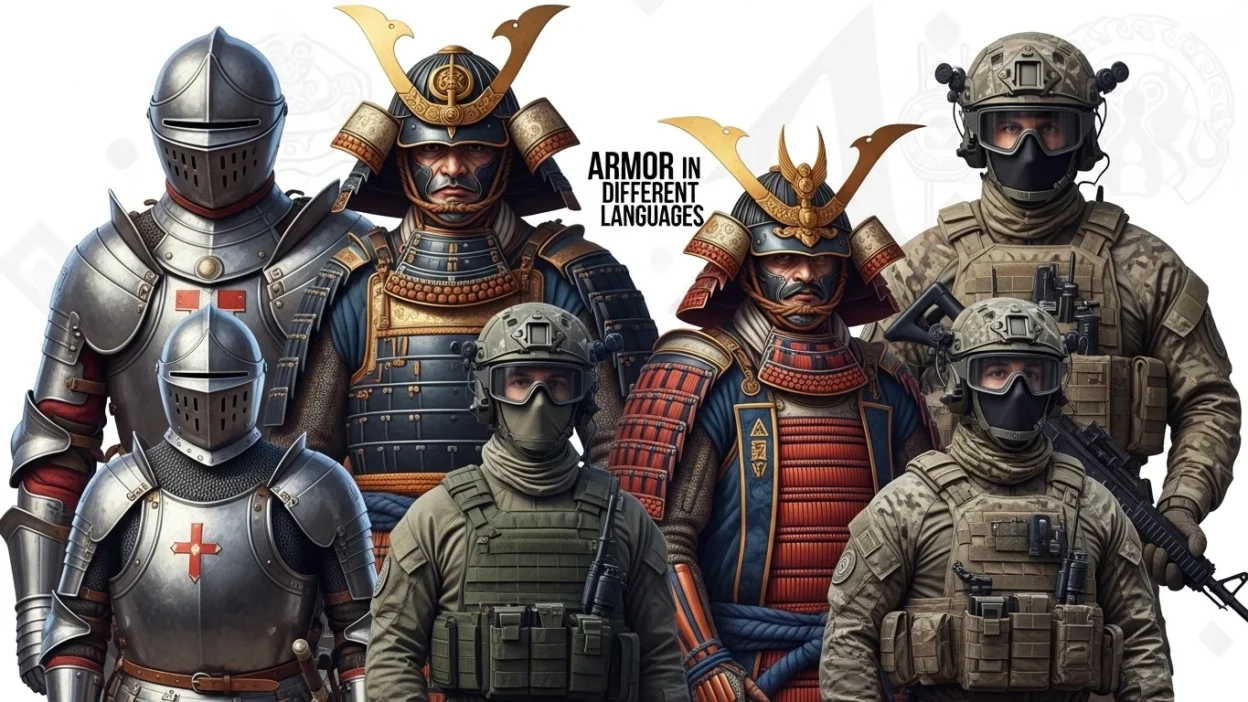
When exploring history, culture, or languages, the word armor often comes up in literature, movies, or historical discussions. But have you ever wondered how to say armor in different languages? Learning armor translations can be fascinating, especially if you’re a language lover, traveler, or history enthusiast.
This guide shows you how to pronounce armor in all languages, providing real-life examples so you can see it in context.
Whether you’re curious about medieval armor in French or want to discuss modern protective gear in Japanese, this article gives you an easy way to learn armor around the world.
Armor in 70 Different Languages
| Language | Pronunciation | Example |
| Arabic | Dir‘a‘ | ارتدى المحارب الدرع للحماية. He wore the armor for protection. |
| Armenian | Dzerk | Լեռնագնացը հագավ զենքը. The hiker put on the armor. |
| Azerbaijani | Zireh | Döyüşçü zireh geydi. The fighter wore armor. |
| Basque | Arnes | Gudariak arnesa jarri zuen. The soldier put on armor. |
| Belarusian | Броня (Bronya) | Воін насіў броню. The warrior wore armor. |
| Bengali | বর্ম (Bôrmo) | যোদ্ধা বর্ম পরেছে। The warrior wore armor. |
| Bosnian | Oklop | Vitez je nosio oklop. The knight wore armor. |
| Bulgarian | Броня (Bronya) | Рицарят носеше броня. The knight wore armor. |
| Catalan | Armadura | El cavaller portava armadura. The knight wore armor. |
| Chinese (Mandarin) | 盔甲 (Kuījiǎ) | 士兵穿上了盔甲。 The soldier wore armor. |
| Croatian | Oklop | Vitez je nosio oklop. The knight wore armor. |
| Czech | Brnění | Rytíř měl na sobě brnění. The knight wore armor. |
| Danish | Rustning | Ridderen bar rustning. The knight wore armor. |
| Dutch | Harnas | De ridder droeg harnas. The knight wore armor. |
| Estonian | Soomus | Sõdalane kandis soomust. The soldier wore armor. |
| Finnish | Haarniska | Ritari käytti haarniskaa. The knight wore armor. |
| French | Armure | Le chevalier portait une armure. The knight wore armor. |
| Georgian | ჯავშანი (Javshani) | მეომარმა გაიკეთა ჯავშანი. The warrior put on armor. |
| German | Rüstung | Der Ritter trug Rüstung. The knight wore armor. |
| Greek | Πανοπλία (Panoplia) | Ο ιππότης φορούσε πανοπλία. The knight wore armor. |
| Gujarati | બાંધકામ (Bāndhkām) | યોધ્ધાએ બાંધકામ પહેર્યું. The warrior wore armor. |
| Haitian Creole | Zam | Gèrye a mete zam. The warrior wore armor. |
| Hausa | Kariya | Soja ya sa kariya. The soldier wore armor. |
| Hebrew | שריון (Shiryón) | האביר לבש שריון. The knight wore armor. |
| Hindi | कवच (Kavach) | योद्धा ने कवच पहना। The warrior wore armor. |
| Hungarian | Páncél | A lovag páncélt viselt. The knight wore armor. |
| Icelandic | Brynja | Riddarinn klæddist brynju. The knight wore armor. |
| Igbo | Ngwá agha | Onye agha yi ngwá agha. The soldier wore armor. |
| Indonesian | Zirah | Prajurit itu memakai zirah. The soldier wore armor. |
| Irish | Claíomhchroí | An ridire chuaigh sé i gclaíomhchroí. The knight put on armor. |
| Italian | Armatura | Il cavaliere indossava l’armatura. The knight wore armor. |
| Japanese | 鎧 (Yoroi) | 侍は鎧を着た。 The samurai wore armor. |
| Javanese | Panyep | Prajurit nganggo panyep. The soldier wore armor. |
| Kannada | ಕನಸು (Kanasa) | ಯೋಧನು ಕನಸು ಹಾಕಿಕೊಂಡನು. The warrior wore armor. |
| Kazakh | Күміс (Kumis) | Жауынгер куміс киді. The warrior wore armor. |
| Khmer | ជើងគោល (Cheung kol) | វីរក្សកស្លៀកជើងគោល។ The warrior wore armor. |
| Korean | 갑옷 (Gapot) | 기사님이 갑옷을 입었다. The knight wore armor. |
| Kurdish | Zirêh | Şerwan zirêh girt. The warrior wore armor. |
| Kyrgyz | Курал-жарак (Kural-jarak) | Жоокер курал-жарак кийди. The soldier wore armor. |
| Lao | ລະບົບປ້ອງກັນ (Labob pongkan) | ນາຍຍິງໃສ່ລະບົບປ້ອງກັນ. The soldier wore armor. |
| Latin | Lorica | Miles loricam induit. The soldier put on armor. |
| Latvian | Bruņas | Bruņinieks nēsāja bruņas. The knight wore armor. |
| Lithuanian | Šarvai | Riteris dėvėjo šarvus. The knight wore armor. |
| Macedonian | Кујен (Kuven) | Војникот носеше кујен. The soldier wore armor. |
| Malay | Zirah | Pahlawan itu memakai zirah. The warrior wore armor. |
| Maltese | Armatura | Il-kavallier libes armatura. The knight wore armor. |
| Marathi | कवच (Kavach) | योद्ध्याने कवच घातले. The warrior wore armor. |
| Mongolian | Бамбай (Bambay) | Цэрэг бамбай өмссөн. The soldier wore armor. |
| Nepali | कवच (Kavach) | सैनिकले कवच लगायो। The soldier wore armor. |
| Norwegian | Rustning | Ridderen hadde på seg rustning. The knight wore armor. |
| Pashto | زغره (Zaghara) | سرتېری زغره واغوسته. The soldier wore armor. |
| Persian | زره (Zereh) | جنگجو زره پوشید. The warrior wore armor. |
| Polish | Zbroja | Rycerz nosił zbroję. The knight wore armor. |
| Portuguese | Armadura | O cavaleiro usava armadura. The knight wore armor. |
| Punjabi | ਕਵਚ (Kavach) | ਯੋਧਾ ਨੇ ਕਵਚ ਪਾਇਆ। The warrior wore armor. |
| Romanian | Armură | Cavalerul purta armură. The knight wore armor. |
| Russian | Броня (Bronya) | Воин носил броню. The warrior wore armor. |
| Serbian | Oklop | Vitez je nosio oklop. The knight wore armor. |
| Sinhala | වාමනය (Vāmanaya) | යෝධයා වාමනය ඇඳගෙන සිටියේය. The warrior wore armor. |
| Slovak | Brnenie | Rytier mal brnenie. The knight wore armor. |
| Slovenian | Oklep | Vitez je nosil oklep. The knight wore armor. |
| Somali | Gaashaan | Askari wuu xiray gaashaan. The soldier wore armor. |
| Spanish | Armadura | El caballero llevaba armadura. The knight wore armor. |
| Swahili | Mlinzi | Askari alivaa mlinzi. The soldier wore armor. |
| Swedish | Rustning | Riddaren bar rustning. The knight wore armor. |
| Tajik | Зиреҳ (Zireh) | Ҷангҷӯ зиреҳ пӯшида буд. The warrior wore armor. |
| Tamil | கவசம் (Kavasam) | போர்வீரன் கவசம் அணிந்தான். The warrior wore armor. |
| Telugu | కవచం (Kavacham) | యోధుడు కవచం ధరించాడు. The warrior wore armor. |
| Thai | เกราะ (Kra) | ทหารสวมเกราะ. The soldier wore armor. |
| Turkish | Zırh | Şövalye zırh giydi. The knight wore armor. |
| Ukrainian | Броня (Bronya) | Воїн носив броню. The warrior wore armor. |
| Urdu | زرہ (Zirah) | سپاہی نے زرہ پہنا۔ The soldier wore armor. |
| Uzbek | Zirh | Askari zirh kiygan edi. The soldier wore armor. |
| Vietnamese | Áo giáp | Chiến binh mặc áo giáp. The warrior wore armor. |
| Welsh | Cwrw | Y marchog gwisgodd cwrw. The knight wore armor. |
| Xhosa | Ibhanti | Umsizi wagqiba ibhanti. The soldier wore armor. |
| Yiddish | אַרמאָר (Armor) | דער קעמפער טראָג אַרמאָר. The fighter wore armor. |
| Yoruba | Àbọ | Ológun wọ àbọ. The soldier wore armor. |
| Zulu | Ibhande | Isosha ligqoke ibhande. The soldier wore armor. |
Why Knowing Armor Translations Is Useful
Understanding how to say armor in different languages can help travelers, history enthusiasts, and multilingual students communicate better in cultural and historical contexts.
Whether reading historical texts, watching international films, or exploring museums, armor translations give deeper insights into protective gear traditions worldwide.
Tips for Learning Armor Vocabulary Across Languages
- Focus on pronunciation first; it makes conversations easier.
- Use real-life example sentences to understand context.
- Group languages by region for easier memorization.
- Compare similarities across languages (like “kavach” in Hindi, Marathi, and Nepali).
Conclusion
Learning armor in all languages enriches your knowledge of history, culture, and communication.
This guide of 70 languages shows how diverse and fascinating the concept of armor is around the world.
Whether for study, travel, or curiosity, mastering armor translations is a rewarding experience.
FAQs About Armor in Different Languages
- What does armor mean in other languages?
Armor generally refers to protective clothing, and most languages have unique terms reflecting cultural variations. - How do I pronounce armor in different languages?
Pronunciation is provided in the table for all 70 languages, which helps with accurate speech. - Are armor translations similar across languages?
Some languages share roots (like Sanskrit-derived “kavach” in Hindi, Marathi, Nepali), while others are unique. - Why is it important to know armor in different languages?
It enhances historical understanding, multilingual communication, and cultural appreciation. - Can I use these translations in writing or conversation? Yes, the examples show how to use the word in context for natural communication.