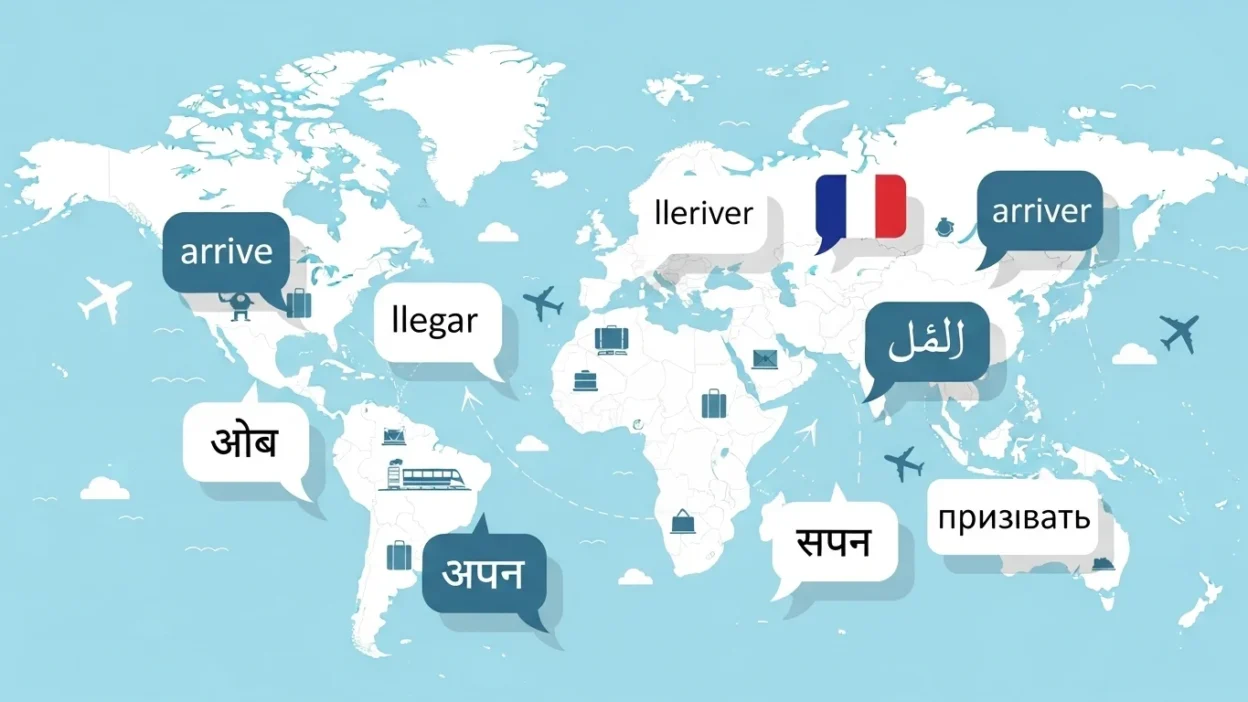
Traveling, learning a new language, or connecting with people globally often requires knowing how to say simple yet essential words like “arrive.”
Understanding how to express “arrive” in different languages can make communication smoother and more meaningful.
In this guide, we’ve compiled 70 languages with pronunciation and real-life examples so you can learn “arrive” translations and use them confidently wherever you go.
How to Say “Arrive” in Different Languages
Below is a comprehensive, mobile-friendly table showing arrive in all languages, complete with pronunciation and example sentences to help you grasp usage naturally.
| Language | Pronunciation | Example |
| Arabic | wuṣūl | وَصَلَ الطَّائِرَةُ إِلَى المَطَارِ |
| The plane arrived at the airport | ||
| Spanish | llegar | Llegamos a Madrid a las cinco. |
| We arrived in Madrid at five. | ||
| French | arriver | Elle est arrivée hier soir. |
| She arrived last night. | ||
| German | ankommen | Der Zug kommt pünktlich an. |
| The train arrives on time. | ||
| Italian | arrivare | Siamo arrivati a Roma stamattina. |
| We arrived in Rome this morning. | ||
| Portuguese | chegar | O navio chegou ao porto. |
| The ship arrived at the port. | ||
| Russian | прибывать (pribivat’) | Поезд прибыл вовремя. |
| The train arrived on time. | ||
| Japanese | 到着する (tōchaku suru) | 飛行機が空港に到着した。 |
| The airplane arrived at the airport. | ||
| Chinese (Mandarin) | 到达 (dàodá) | 我们到达酒店了。 |
| We have arrived at the hotel. | ||
| Korean | 도착하다 (dochakada) | 기차가 정시에 도착했다. |
| The train arrived on time. | ||
| Hindi | पहुँचना (pahunchna) | वह स्टेशन पहुँच गई। |
| She arrived at the station. | ||
| Bengali | পৌঁছানো (pôucca) | আমরা গন্তব্যে পৌঁছলাম। |
| We arrived at the destination. | ||
| Urdu | پہنچنا (pahunchna) | وہ سکول پہنچ گئی۔ |
| She arrived at school. | ||
| Turkish | varmak | Uçak havaalanına vardı. |
| The plane arrived at the airport. | ||
| Persian | رسیدن (residan) | قطار به موقع رسید. |
| The train arrived on time. | ||
| Greek | φτάνω (ftáno) | Φτάσαμε στο ξενοδοχείο. |
| We arrived at the hotel. | ||
| Polish | przybyć | Pociąg przybył na czas. |
| The train arrived on time. | ||
| Dutch | aankomen | De bus is op tijd aangekomen. |
| The bus arrived on time. | ||
| Swedish | anlända | Vi anlände till Stockholm igår. |
| We arrived in Stockholm yesterday. | ||
| Norwegian | ankomme | Flyet ankom flyplassen. |
| The plane arrived at the airport. | ||
| Danish | ankomme | Toget ankom til stationen. |
| The train arrived at the station. | ||
| Finnish | saapua | Lentokone saapui kentälle. |
| The airplane arrived at the airport. | ||
| Czech | dorazit | Přijeli jsme do Prahy. |
| We arrived in Prague. | ||
| Slovak | prísť | Auto prišlo na čas. |
| The car arrived on time. | ||
| Hungarian | megérkezni | Vonat időben megérkezett. |
| The train arrived on time. | ||
| Romanian | ajunge | Am ajuns la destinație. |
| We arrived at the destination. | ||
| Bulgarian | пристигане (pristigane) | Влакът пристигна навреме. |
| The train arrived on time. | ||
| Serbian | stići | Voz je stigao na vreme. |
| The train arrived on time. | ||
| Croatian | stići | Avion je stigao na aerodrom. |
| The plane arrived at the airport. | ||
| Bosnian | stići | Autobus je stigao na stanicu. |
| The bus arrived at the station. | ||
| Slovenian | priti | Prišli smo v Ljubljano. |
| We arrived in Ljubljana. | ||
| Macedonian | пристигнува (pristignuva) | Автобусот пристигна навреме. |
| The bus arrived on time. | ||
| Albanian | mbërrij | Aeroplani mbërriti në aeroport. |
| The airplane arrived at the airport. | ||
| Malay | sampai | Kami sampai di hotel jam 3. |
| We arrived at the hotel at 3. | ||
| Indonesian | tiba | Pesawat tiba di bandara. |
| The plane arrived at the airport. | ||
| Thai | มาถึง (ma thueng) | รถไฟมาถึงสถานีตรงเวลา. |
| The train arrived at the station on time. | ||
| Vietnamese | đến | Chúng tôi đến sân bay lúc 10 giờ. |
| We arrived at the airport at 10 o’clock. | ||
| Swahili | kufika | Ndege ilifika uwanja wa ndege. |
| The plane arrived at the airport. | ||
| Zulu | ukufika | Isitimela sifikile ngesikhathi. |
| The train arrived on time. | ||
| Xhosa | ukufika | Inqwelomoya ifikile ebaleni. |
| The airplane arrived at the airport. | ||
| Amharic | መድረስ (medres) | አውቶቡሱ በጊዜ መድረሰዋል. |
| The bus arrived on time. | ||
| Hebrew | להגיע (lehagia) | המטוס הגיע לשדה התעופה. |
| The plane arrived at the airport. | ||
| Armenian | ժամանել (zhamanel) | Երթևեկողը ժամանել է կայարան. |
| The train arrived at the station. | ||
| Georgian | ჩამოსვლა (chamosvla) | მატარებელი მოვიდა. |
| The train arrived. | ||
| Lithuanian | atvykti | Mes atvykome į Vilnių. |
| We arrived in Vilnius. | ||
| Latvian | ierasties | Vilciens ieradās laikā. |
| The train arrived on time. | ||
| Estonian | saabuma | Lennuk saabus lennujaama. |
| The airplane arrived at the airport. | ||
| Maltese | jasal | Il-ferrovija waslet fil-belt. |
| The train arrived in the city. | ||
| Irish | teacht | Shroich an traein ar a nóiméad. |
| The train arrived on time. | ||
| Scottish Gaelic | ruighinn | Dh’ruig an t-adhairport am plèana. |
| The plane arrived at the airport. | ||
| Welsh | cyrraedd | Cyrhaeddodd y trên yr orsaf. |
| The train arrived at the station. | ||
| Basque | iritsi | Trena garaiz iritsi da. |
| The train arrived on time. | ||
| Catalan | arribar | L’avió va arribar a l’aeroport. |
| The plane arrived at the airport. | ||
| Galician | chegar | Chegamos ao hotel cedo. |
| We arrived at the hotel early. | ||
| Filipino | dumating | Dumating ang eroplano sa paliparan. |
| The plane arrived at the airport. | ||
| Malagasy | tonga | Tonga soa ny fiaramanidina. |
| The airplane arrived safely. | ||
| Haitian Creole | rive | Avyon an rive nan ayewopò a. |
| The plane arrived at the airport. | ||
| Uzbek | kelmoq | Poyezd belgilangan vaqtda keldi. |
| The train arrived on time. | ||
| Kazakh | жету (zhetu) | Поезд уақытында келді. |
| The train arrived on time. | ||
| Kyrgyz | жетүү (zhetüü) | Учак аэропортко жетти. |
| The airplane arrived at the airport. | ||
| Tajik | расидан (rasidan) | Поезд сари вақт расид. |
| The train arrived on time. | ||
| Mongolian | хүрэх (khürekh) | Онгоц нисэх буудалд хүрлээ. |
| The airplane arrived at the airport. | ||
| Lao | ມາເຖິງ (ma thoeng) | ລົດໄຟມາເຖິງໂຄງການ. |
| The train arrived at the station. | ||
| Khmer | មកដល់ (mok dol) | រថភ្លើងមកដល់ពេលវេលា។ |
| The train arrived on time. | ||
| Sinhala | පැමිණීම (pæminīma) | දුම්රිය කාලයට පැමිණි. |
| The train arrived on time. | ||
| Burmese | ရောက်ရှိသည် (yauk shi de) | ဗိုင်းလ်ယာယာဉ် သတ်မှတ်အချိန်တွင် ရောက်ရှိသည်။ |
| The train arrived on time. | ||
| Nepali | पुग्नु (pugnu) | रेल समयमै पुग्यो। |
| The train arrived on time. | ||
| Pashto | رسیدل (rasidl) | الوتکه په وخت رسیدلې. |
| The plane arrived on time. | ||
| Tamil | வந்தல் (vandhal) | விமானம் விமான நிலையத்திற்கு வந்தது. |
| The airplane arrived at the airport. | ||
| Telugu | రావడం (ravadam) | రైలు సమయానికి చేరింది. |
| The train arrived on time. | ||
| Kannada | ಆಗು (āgu) | ರೈಲು ಸಮಯಕ್ಕೆ ಆಗಿದೆ. |
| The train arrived on time. | ||
| Malayalam | എത്തുക (ethuka) | ട്രെയിന് സമയത്ത് എത്തി. |
| The train arrived on time. | ||
| Marathi | पोहोचणे (pohachne) | रेल्वे वेळेवर पोहोचली. |
| The train arrived on time. | ||
| Gujarati | પહોંચવું (pahochvu) | ટ્રેન સમયસર પહોંચી. |
| The train arrived on time. | ||
| Punjabi | ਪਹੁੰਚਣਾ (pahunchaṇā) | ਰੇਲ ਸਮੇਂ ‘ਤੇ ਪਹੁੰਚ ਗਈ। |
| The train arrived on time. |
Why Learning “Arrive” in Different Languages Matters
Knowing how to say “arrive” in different languages helps travelers, language learners, and professionals communicate efficiently. Whether booking transportation, coordinating meetings, or sharing updates with friends, these arrive translations make interactions clear and smooth.
Tips for Using “Arrive” Around the World
- Pay attention to context – formal vs. informal usage can differ.
- Listen to native pronunciation to avoid misunderstandings.
- Combine with travel-related vocabulary for real-life scenarios.
- Practice phrases with real examples to remember them quickly.
- Use it in everyday conversations to reinforce memory.
Conclusion
Mastering “arrive” in different languages opens doors to better communication, smoother travel experiences, and a deeper appreciation of global cultures.
This guide provides you with arrive translations and examples in 70 languages, making it easier to connect wherever you go.
FAQs About “Arrive” in Different Languages
1. How do I say “arrive” in Japanese?
You say 到着する (tōchaku suru). Example: 飛行機が空港に到着した – The airplane arrived at the airport.
2. What is “arrive” in Spanish?
In Spanish, it is llegar. Example: Llegamos a Madrid a las cinco – We arrived in Madrid at five.
3. Are there differences in formal and informal “arrive” usage?
Yes. Many languages like French, German, and Japanese have formal and casual forms depending on context.
4. How can I practice “arrive” in multiple languages?
Use real-life travel phrases, language apps, and conversation practice with native speakers.
5. Why learn “arrive” in different languages?
It helps with travel, communication, and cultural understanding, making interactions smoother and more respectful.

Marak Robort is a content writer and researcher with a strong interest in language, meanings, and digital information. His work focuses on presenting clear, easy-to-understand explanations that help readers quickly grasp complex ideas.