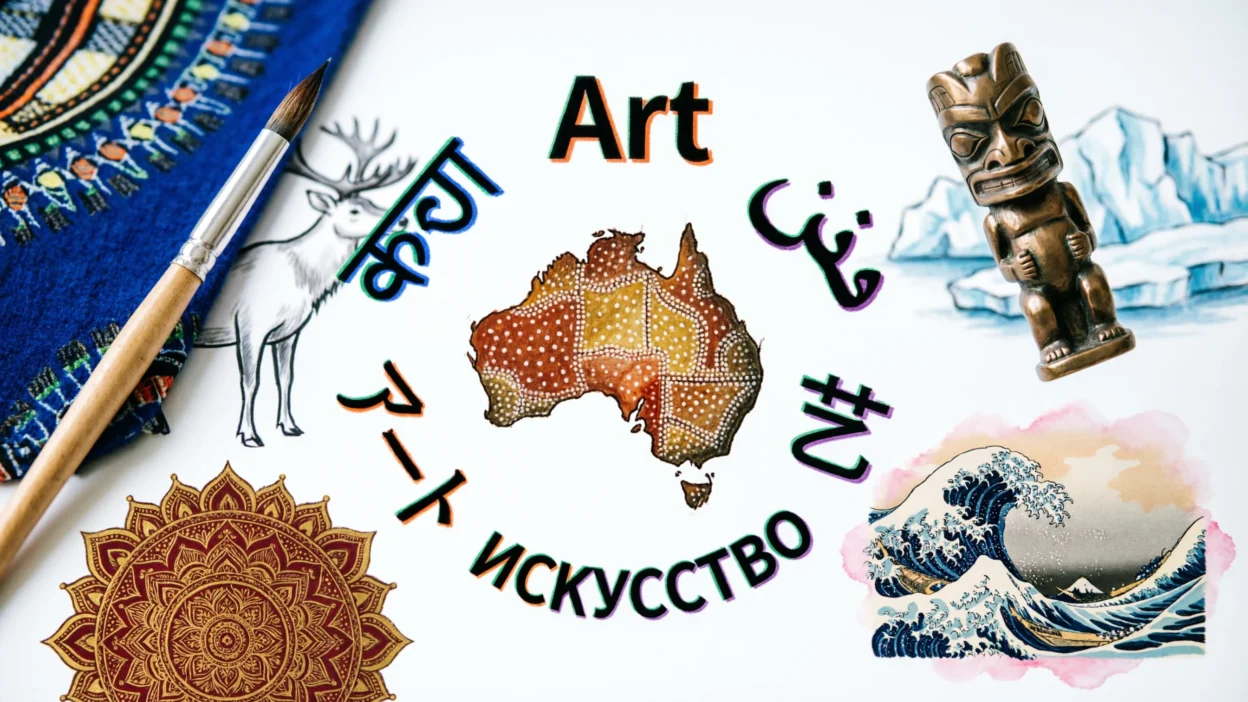
Art is a universal human expression, but the word “art” sounds different across cultures and languages. If you’re curious about art in different languages, learning globally, or creating multilingual content, this guide gives you clear, real-life translations you can actually use.
Below, you’ll find how to say art in different languages, with pronunciation and a simple example for each one. This is perfect for language learners, writers, students, and anyone exploring art around the world.
Art in Different Languages (All Languages Table)
| Language | Pronunciation | Example |
| English | ahrt | Art inspires creativity. – Art inspires creativity. |
| Spanish | arte | El arte es hermoso. – Art is beautiful. |
| French | ar | L’art change la culture. – Art changes culture. |
| German | artst | Kunst ist wichtig. – Art is important. |
| Italian | ar-te | L’arte unisce le persone. – Art unites people. |
| Portuguese | ar-chi | A arte é expressão. – Art is expression. |
| Dutch | kunst | Kunst vertelt verhalen. – Art tells stories. |
| Swedish | konst | Konst är överallt. – Art is everywhere. |
| Norwegian | konst | Kunst betyr mye. – Art means a lot. |
| Danish | kunst | Kunst skaber følelser. – Art creates feelings. |
| Finnish | taide | Taide koskettaa sydäntä. – Art touches the heart. |
| Russian | is-kus-stva | Iskusstvo vdo-khno-vlya-yet. – Art inspires. |
| Ukrainian | mis-tet-stvo | Mystetstvo vazhlyve. – Art is important. |
| Polish | shtu-ka | Sztuka uczy ludzi. – Art teaches people. |
| Czech | umě-ni | Umění je síla. – Art is power. |
| Slovak | u-me-nye | Umenie je život. – Art is life. |
| Hungarian | mű-vé-szet | A művészet gyönyörű. – Art is beautiful. |
| Romanian | ar-tă | Arta spune povești. – Art tells stories. |
| Bulgarian | iz-kus-stvo | Izkusstvo vdahnovyava. – Art inspires. |
| Greek | té-khni | I tékhni milá. – Art speaks. |
| Turkish | sa-nat | Sanat hayattır. – Art is life. |
| Arabic | fan | Al-fan jamīl. – Art is beautiful. |
| Hebrew | o-man-ut | Omanut mechabéret. – Art connects. |
| Persian | hon-ar | Honar zendegi ast. – Art is life. |
| Hindi | ka-la | Kala man ko chhoo-ti hai. – Art touches the heart. |
| Urdu | fa-nun | Fanun rooh ko bolta hai. – Art speaks to the soul. |
| Bengali | shil-po | Shilpo shundor. – Art is beautiful. |
| Punjabi | ka-la | Kala zindagi hai. – Art is life. |
| Marathi | ka-la | Kala mahatvachi aahe. – Art is important. |
| Gujarati | ka-la | Kala prerna aape chhe. – Art gives inspiration. |
| Tamil | kalai | Kalai ulagathai maattrum. – Art changes the world. |
| Telugu | ka-la | Kala hrudayam thakuthundi. – Art touches the heart. |
| Kannada | ka-le | Kale bhavane. – Art is emotion. |
| Malayalam | ka-la | Kala manassine thottu. – Art touched the mind. |
| Sinhala | ka-laa | Kala sundarai. – Art is beautiful. |
| Nepali | ka-la | Kala jeevan ho. – Art is life. |
| Thai | sin-la-pa | Sinlapa mee khwam-mai. – Art has meaning. |
| Vietnamese | nghệ thuật | Nghệ thuật truyền cảm hứng. – Art inspires. |
| Indonesian | seni | Seni itu indah. – Art is beautiful. |
| Malay | seni | Seni menyatukan. – Art unites. |
| Filipino | sining | Sining ay buhay. – Art is life. |
| Chinese (Mandarin) | yi shu | Yi shu hen zhongyao. – Art is important. |
| Japanese | gei-jutsu | Geijutsu wa kokoro desu. – Art is heart. |
| Korean | ye-sul | Yesul-eun areumdapda. – Art is beautiful. |
| Mongolian | ur-lag | Urlag setgel hodoldog. – Art moves feelings. |
| Kazakh | öner | Öner adamdy ösiredi. – Art develops people. |
| Uzbek | san’at | San’at ilhom beradi. – Art gives inspiration. |
| Azerbaijani | sə-nət | Sənət ruhdur. – Art is soul. |
| Georgian | khelovneba | Khelovneba dzlieria. – Art is powerful. |
| Armenian | ar-vest | Arvest hogin e. – Art is soul. |
| Swahili | sanaa | Sanaa ni maisha. – Art is life. |
| Amharic | tibeb | Tibeb wub new. – Art is beautiful. |
| Somali | far-shax-an | Farshaxan waa nolol. – Art is life. |
| Yoruba | ọ̀nà | Ọ̀nà dára. – Art is good. |
| Igbo | nka | Nka bu ndu. – Art is life. |
| Hausa | fasaha | Fasaha tana da muhimmanci. – Art is important. |
| Zulu | ubuciko | Ubuciko bubuhle. – Art is beautiful. |
| Afrikaans | kuns | Kuns inspireer mense. – Art inspires people. |
| Xhosa | ubugcisa | Ubugcisa bubalulekile. – Art is important. |
| Shona | unyanzvi | Unyanzvi hunofurira. – Art influences. |
| Malagasy | zavakanto | Zavakanto mahafinaritra. – Art is fascinating. |
| Icelandic | list | List er líf. – Art is life. |
| Irish | ealaín | Tá ealaín tábhachtach. – Art is important. |
| Welsh | celf | Mae celf yn ysbrydoli. – Art inspires. |
| Scots Gaelic | ealain | Tha ealain brèagha. – Art is beautiful. |
| Breton | arz | Arz a unir an dud. – Art unites people. |
| Basque | artea | Artea garrantzitsua da. – Art is important. |
| Catalan | art | L’art és cultura. – Art is culture. |
| Galician | arte | A arte inspira. – Art inspires. |
| Esperanto | arto | Arto estas grava. – Art is important. |
Why Learning “Art” in Different Languages Matters
Understanding art in all languages helps you connect cultures, improve language skills, and create globally relevant content. Artists, students, and marketers all benefit from knowing accurate art translations.
Conclusion
Art speaks every language, even when the words change. By learning how to say art in different languages, you open the door to culture, creativity, and deeper global understanding.
FAQs About Art in Different Languages
1. What is the most common word for art worldwide?
Many languages use variations like art, arte, or sanaa, making it widely recognizable.
2. Why does the word for art differ so much between languages?
Each language reflects its culture, history, and artistic traditions.
3. Is “art” always used the same way in every language?
No, some languages use it broadly, while others separate fine art, craft, and design.
4. Which languages use a word similar to English “art”?
French, Spanish, Italian, Catalan, and Galician use very close forms.
5. How can I remember art translations easily?
Use short example sentences and connect them with images or emotions.

Marak Robort is a content writer and researcher with a strong interest in language, meanings, and digital information. His work focuses on presenting clear, easy-to-understand explanations that help readers quickly grasp complex ideas.