If you’ve ever wondered how to say ceramic in different languages, you’re in the right place. Whether you’re a student, traveler, artist, researcher, or language enthusiast, knowing ceramic translations can help you communicate better across cultures.
Ceramic materials are used globally in art, pottery, architecture, tiles, dishes, and construction. Learning how to say ceramic in all languages not only expands your vocabulary but also gives you insight into how different cultures describe this important material.
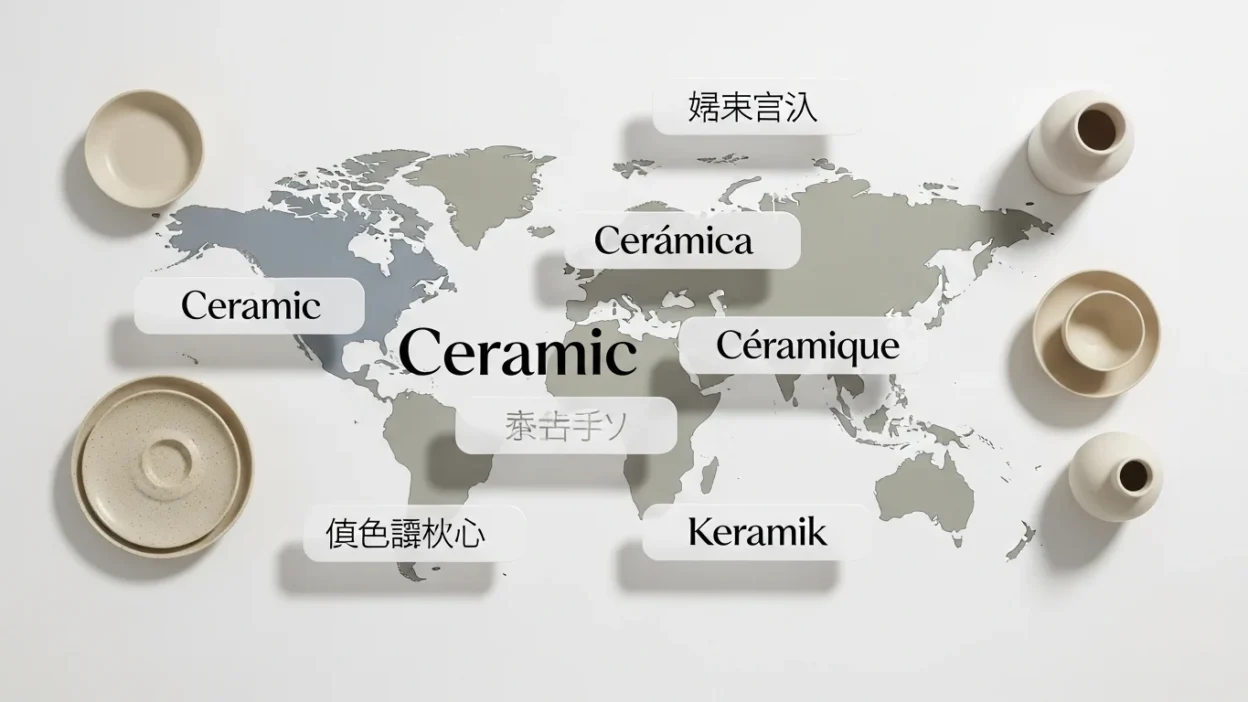
Below, you’ll find a complete table showing how to say ceramic in different languages, including pronunciation and real life example sentences. This guide is optimized for quick reading, mobile devices, and featured snippets.
How to Say Ceramic in Different Languages (70 Languages Table)
| Language | Pronunciation | Example |
| English | suh-RA-mik | This bowl is made of ceramic. (English meaning: The bowl is made from ceramic material.) |
| Spanish | seh-RA-mee-ka | La taza es de cerámica. (English meaning: The cup is made of ceramic.) |
| French | seh-ra-MEEK | La statue est en céramique. (English meaning: The statue is made of ceramic.) |
| German | tseh-RAH-mik | Die Vase ist aus Keramik. (English meaning: The vase is made of ceramic.) |
| Italian | cheh-RA-mee-ka | Il piatto è di ceramica. (English meaning: The plate is ceramic.) |
| Portuguese | seh-RA-mee-ka | A tigela é de cerâmica. (English meaning: The bowl is made of ceramic.) |
| Russian | seh-RA-mee-ka | Это керамическая чашка. (English meaning: This is a ceramic cup.) |
| Chinese (Mandarin) | tao-ci | 这个碗是陶瓷的。 (English meaning: This bowl is ceramic.) |
| Japanese | toh-gee | これは陶器です。 (English meaning: This is ceramic ware.) |
| Korean | doh-ja | 이 접시는 도자기입니다. (English meaning: This plate is ceramic.) |
| Arabic | siramik | هذا إناء سيراميك. (English meaning: This is a ceramic container.) |
| Hindi | suh-raa-mik | यह सिरेमिक कप है। (English meaning: This is a ceramic cup.) |
| Urdu | suh-raa-mik | یہ سیرامک پلیٹ ہے۔ (English meaning: This is a ceramic plate.) |
| Bengali | seh-raa-mik | এটি সিরামিক বাসন। (English meaning: This is ceramic cookware.) |
| Punjabi | seh-raa-mik | ਇਹ ਸਿਰੈਮਿਕ ਕਟੋਰਾ ਹੈ। (English meaning: This is a ceramic bowl.) |
| Turkish | seh-RA-meek | Bu tabak seramik. (English meaning: This plate is ceramic.) |
| Persian | seh-RA-mik | این ظرف سرامیکی است. (English meaning: This dish is ceramic.) |
| Greek | keh-ra-mee-KI | Αυτό είναι κεραμικό πιάτο. (English meaning: This is a ceramic plate.) |
| Dutch | keh-RAH-mik | Dit is een keramische vaas. (English meaning: This is a ceramic vase.) |
| Swedish | she-RAH-mik | Skålen är av keramik. (English meaning: The bowl is ceramic.) |
| Norwegian | she-RAH-mik | Koppen er keramisk. (English meaning: The cup is ceramic.) |
| Danish | keh-RAH-mik | Tallerkenen er keramisk. (English meaning: The plate is ceramic.) |
| Finnish | KEH-ra-mee-kka | Tämä on keramiikkakulho. (English meaning: This is a ceramic bowl.) |
| Polish | keh-RAH-mi-ka | To jest ceramiczny kubek. (English meaning: This is a ceramic mug.) |
| Czech | keh-RAH-mi-ka | To je keramická miska. (English meaning: This is a ceramic bowl.) |
| Slovak | keh-RAH-mi-ka | Toto je keramický tanier. (English meaning: This is a ceramic plate.) |
| Hungarian | keh-RAH-mee-a | Ez kerámia váza. (English meaning: This is a ceramic vase.) |
| Romanian | cheh-RA-mee-ka | Farfuria este din ceramică. (English meaning: The plate is ceramic.) |
| Bulgarian | keh-RAH-mi-ka | Това е керамична чаша. (English meaning: This is a ceramic cup.) |
| Serbian | keh-RAH-mi-ka | Ovo je keramička činija. (English meaning: This is a ceramic bowl.) |
| Croatian | keh-RAH-mi-ka | Ovo je keramički tanjur. (English meaning: This is a ceramic plate.) |
| Slovenian | keh-RAH-mi-ka | To je keramična posoda. (English meaning: This is a ceramic container.) |
| Ukrainian | keh-RAH-mi-ka | Це керамічна ваза. (English meaning: This is a ceramic vase.) |
| Hebrew | seh-RA-mit | זו צלחת קרמית. (English meaning: This is a ceramic plate.) |
| Thai | seh-raa-mik | นี่คือจานเซรามิก (English meaning: This is a ceramic plate.) |
| Vietnamese | seh-RA-mik | Đây là bát gốm sứ. (English meaning: This is a ceramic bowl.) |
| Indonesian | seh-RA-mik | Ini piring keramik. (English meaning: This is a ceramic plate.) |
| Malay | seh-RA-mik | Ini cawan seramik. (English meaning: This is a ceramic cup.) |
| Filipino | seh-RA-mik | Ito ay ceramic na mangkok. (English meaning: This is a ceramic bowl.) |
| Swahili | seh-RA-mik | Hiki ni kikombe cha kauri. (English meaning: This is a ceramic cup.) |
| Zulu | seh-RA-mik | Lena isitsha se-ceramic. (English meaning: This is a ceramic container.) |
| Afrikaans | keh-RAH-mik | Dit is keramiek bord. (English meaning: This is a ceramic plate.) |
| Amharic | seh-RA-mik | ይህ ሴራሚክ ሳህን ነው. (English meaning: This is a ceramic plate.) |
| Somali | seh-RA-mik | Tani waa saxan ceramic ah. (English meaning: This is a ceramic plate.) |
| Tamil | seh-raa-mik | இது செராமிக் கிண்ணம். (English meaning: This is a ceramic bowl.) |
| Telugu | seh-raa-mik | ఇది సిరామిక్ ప్లేట్. (English meaning: This is a ceramic plate.) |
| Kannada | seh-raa-mik | ಇದು ಸೆರಾಮಿಕ್ ಬೌಲ್. (English meaning: This is a ceramic bowl.) |
| Malayalam | seh-raa-mik | ഇത് സെറാമിക് പാത്രമാണ്. (English meaning: This is a ceramic vessel.) |
| Marathi | seh-raa-mik | हे सिरेमिक भांडे आहे. (English meaning: This is a ceramic pot.) |
| Gujarati | seh-raa-mik | આ સિરામિક થાળી છે. (English meaning: This is a ceramic plate.) |
| Nepali | seh-RA-mik | यो सिरेमिक कप हो। (English meaning: This is a ceramic cup.) |
| Sinhala | seh-RA-mik | මෙය සෙරමික් කෝප්පයකි. (English meaning: This is a ceramic cup.) |
| Burmese | seh-RA-mik | ဒီဟာ စီရာမစ် ပန်းကန်ပါ။ (English meaning: This is a ceramic plate.) |
| Khmer | seh-RA-mik | នេះជាចានសេរ៉ាមិច។ (English meaning: This is a ceramic plate.) |
| Lao | seh-RA-mik | ນີ້ແມ່ນຈານເຊຣາມິກ. (English meaning: This is a ceramic plate.) |
| Mongolian | seh-RA-mik | Энэ керамик аяга байна. (English meaning: This is a ceramic cup.) |
| Georgian | keh-ra-mee-ka | ეს კერამიკული თასი არის. (English meaning: This is a ceramic bowl.) |
| Armenian | keh-ra-mee-ka | Սա կերամիկական բաժակ է. (English meaning: This is a ceramic cup.) |
| Albanian | che-ra-mee-ka | Kjo është pjatë qeramike. (English meaning: This is a ceramic plate.) |
| Lithuanian | keh-RA-mi-ka | Tai keraminė vaza. (English meaning: This is a ceramic vase.) |
| Latvian | keh-RA-mi-ka | Tā ir keramikas krūze. (English meaning: This is a ceramic mug.) |
| Estonian | keh-RA-mi-ka | See on keraamiline tass. (English meaning: This is a ceramic cup.) |
| Icelandic | keh-RAH-mik | Þetta er keramík bolli. (English meaning: This is a ceramic cup.) |
| Irish | keh-RAH-mik | Is babhla ceirmeach é seo. (English meaning: This is a ceramic bowl.) |
| Welsh | keh-RAH-mik | Mae hwn yn blât ceramig. (English meaning: This is a ceramic plate.) |
| Basque | keh-RA-mi-ka | Hau plater keramikoa da. (English meaning: This is a ceramic plate.) |
| Maltese | che-ra-mee-ka | Dan huwa platt ċeramiku. (English meaning: This is a ceramic plate.) |
| Haitian Creole | seh-RA-mik | Sa a se yon bòl seramik. (English meaning: This is a ceramic bowl.) |
| Malagasy | seh-RA-mik | Ity dia lovia seramika. (English meaning: This is a ceramic plate.) |
What Does Ceramic Mean?
Ceramic refers to objects made from clay that are hardened by heat. It includes pottery, tiles, dishes, bricks, and decorative art.
Across cultures, ceramic materials have been used for thousands of years in cooking, construction, and design.
Why Learn Ceramic Translations?
Knowing ceramic around the world is useful if you:
- Travel internationally
- Work in construction or interior design
- Study art or pottery
- Import or export ceramic goods
- Learn new languages
It also helps when shopping globally or communicating with international manufacturers.
Conclusion
Now you know how to say ceramic in different languages across 70 global languages.
From Europe to Asia, Africa to the Americas, ceramic translations show how connected the world is through materials and craftsmanship.
Use this guide whenever you need ceramic in all languages or want to understand ceramic vocabulary globally.
Frequently Asked Questions
1. How do you say ceramic in different languages?
You can say ceramic as cerámica in Spanish, céramique in French, Keramik in German, 陶瓷 in Chinese, and seramik in Turkish, among many others listed above.
2. What is the most common word for ceramic worldwide?
Many languages use a variation of “ceramic” or “keramik,” especially in European languages.
3. Is ceramic the same in all languages?
No, while some languages share similar spellings, pronunciation and sentence structure differ.
4. Why are ceramic translations similar in European languages?
Many European languages share Latin or Greek roots, which explains the similarities.
5. Where is ceramic used most commonly?
Ceramic is widely used in kitchens, bathrooms, construction, art studios, and decorative crafts worldwide.

Marak Robort is a content writer and researcher with a strong interest in language, meanings, and digital information. His work focuses on presenting clear, easy-to-understand explanations that help readers quickly grasp complex ideas.