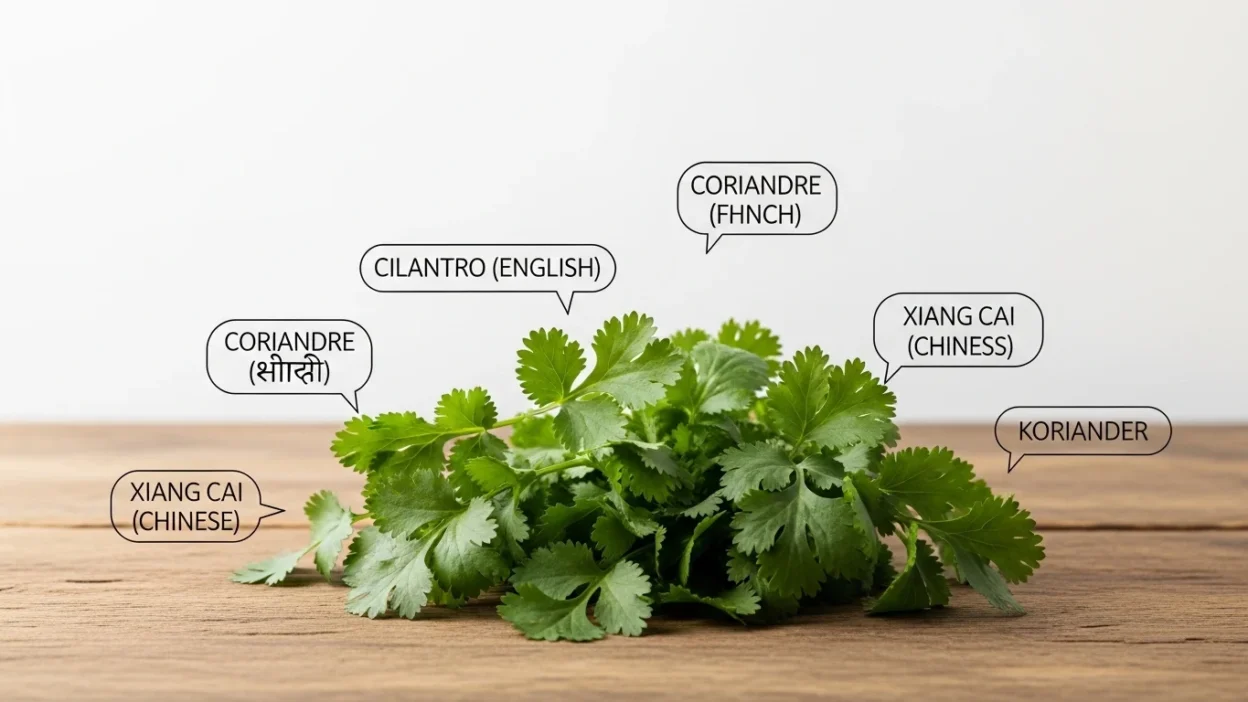
Cilantro is one of the most loved and sometimes debated herbs in the world. Whether you call it coriander, fresh dhania, or something entirely different, this aromatic herb appears in cuisines across continents.
If you’ve ever wondered how to say cilantro in different languages, this guide gives you exactly what you need. Below, you’ll find 70 languages with pronunciation, a natural example sentence using the word, and the English meaning.
This article is perfect for travelers, food bloggers, language learners, chefs, and anyone curious about cilantro translations, how to say cilantro in different languages, and what cilantro is called around the world.
Cilantro in Different Languages (70 Languages Table)
| Language | Pronunciation & Example | English Meaning |
| English | Cilantro (si-LAN-tro) – I added fresh cilantro to the salad. | I added fresh cilantro to the salad. |
| Spanish | Cilantro (see-LAN-tro) – Agregué cilantro fresco al guacamole. | I added fresh cilantro to the guacamole. |
| French | Coriandre (ko-ryand) – J’ai ajouté de la coriandre fraîche au plat. | I added fresh cilantro to the dish. |
| German | Koriander (ko-ree-AN-der) – Ich habe frischen Koriander in die Suppe gegeben. | I added fresh cilantro to the soup. |
| Italian | Coriandolo (ko-ree-AN-do-lo) – Ho aggiunto coriandolo fresco alla salsa. | I added fresh cilantro to the sauce. |
| Portuguese | Coentro (kwen-tro) – Adicionei coentro fresco ao arroz. | I added fresh cilantro to the rice. |
| Dutch | Koriander (ko-ree-AN-der) – Ik heb verse koriander toegevoegd aan de curry. | I added fresh cilantro to the curry. |
| Russian | Кинза (kin-ZA) – Я добавил кинзу в салат. | I added cilantro to the salad. |
| Arabic | كزبرة (kuz-barah) – أضفت كزبرة طازجة إلى الطبق. | I added fresh cilantro to the dish. |
| Hindi | धनिया (DHA-nee-ya) – मैंने धनिया सलाद में डाला। | I added cilantro to the salad. |
| Urdu | دھنیا (DHA-ni-ya) – میں نے دھنیا سالن میں ڈالا۔ | I added cilantro to the curry. |
| Bengali | ধনিয়া (DHO-ni-ya) – আমি ধনিয়া ভর্তায় দিয়েছি। | I added cilantro to the mash. |
| Punjabi | ਧਨੀਆ (DHA-nee-aa) – ਮੈਂ ਧਨੀਆ ਚਟਨੀ ਵਿੱਚ ਪਾਇਆ। | I added cilantro to the chutney. |
| Turkish | Kişniş (kish-nish) – Çorbaya kişniş ekledim. | I added cilantro to the soup. |
| Greek | Κόλιανδρος (KO-lee-an-dros) – Έβαλα κόλιανδρο στη σαλάτα. | I added cilantro to the salad. |
| Chinese (Mandarin) | 香菜 (xiang cai) – 我在汤里加了香菜。 | I added cilantro to the soup. |
| Japanese | パクチー (pakuchi) – スープにパクチーを入れました。 | I added cilantro to the soup. |
| Korean | 고수 (go-su) – 나는 국에 고수를 넣었다. | I added cilantro to the soup. |
| Thai | ผักชี (phak chi) – ฉันใส่ผักชีในแกง. | I added cilantro to the curry. |
| Vietnamese | Rau mùi (zow mooi) – Tôi đã thêm rau mùi vào món ăn. | I added cilantro to the dish. |
| Indonesian | Ketumbar (keh-tum-bar) – Saya menambahkan ketumbar ke sup. | I added cilantro to the soup. |
| Malay | Ketumbar (keh-tum-bar) – Saya tambah ketumbar dalam kari. | I added cilantro to the curry. |
| Filipino | Wansoy (wan-soy) – Naglagay ako ng wansoy sa sabaw. | I added cilantro to the soup. |
| Swahili | Giligilani (gi-li-gi-LA-ni) – Niliweka giligilani kwenye mchuzi. | I added cilantro to the sauce. |
| Hebrew | כוסברה (kus-bara) – הוספתי כוסברה טרייה לסלט. | I added fresh cilantro to the salad. |
| Persian | گشنیز (gosh-niz) – من گشنیز به غذا اضافه کردم. | I added cilantro to the food. |
| Polish | Kolendra (ko-LEN-dra) – Dodałem kolendrę do zupy. | I added cilantro to the soup. |
| Romanian | Coriandru (ko-ree-AN-droo) – Am adăugat coriandru în mâncare. | I added cilantro to the food. |
| Hungarian | Koriander (ko-ree-AN-der) – Tettem koriandert a levesbe. | I added cilantro to the soup. |
| Czech | Koriandr (ko-ree-AN-dr) – Přidal jsem koriandr do salátu. | I added cilantro to the salad. |
| Slovak | Koriander (ko-ree-AN-der) – Pridal som koriander do polievky. | I added cilantro to the soup. |
| Danish | Koriander (ko-ree-AN-er) – Jeg tilføjede koriander til suppen. | I added cilantro to the soup. |
| Swedish | Koriander (ko-ree-AN-der) – Jag lade till koriander i soppan. | I added cilantro to the soup. |
| Norwegian | Koriander (ko-ree-AN-der) – Jeg tilsatte koriander i suppen. | I added cilantro to the soup. |
| Finnish | Korianteri (ko-ree-AN-te-ri) – Lisäsin korianteria keittoon. | I added cilantro to the soup. |
| Icelandic | Kóríander (ko-ree-AN-der) – Ég setti kóríander í súpuna. | I added cilantro to the soup. |
| Ukrainian | Кінза (kin-ZA) – Я додав кінзу до страви. | I added cilantro to the dish. |
| Bulgarian | Кориандър (ko-ree-AN-der) – Добавих кориандър в супата. | I added cilantro to the soup. |
| Serbian | Korijander (ko-ree-YAN-der) – Dodao sam korijander u salatu. | I added cilantro to the salad. |
| Croatian | Korijander (ko-ree-YAN-der) – Dodao sam korijander u juhu. | I added cilantro to the soup. |
| Slovenian | Koriander (ko-ree-AN-der) – Dodal sem koriander v juho. | I added cilantro to the soup. |
| Lithuanian | Kalendra (ka-LEN-dra) – Įdėjau kalendros į sriubą. | I added cilantro to the soup. |
| Latvian | Koriandrs (ko-ree-AN-drs) – Es pievienoju koriandru zupai. | I added cilantro to the soup. |
| Estonian | Koriander (ko-ree-AN-der) – Lisasin koriandrit supile. | I added cilantro to the soup. |
| Albanian | Koriandër (ko-ree-AN-der) – Shtova koriandër në sallatë. | I added cilantro to the salad. |
| Georgian | ქინძი (kin-dzi) – კერძში ქინძი დავამატე. | I added cilantro to the dish. |
| Armenian | Համեմ (ha-mem) – Ես համեմ ավելացրեցի ապուրին։ | I added cilantro to the soup. |
| Azerbaijani | Keşniş (kesh-nish) – Keşniş şorbaya əlavə etdim. | I added cilantro to the soup. |
| Kazakh | Кинза (kin-za) – Мен кинзаны салатқа қостым. | I added cilantro to the salad. |
| Uzbek | Kashnich (kash-nich) – Sho‘rvaga kashnich qo‘shdim. | I added cilantro to the soup. |
| Nepali | धनियाँ (DHA-ni-yaa) – मैले धनियाँ तरकारीमा राखें। | I added cilantro to the curry. |
| Sinhala | කොත්තමල්ලි (kot-tha-mal-li) – මම කොත්තමල්ලි සුප් එකට දැම්මා. | I added cilantro to the soup. |
| Tamil | கொத்தமல்லி (kot-tha-mal-li) – நான் கொத்தமல்லி சூப்பில் சேர்த்தேன். | I added cilantro to the soup. |
| Telugu | కొత్తిమీర (kot-thi-mee-ra) – నేను కొత్తిమీర కూరలో వేసాను. | I added cilantro to the curry. |
| Kannada | ಕೊತ್ತಂಬರಿ (kot-tham-ba-ri) – ನಾನು ಕೊತ್ತಂಬರಿ ಸಾರಿಗೆ ಹಾಕಿದೆ. | I added cilantro to the soup. |
| Malayalam | മല്ലിയില (mal-li-yi-la) – ഞാൻ മല്ലിയില കറിയിൽ ചേർത്തു. | I added cilantro to the curry. |
| Marathi | कोथिंबीर (ko-thim-beer) – मी कोथिंबीर भाजीमध्ये घातली. | I added cilantro to the vegetable dish. |
| Gujarati | કોથમીર (ko-th-meer) – મેં કોથમીર શાકમાં નાખ્યું. | I added cilantro to the curry. |
| Somali | Kabsar (kab-sar) – Waxaan ku daray kabsar maraqa. | I added cilantro to the soup. |
| Zulu | Ucwecwe | Ngifake ucwecwe esobho. |
| Afrikaans | Koljander (kol-yan-der) – Ek het koljander by die sop gevoeg. | I added cilantro to the soup. |
| Mongolian | Яншуй (yan-shui) – Би яншуй шөлөнд хийлээ. | I added cilantro to the soup. |
| Burmese | နံနံပင် (nan-nan-pin) – ကျွန်တော် နံနံပင် ဟင်းထဲ ထည့်လိုက်တယ်။ | I added cilantro to the dish. |
| Khmer | ជីរបារាំង (chee ba-rang) – ខ្ញុំដាក់ជីរបារាំងក្នុងស៊ុប។ | I added cilantro to the soup. |
| Lao | ຜັກຊີ (phak si) – ຂ້ອຍໃສ່ຜັກຊີໃນແກງ. | I added cilantro to the soup. |
| Amharic | ድንብላል (dinbilal) – ድንብላል በምግብ ጨመርኩ። | I added cilantro to the food. |
| Haitian Creole | Koryand (ko-ryand) – Mwen mete koryand nan soup la. | I added cilantro to the soup. |
| Maltese | Kosbor (kos-bor) – Żidt kosbor fis-soppa. | I added cilantro to the soup. |
| Basque | Martorri (mar-tor-ri) – Martorri gehitu dut zopan. | I added cilantro to the soup. |
Why Cilantro Has Different Names Around the World
Cilantro is the leaf of the coriander plant. In many countries, the leaves and seeds share similar names. In others, they are completely different words.
For example:
- In American English, “cilantro” refers to the leaves.
- In British English, it’s called “coriander.”
- In South Asia, it is commonly known as “dhania.”
Understanding cilantro in all languages helps with:
- Traveling abroad
- Reading international recipes
- Communicating in global kitchens
- Learning new languages
How to Say Cilantro in Different Languages Correctly
When learning how to say cilantro in different languages, pronunciation matters. Some languages use a soft “k” sound (koriander), while others use “dh” sounds like dhania.
If you’re ordering food overseas or reading a menu, knowing the local word can make things easier and more enjoyable.
Conclusion
Cilantro is truly a global herb. From “dhania” in India to “xiang cai” in China and “koriander” across Europe, its name changes but its flavor connects cultures worldwide.
Now you know cilantro translations across 70 languages, along with pronunciation and real examples. Whether you’re a traveler, student, or food lover, this guide makes understanding cilantro around the world simple and practical.
Frequently Asked Questions (FAQs)
1. What is cilantro called in other languages?
Cilantro is called coriandre (French), koriander (German), dhania (Hindi/Urdu), xiang cai (Chinese), pakuchi (Japanese), and many other names globally.
2. Is cilantro the same as coriander?
Yes. Cilantro usually refers to the leaves, while coriander often refers to the seeds. In many countries, both are called coriander.
3. How do you say cilantro in Europe?
Most European languages use a variation of “koriander” or “coriandre,” such as German (Koriander), Dutch (Koriander), and French (Coriandre).
4. How do you say cilantro in Asian languages?
In Hindi it’s dhania, in Chinese xiang cai, in Thai phak chi, in Japanese pakuchi, and in Korean gosu.
5. Why does cilantro have so many different names?
Because it is used worldwide in different cuisines and languages, each culture developed its own word for the herb.

Ely Joseph is a language researcher, writer, and contributor who specializes in words, meanings, and multilingual communication. With a strong interest in how language shapes understanding across cultures, Ely focuses on creating clear, accurate, and reader-friendly content for a global audience.