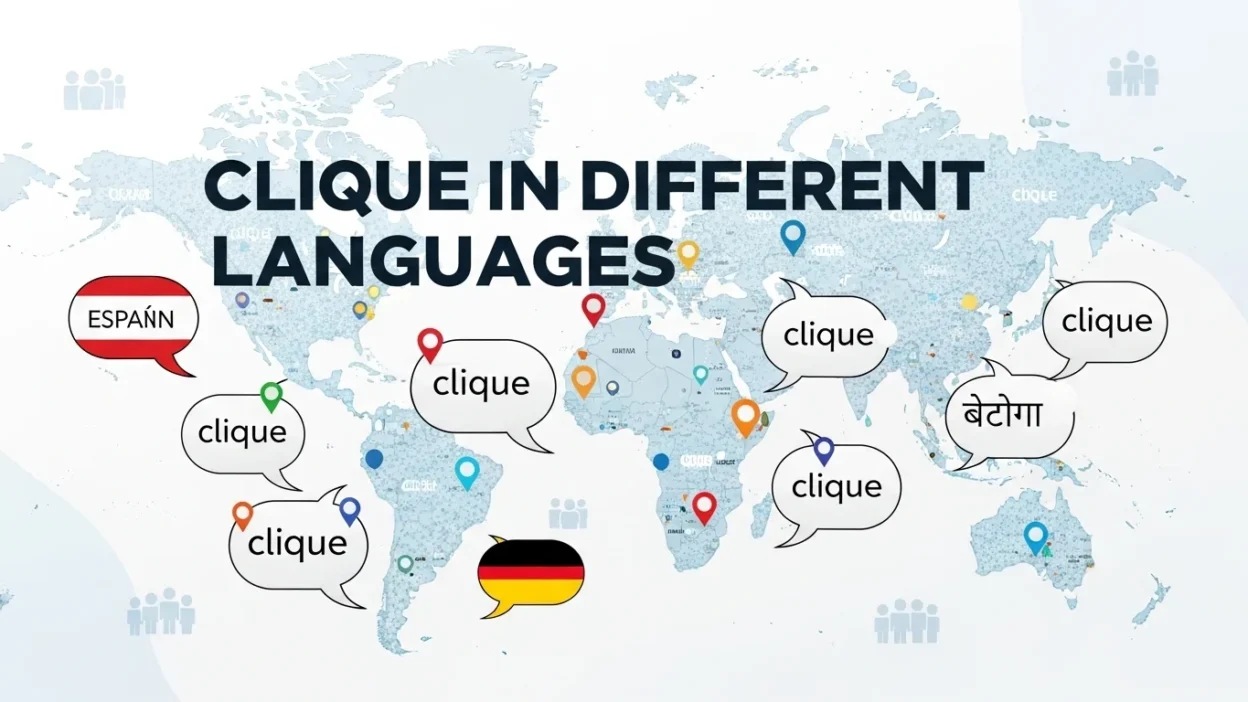
Understanding the word “clique” in different languages helps you communicate better across cultures. Whether you’re studying languages, writing creatively, traveling, or simply curious, knowing how to say clique around the world gives you deeper insight into social dynamics globally.
A clique usually refers to a small, exclusive group of people who share common interests and often exclude others. In this guide, you’ll discover clique translations in 70 languages, complete with pronunciation and real-life example sentences. If you’ve ever searched for how to say clique in different languages or wanted clique in all languages in one place, this comprehensive list is for you.
How to Say “Clique” in Different Languages (70 Languages Table)
Below is a clean, mobile-friendly table showing clique in different languages, including pronunciation and an example sentence for each.
| Language | Pronunciation & Example | English Meaning |
| English | /kleek/ – They formed a clique at school. | A small exclusive group formed at school. |
| Spanish | clíque /klee-keh/ – Formaron una clíque en la escuela. | They formed a clique at school. |
| French | clique /kleek/ – Ils ont formé une clique à l’école. | They formed a clique at school. |
| German | Clique /klee-kuh/ – Sie bildeten eine Clique in der Schule. | They formed a clique at school. |
| Italian | cricca /kree-kah/ – Hanno formato una cricca a scuola. | They formed a clique at school. |
| Portuguese | panelinha /pah-neh-lyah/ – Eles criaram uma panelinha na escola. | They created a small clique at school. |
| Dutch | kliek /kleek/ – Ze vormden een kliek op school. | They formed a clique at school. |
| Russian | клика /klee-kah/ – Они создали клику в школе. | They created a clique at school. |
| Chinese (Mandarin) | 小圈子 /shyao chwen dzuh/ – 他们在学校形成了小圈子。 | They formed a small circle at school. |
| Japanese | 派閥 /hah-bah-tsu/ – 学校で派閥を作った。 | They formed a faction at school. |
| Korean | 파벌 /pah-bol/ – 그들은 학교에서 파벌을 만들었다. | They formed a faction at school. |
| Arabic | شِلّة /shil-lah/ – شكلوا شلة في المدرسة. | They formed a clique at school. |
| Hindi | गुट /gut/ – उन्होंने स्कूल में एक गुट बनाया। | They formed a group at school. |
| Urdu | ٹولی /toh-lee/ – انہوں نے اسکول میں ایک ٹولی بنائی۔ | They formed a group at school. |
| Turkish | klik /kleek/ – Okulda bir klik oluşturdular. | They formed a clique at school. |
| Greek | κλίκα /klee-kah/ – Δημιούργησαν μια κλίκα στο σχολείο. | They formed a clique at school. |
| Polish | klika /klee-kah/ – Utworzyli klikę w szkole. | They formed a clique at school. |
| Swedish | klick /kleek/ – De bildade en klick i skolan. | They formed a clique at school. |
| Norwegian | klikk /kleek/ – De dannet en klikk på skolen. | They formed a clique at school. |
| Danish | klike /klee-keh/ – De dannede en klike i skolen. | They formed a clique at school. |
| Finnish | klikki /klee-kee/ – He muodostivat klikin koulussa. | They formed a clique at school. |
| Hungarian | klikk /kleek/ – Klikket alakítottak az iskolában. | They formed a clique at school. |
| Czech | klika /klee-kah/ – Vytvořili kliku ve škole. | They formed a clique at school. |
| Slovak | klika /klee-kah/ – Vytvorili kliku v škole. | They formed a clique at school. |
| Romanian | clică /klee-kuh/ – Au format o clică la școală. | They formed a clique at school. |
| Bulgarian | клика /klee-kah/ – Те създадоха клика в училище. | They formed a clique at school. |
| Croatian | klika /klee-kah/ – Formirali su kliku u školi. | They formed a clique at school. |
| Serbian | клика /klee-kah/ – Формирали су клику у школи. | They formed a clique at school. |
| Ukrainian | кліка /klee-kah/ – Вони створили кліку в школі. | They formed a clique at school. |
| Hebrew | קליקה /klee-kah/ – הם יצרו קליקה בבית הספר. | They formed a clique at school. |
| Thai | กลุ่มเล็ก /gloom lek/ – พวกเขาสร้างกลุ่มเล็กที่โรงเรียน | They formed a small group at school. |
| Vietnamese | phe nhóm /feh nyom/ – Họ lập một phe nhóm ở trường. | They formed a clique at school. |
| Indonesian | klik /kleek/ – Mereka membentuk klik di sekolah. | They formed a clique at school. |
| Malay | klik /kleek/ – Mereka membentuk klik di sekolah. | They formed a clique at school. |
| Filipino | barkada /bar-kah-dah/ – Bumuo sila ng barkada sa paaralan. | They formed a close group at school. |
| Swahili | kikundi /kee-koon-dee/ – Waliunda kikundi shuleni. | They formed a group at school. |
| Zulu | iqembu /ee-kwem-boo/ – Bakha iqembu esikoleni. | They formed a group at school. |
| Afrikaans | kliek /kleek/ – Hulle het ‘n kliek by die skool gevorm. | They formed a clique at school. |
| Persian | کلیک /klee-k/ – آنها در مدرسه یک کلیک تشکیل دادند. | They formed a clique at school. |
| Bengali | গোষ্ঠী /gosh-thee/ – তারা স্কুলে একটি গোষ্ঠী তৈরি করেছে। | They formed a group at school. |
| Tamil | குழு /koo-zhoo/ – அவர்கள் பள்ளியில் ஒரு குழு உருவாக்கினர். | They formed a group at school. |
| Telugu | వర్గం /var-gam/ – వారు పాఠశాలలో ఒక వర్గం ఏర్పాటు చేశారు. | They formed a group at school. |
| Marathi | गट /gut/ – त्यांनी शाळेत एक गट तयार केला. | They formed a group at school. |
| Gujarati | જૂથ /juth/ – તેમણે શાળામાં એક જૂથ બનાવ્યું. | They formed a group at school. |
| Punjabi | ਟੋਲੀ /toh-lee/ – ਉਨ੍ਹਾਂ ਨੇ ਸਕੂਲ ਵਿੱਚ ਇੱਕ ਟੋਲੀ ਬਣਾਈ। | They formed a group at school. |
| Nepali | समूह /sa-moo-ha/ – उनीहरूले स्कूलमा समूह बनाए। | They formed a group at school. |
| Sinhala | කණ්ඩායම /kan-dah-yah-ma/ – ඔවුන් පාසලේ කණ්ඩායමක් සෑදුවා. | They formed a group at school. |
| Burmese | အဖွဲ့ /ah-pwè/ – သူတို့ ကျောင်းမှာ အဖွဲ့ဖွဲ့ခဲ့တယ်။ | They formed a group at school. |
| Khmer | ក្រុមតូច /krom toch/ – ពួកគេបង្កើតក្រុមតូចនៅសាលា។ | They formed a small group at school. |
| Lao | ກຸ່ມ /koom/ – ພວກເຂົາສ້າງກຸ່ມຢູ່ໂຮງຮຽນ. | They formed a group at school. |
| Mongolian | бүлэг /boo-leg/ – Тэд сургуульд бүлэг байгуулсан. | They formed a group at school. |
| Icelandic | klíka /klee-kah/ – Þau mynduðu klíku í skólanum. | They formed a clique at school. |
| Latvian | kliķe /klee-keh/ – Viņi izveidoja kliķi skolā. | They formed a clique at school. |
| Lithuanian | klika /klee-kah/ – Jie sudarė kliką mokykloje. | They formed a clique at school. |
| Estonian | klikk /kleek/ – Nad moodustasid kliki koolis. | They formed a clique at school. |
| Slovenian | klika /klee-kah/ – Ustvarili so kliko v šoli. | They formed a clique at school. |
| Albanian | klikë /klee-kuh/ – Ata krijuan një klikë në shkollë. | They formed a clique at school. |
| Macedonian | клика /klee-kah/ – Тие формираа клика во училиште. | They formed a clique at school. |
| Armenian | կլիկա /klee-kah/ – Նրանք դպրոցում կլիկա ձևավորեցին։ | They formed a clique at school. |
| Georgian | კლიკა /klee-kah/ – მათ სკოლაში კლიკა შექმნეს. | They formed a clique at school. |
| Basque | klik /kleek/ – Eskolan klik bat sortu zuten. | They formed a clique at school. |
| Catalan | clique /klee-kah/ – Van formar una clique a l’escola. | They formed a clique at school. |
| Galician | clique /klee-keh/ – Formaron unha clique na escola. | They formed a clique at school. |
| Haitian Creole | klik /kleek/ – Yo te fòme yon klik lekòl la. | They formed a clique at school. |
| Somali | koox yar /koh/ – Waxay sameeyeen koox yar dugsiga. | They formed a small group at school. |
| Amharic | ቡድን /boo-den/ – እነሱ ቡድን በትምህርት ቤት ፈጠሩ። | They formed a group at school. |
| Yoruba | ẹgbẹ́ /ehg-beh/ – Wọ́n dá ẹgbẹ́ kan sílẹ̀ ní ilé-ìwé. | They formed a group at school. |
| Igbo | otu /oh-too/ – Ha guzobere otu n’ụlọ akwụkwọ. | They formed a group at school. |
| Malagasy | vondrona /voon-droo-na/ – Namorona vondrona tany an-tsekoly izy ireo. | They formed a group at school. |
Why Learning “Clique” Translations Is Useful
Knowing how to say clique in different languages improves communication in multicultural settings.
It’s helpful for:
- Language learners
- Writers and translators
- Social psychology students
- Travelers
- International business professionals
Understanding clique around the world also reveals cultural attitudes about exclusivity and group dynamics.
Is the Meaning of “Clique” the Same in All Languages?
Not always.
In some languages, the translation carries a negative tone, suggesting secrecy or exclusion. In others, it simply means a small group or circle of friends.
When searching for clique in all languages, remember that cultural nuance matters as much as literal translation.
Conclusion
Now you know clique in different languages across 70 global languages. From Europe to Asia, Africa to the Americas, the concept of a small exclusive group exists everywhere—though expressed differently.
Use this guide whenever you need accurate clique translations or want to understand how social groups are described worldwide.
Frequently Asked Questions
1. What does “clique” mean in simple words?
A clique is a small group of people who spend time together and often exclude others.
2. How do you say clique in different languages?
The word varies by language, such as clique (French), klika (Polish), شلة (Arabic), and 小圈子 (Chinese).
3. Is clique always negative?
Not always. In some cultures, it simply means a close friend group. In others, it implies exclusion.
4. What is clique in European languages?
Many European languages use similar forms like clique, klika, kliek, or klick.
5. Why are clique translations similar in many languages?
Because the word has French origins and spread across Europe and other regions through cultural exchange.

Marak Robort is a content writer and researcher with a strong interest in language, meanings, and digital information. His work focuses on presenting clear, easy-to-understand explanations that help readers quickly grasp complex ideas.