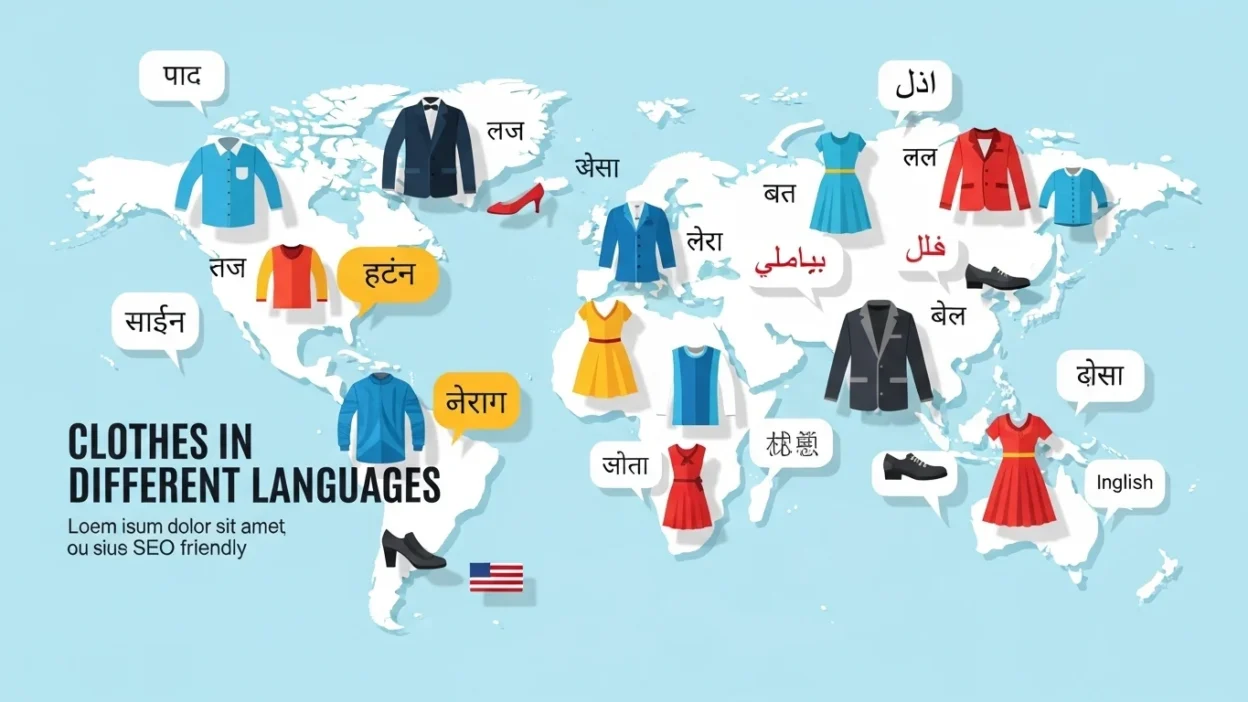
Understanding how to say clothes in different languages is not just fun, it’s practical for travelers, language learners, and anyone curious about cultures.
Knowing clothes translations helps you communicate in shopping, fashion, or everyday conversations across the globe.
This guide provides clothes in all languages with pronunciation tips and real-life example sentences, making it easy to remember and use.
Whether you want to know how to say clothes in different languages or explore clothes around the world, this article will be your ultimate reference.
Clothes in 70 Different Languages
| Language | Pronunciation | Example |
| Spanish | ropa | Me gusta comprar ropa nueva. |
| French | vêtements | Elle porte de beaux vêtements. |
| German | Kleidung | Ich brauche neue Kleidung. |
| Italian | vestiti | Ho comprato dei vestiti nuovi. |
| Portuguese | roupas | Ele tem muitas roupas. |
| Russian | одежда (odezhda) | Я купил новую одежду. |
| Japanese | 服 (fuku) | 新しい服を買いました。 |
| Chinese (Mandarin) | 衣服 (yīfú) | 我喜欢这件衣服。 |
| Korean | 옷 (ot) | 새 옷이 필요해요. |
| Arabic | ملابس (malabis) | أحب شراء ملابس جديدة. |
| Hindi | कपड़े (kapde) | मुझे नए कपड़े चाहिए। |
| Bengali | পোশাক (poshak) | আমি নতুন পোশাক কিনেছি। |
| Urdu | کپڑے (kapray) | مجھے نئے کپڑے چاہیے۔ |
| Turkish | kıyafetler | Yeni kıyafetler aldım. |
| Dutch | kleren | Ik heb nieuwe kleren gekocht. |
| Greek | ρούχα (roucha) | Αγόρασα καινούργια ρούχα. |
| Polish | ubrania | Potrzebuję nowych ubrań. |
| Swedish | kläder | Jag köpte nya kläder. |
| Norwegian | klær | Jeg trenger nye klær. |
| Danish | tøj | Jeg købte nyt tøj. |
| Finnish | vaatteet | Minulla on uusia vaatteita. |
| Czech | oblečení | Koupil jsem nové oblečení. |
| Hungarian | ruházat | Vettem új ruházatot. |
| Romanian | haine | Am cumpărat haine noi. |
| Bulgarian | дрехи (drehi) | Купих нови дрехи. |
| Serbian | одећа (odeća) | Купио сам нову одећу. |
| Croatian | odjeća | Kupio sam novu odjeću. |
| Bosnian | odjeća | Trebam novu odjeću. |
| Slovak | oblečenie | Kúpil som nové oblečenie. |
| Slovenian | oblačila | Kupi sem nova oblačila. |
| Malay | pakaian | Saya membeli pakaian baru. |
| Indonesian | pakaian | Aku membeli pakaian baru. |
| Thai | เสื้อผ้า (s̄eụ̄̂x phā) | ฉันซื้อเสื้อผ้าใหม่ |
| Vietnamese | quần áo | Tôi mua quần áo mới. |
| Swahili | nguo | Nimekununua nguo mpya. |
| Hebrew | בגדים (begadim) | קניתי בגדים חדשים. |
| Persian | لباس (lebas) | من لباس جدید خریدم. |
| Ukrainian | одяг (odyah) | Я купив новий одяг. |
| Malay (Brunei) | pakaian | Saya membeli pakaian baru. |
| Tagalog | damit | Bumili ako ng bagong damit. |
| Tamil | உடைகள் (udaikaḷ) | நான் புதிய உடைகள் வாங்கினேன். |
| Telugu | దుస్తులు (dustulu) | నేను కొత్త దుస్తులు కొన్నాను. |
| Kannada | ಬಟ್ಟೆಗಳು (baṭṭegaḷu) | ನಾನು ಹೊಸ ಬಟ್ಟೆಗಳು ಖರೀದಿಸಿದ್ದೇನೆ. |
| Malayalam | വസ്ത്രങ്ങൾ (vasthrangal) | ഞാൻ പുതിയ വസ്ത്രങ്ങൾ വാങ്ങി. |
| Sinhala | ඇඳුම් (ændum) | මම නව ඇඳුම් මිලදීගත්තා. |
| Nepali | लुगा (luga) | मैले नयाँ लुगा किनें। |
| Pashto | کالي (kali) | ما نوي کالي اخیستي دي. |
| Kurdish | cil û berg | Ez cil û bergên nû kirîm. |
| Mongolian | хувцас (khuwtsas) | Би шинэ хувцас худалдаж авсан. |
| Tibetan | སྐུ་ཚགས (sku tshags) | ངས་གསར་པའི་སྐུ་ཚགས་ཉོན། |
| Armenian | հագուստ (hagust) | Ես նոր հագուստ գնեցի: |
| Georgian | ტანსაცმელი (tansatsmeli) | მე ვიყიდე ახალი ტანსაცმელი. |
| Azerbaijani | geyimlər | Mən yeni geyimlər aldım. |
| Kazakh | киім (kiim) | Мен жаңа киім алдым. |
| Uzbek | kiyim | Men yangi kiyim sotib oldim. |
| Tajik | либос (libos) | Ман либоси нав харидам. |
| Malay (Singapore) | pakaian | Saya membeli pakaian baru. |
| Haitian Creole | rad | Mwen achte rad nouvo. |
| Yoruba | aṣọ | Mo ra aṣọ tuntun. |
| Igbo | uwe | Azụtara m uwe ọhụrụ. |
| Zulu | izingubo | Ngithenge izingubo ezintsha. |
| Xhosa | iimpahla | Ndithenge iimpahla ezintsha. |
| Somali | dhar | Waxaan iibsaday dhar cusub. |
| Malagasy | akanjo | Nividy akanjo vaovao aho. |
| Maori | kākahu | I hoko kākahu hou au. |
| Hawaiian | lole | Ua kūʻai au i lole hou. |
| Basque | arropa | Arropa berria erosi dut. |
| Catalan | roba | He comprat roba nova. |
How to Learn Clothes in All Languages Quickly
Learning clothes translations doesn’t have to be difficult. Focus on:
- Pronunciation first — it helps you be understood.
- Short example sentences — they give context.
- Repetition — reviewing daily helps retention.
By using these tips, you’ll know how to say clothes in different languages confidently, whether for travel, fashion, or casual conversations.
Why Knowing Clothes Around the World Is Useful
- Travel: Helps you shop abroad or ask for clothing items.
- Language learning: Adds practical vocabulary to your skill set.
- Cultural understanding: Some clothes have unique names in local languages.
Knowing clothes in all languages can be a fun way to connect with people globally.
Conclusion
Learning clothes in different languages opens doors to communication, travel, and cultural exploration.
With this guide, you can now confidently say “clothes” in 70 languages, understand pronunciation, and use it in real-life situations.
FAQs
1. What is the easiest way to remember clothes in different languages?
Use short example sentences and repeat them daily to improve retention.
2. Can I use these translations for shopping abroad?
Yes, knowing the local word for clothes helps when shopping in foreign countries.
3. Do all languages have a single word for clothes?
Most languages have a single general word, but some distinguish types of clothing.
4. Is pronunciation important when learning clothes translations?
Absolutely. Proper pronunciation ensures you are understood and avoids confusion.
5. How many languages can I realistically learn clothes words in?
You can learn words in dozens of languages. Start with the ones most relevant to your travel or interest.

David William is a language enthusiast, researcher, and content creator at Lingoveb. With a deep passion for words, meanings, and global communication, he focuses on making language simple, clear, and accessible for readers around the world.