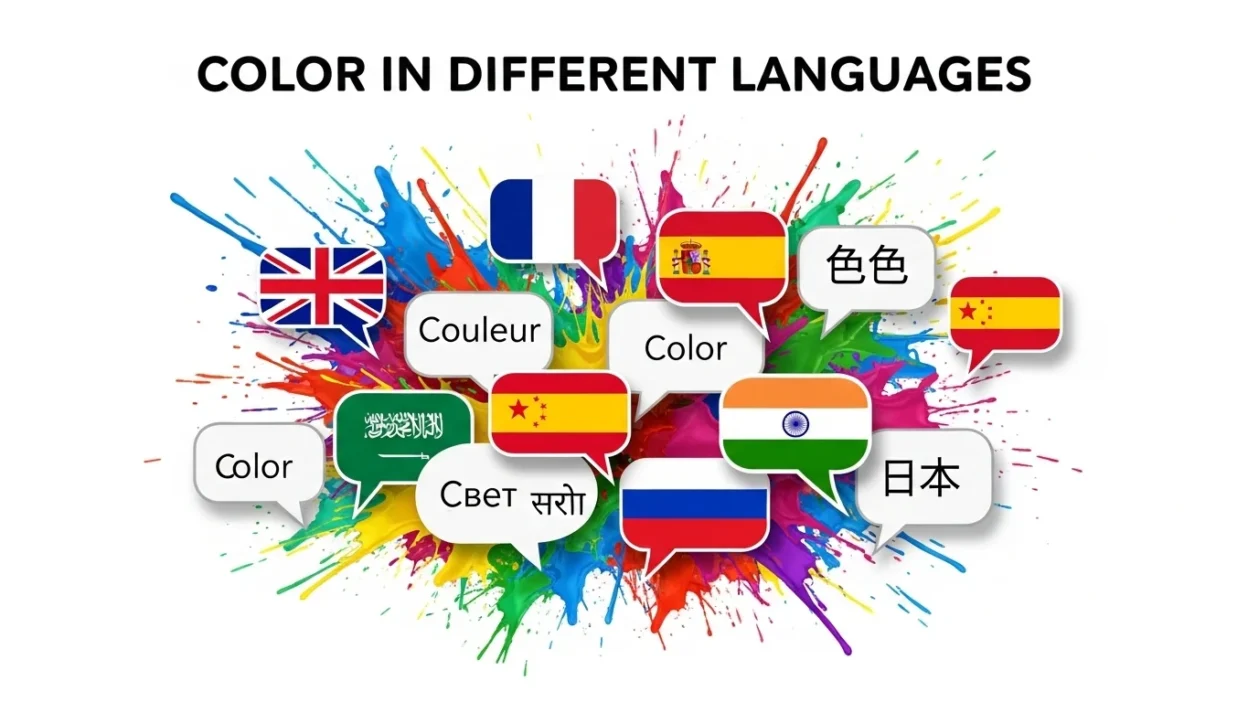
Colors are a universal part of life. From the blue sky to a green forest, we experience color every day but did you know that the word for “color” is different in almost every language? Learning color in different languages is not only fun but also useful for travel, cultural understanding, and language learning.
In this article, you will discover how to say color in different languages, explore color translations, and see color in all languages through practical examples.
Whether you are a language enthusiast, a traveler, or simply curious, this guide gives you an easy to read, fully organized list of color around the world.
Color in 70 Different Languages
| Language | Pronunciation | Example |
| Arabic | al-lawn | هذا اللون أحمر. |
| Armenian | dzaghg | Ays dzaghy k’aghak’ e. |
| Azerbaijani | rəng | Bu rəng yaşıl. |
| Basque | kolore | Kolore hau hori da. |
| Belarusian | koler | Гэты колер сіні. |
| Bengali | rong | Ei rong lal. |
| Bosnian | boja | Ova boja je zelena. |
| Bulgarian | tsvyat | Този цвят е червен. |
| Catalan | color | Aquest color és blau. |
| Chinese (Mandarin) | yánsè | 這個顏色是紅色。 |
| Croatian | boja | Ova boja je plava. |
| Czech | barva | Tato barva je zelená. |
| Danish | farve | Denne farve er gul. |
| Dutch | kleur | Deze kleur is rood. |
| Estonian | värv | See värv on sinine. |
| Filipino | kulay | Ang kulay na ito ay pula. |
| Finnish | väri | Tämä väri on vihreä. |
| French | couleur | Cette couleur est bleue. |
| Galician | cor | Esta cor é vermella. |
| Georgian | tskhra | Es tskhra ts’viti. |
| German | Farbe | Diese Farbe ist gelb. |
| Greek | xroma | Αυτό το χρώμα είναι κόκκινο. |
| Gujarati | rang | Aa rang laal chhe. |
| Haitian Creole | koulè | Koulè sa a se ble. |
| Hausa | launi | Wannan launi ja ne. |
| Hebrew | tseva | הצבע הזה הוא ירוק. |
| Hindi | rang | Ye rang laal hai. |
| Hungarian | szín | Ez a szín kék. |
| Icelandic | litur | Þessi litur er gulur. |
| Igbo | agba | Agba a bụ akwụkwọ ndụ. |
| Indonesian | warna | Warna ini merah. |
| Irish | dath | Tá an dath seo gorm. |
| Italian | colore | Questo colore è rosso. |
| Japanese | iro | この色は赤です。 |
| Javanese | warna | Werna iki ijo. |
| Kannada | baNaNa | ಈ ಬಣ್ಣ ಕೆಂಪಾಗಿದೆ. |
| Kazakh | tüs | Бұл түс көк. |
| Khmer | raŋ | ពណ៌នេះជាក្រហម។ |
| Korean | saek | 이 색은 파랑입니다. |
| Kurdish (Kurmanji) | reng | Ev reng sor e. |
| Kyrgyz | tüs | Бул түс кызыл. |
| Lao | sʉ̄a | ສີນີ້ແມ່ນແດງ. |
| Latvian | krāsa | Šī krāsa ir zila. |
| Lithuanian | spalva | Ši spalva žalia. |
| Luxembourgish | Faarf | Dës Faarf ass rout. |
| Macedonian | boja | Оваа боја е сина. |
| Malagasy | loko | Ity loko ity dia mena. |
| Malay | warna | Warna ini biru. |
| Maltese | kulur | Dan il-kulur huwa aħmar. |
| Maori | tae | Ko tēnei tae he kākāriki. |
| Marathi | rang | हा रंग लाल आहे. |
| Mongolian | öngө | Энэ өнгө цэнхэр. |
| Nepali | rang | यो रंग रातो छ। |
| Norwegian | farge | Denne fargen er blå. |
| Pashto | rang | دا رنګ سور دی. |
| Persian | rang | این رنگ سبز است. |
| Polish | kolor | Ten kolor jest czerwony. |
| Portuguese | cor | Esta cor é azul. |
| Punjabi | rang | ਇਹ ਰੰਗ ਲਾਲ ਹੈ। |
| Romanian | culoare | Această culoare este galbenă. |
| Russian | tsvet | Этот цвет красный. |
| Serbian | boja | Ova boja je crvena. |
| Sinhala | rangaya | මේ වර්ණය රතුයි. |
| Slovak | farba | Táto farba je zelená. |
| Slovenian | barva | Ta barva je modra. |
| Somali | midab | Midabkani waa casaan. |
| Spanish | color | Este color es rojo. |
| Sundanese | warna | Ieu warna héjo. |
| Swahili | rangi | Rangi hii ni nyekundu. |
| Swedish | färg | Denna färg är blå. |
| Tajik | rang | Ин ранг сабз аст. |
| Tamil | vaNNam | இந்த வண்ணம் சிவப்பு. |
| Telugu | raNg | ఈ రంగు ఎరుపు. |
| Thai | s̄ī | สีนี้คือแดง |
| Turkish | renk | Bu renk kırmızı. |
| Ukrainian | kolir | Цей колір синій. |
| Urdu | rang | یہ رنگ لال ہے۔ |
| Uzbek | rang | Bu rang ko‘k. |
| Vietnamese | màu sắc | Màu này là đỏ. |
| Welsh | lliw | Mae’r lliw hwn yn werdd. |
| Xhosa | umbala | Lo mbala uluhlaza. |
| Yiddish | farb | דער פערב איז רויט. |
| Yoruba | awọ | Awọ yi jẹ pupa. |
| Zulu | umbala | Lo mbala umnyama. |
Why Learning Color in Different Languages is Useful
Understanding color translations can help in travel, shopping, and even art. When you know how to say color in different languages, you can describe things accurately, ask for items in stores, or talk about fashion and design while abroad. It also opens doors to cultural nuances, as color symbolism can vary around the world.
Tips to Remember Color Vocabulary in Any Language
- Associate colors with objects: Link the word with something visual in your daily life.
- Use flashcards: Writing the color word and example sentence helps retention.
- Practice daily: Try saying a color in a new language every day.
- Listen and repeat: Audio resources or native speakers can improve pronunciation.
Conclusion
Learning color in different languages is a fun, practical, and rewarding way to connect with people worldwide.
By exploring color around the world, you not only expand your vocabulary but also gain insights into diverse cultures.
Use this guide to start practicing, and soon saying colors in 70 different languages will feel natural.
FAQs About Color in Different Languages
1. How do I say “color” in multiple languages?
You can refer to the table above—it shows 70 languages with pronunciation and example sentences.
2. Why is it important to learn color translations?
Knowing colors helps in travel, shopping, design, and cultural understanding.
3. Can learning color words improve language skills?
Yes, it’s a simple way to memorize vocabulary, practice pronunciation, and gain confidence in speaking.
4. Are there cultural differences in color meanings?
Yes, red can symbolize luck in China, while in some Western countries it may mean danger.
5. What’s the easiest way to remember colors in different languages?
Use visual associations, repetition, and example sentences like the ones in this guide.