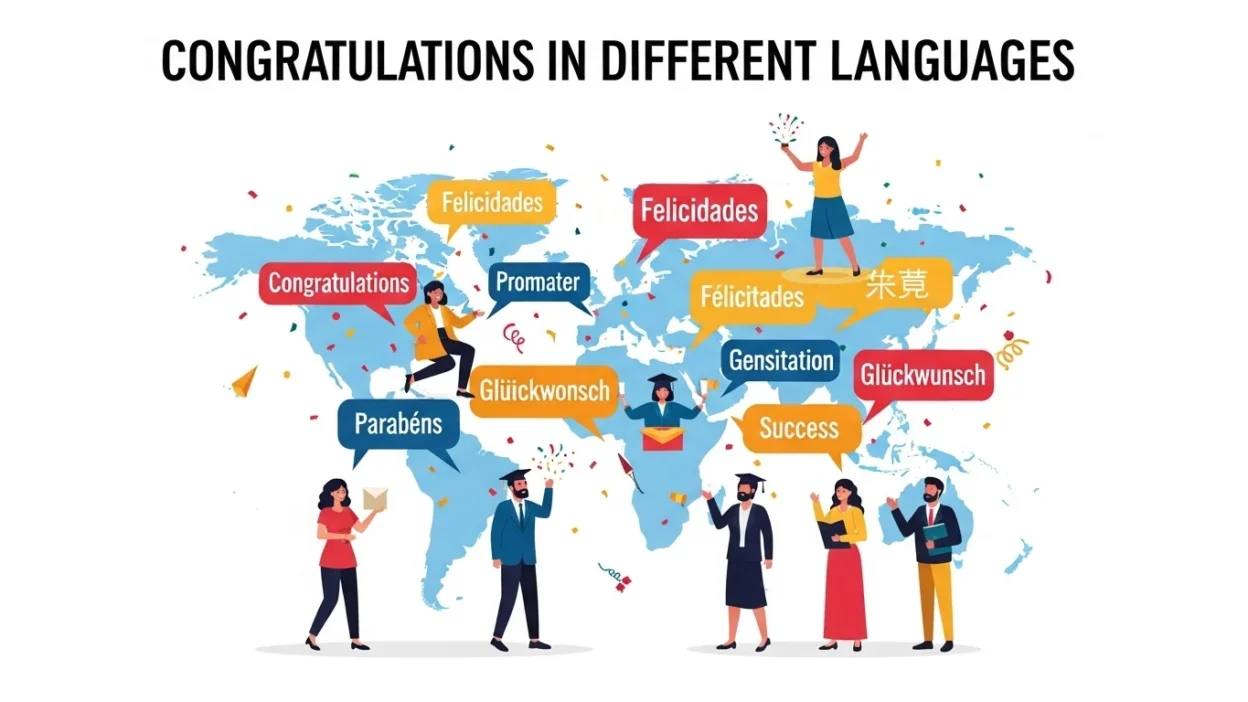
Celebrating achievements is a universal human experience. Whether someone graduates, gets a new job, wins a competition, or celebrates a wedding, saying congratulations is a simple way to show happiness for their success. But did you know that people express this word differently across cultures?
In this guide, you’ll discover congratulations in different languages from around the world. Learning these phrases can help you connect with international friends, improve cultural awareness, and even make your messages more meaningful when celebrating global events.
If you’ve ever wondered how to say congratulations in different languages, this article provides clear translations, pronunciations, and real-life examples. The table below shows congratulations translations in all languages, helping you see how people celebrate success around the world.
Congratulations in Different Languages (70 Languages Table)
| Language | Pronunciation | Example |
| English | kuhn-grach-uh-lay-shunz | Congratulations on your promotion! (Meaning: I’m happy about your promotion.) |
| Spanish | feh-lee-see-dah-des | ¡Felicidades por tu graduación! (Meaning: Congratulations on your graduation.) |
| French | feh-lee-see-tah-syon | Félicitations pour ton succès. (Meaning: Congratulations on your success.) |
| German | gluk-vunsh | Glückwunsch zum neuen Job! (Meaning: Congratulations on the new job.) |
| Italian | kon-gra-too-lah-tsee-oh-nee | Congratulazioni per il tuo matrimonio. (Meaning: Congratulations on your marriage.) |
| Portuguese | kon-grah-too-lah-soyns | Parabéns pela vitória! (Meaning: Congratulations on the victory.) |
| Dutch | feh-lee-see-tah-tee | Gefeliciteerd met je examen. (Meaning: Congratulations on your exam.) |
| Swedish | gruh-tis | Grattis till din prestation! (Meaning: Congratulations on your achievement.) |
| Danish | grah-tees | Tillykke med fødselsdagen! (Meaning: Congratulations on your birthday.) |
| Norwegian | grah-tee-loo-kah | Gratulerer med jobben! (Meaning: Congratulations on the job.) |
| Finnish | on-nee-te-loot | Onnittelut valmistumisesta! (Meaning: Congratulations on graduating.) |
| Polish | grat-soo-la-tsyeh | Gratulacje z okazji awansu! (Meaning: Congratulations on your promotion.) |
| Czech | grah-too-loo-yee | Gratuluji k úspěchu. (Meaning: Congratulations on the success.) |
| Slovak | gra-too-loo-yem | Gratulujem k víťazstvu. (Meaning: Congratulations on the victory.) |
| Hungarian | gra-too-lah-lok | Gratulálok a sikerhez! (Meaning: Congratulations on the success.) |
| Romanian | feh-lee-chee-tar | Felicitări pentru premiu! (Meaning: Congratulations on the award.) |
| Greek | sin-hah-ree-tee-ree-ah | Συγχαρητήρια για την επιτυχία! (Meaning: Congratulations on the achievement.) |
| Turkish | teh-breeck-ler | Tebrikler sınavı geçtin! (Meaning: Congratulations you passed the exam.) |
| Russian | pahz-drahv-lyah-yu | Поздравляю с победой! (Meaning: Congratulations on the victory.) |
| Ukrainian | po-zdrahv-lyah-yu | Вітаю з успіхом! (Meaning: Congratulations on the success.) |
| Bulgarian | chest-hee-to | Честито за новата работа! (Meaning: Congratulations on the new job.) |
| Serbian | chest-ee-tah-mo | Čestitamo na venčanju! (Meaning: Congratulations on the wedding.) |
| Croatian | chest-ee-tah-mo | Čestitam na uspjehu! (Meaning: Congratulations on the success.) |
| Slovenian | cheh-stee-tahm | Čestitam za zmago! (Meaning: Congratulations on the win.) |
| Lithuanian | sveh-ee-kee-nah | Sveikinimai baigus studijas! (Meaning: Congratulations on finishing studies.) |
| Latvian | sveh-ee-tsee-noo | Apsveicu ar panākumiem! (Meaning: Congratulations on your success.) |
| Estonian | on-nee-tleyn | Õnnitleme võidu puhul! (Meaning: Congratulations on the victory.) |
| Arabic | mab-rook | مبروك على النجاح! (Meaning: Congratulations on the success.) |
| Hebrew | mazal tov | מזל טוב על החתונה! (Meaning: Congratulations on the wedding.) |
| Persian | tab-rik | تبریک برای موفقیت! (Meaning: Congratulations on the achievement.) |
| Hindi | buh-dha-ee | बधाई हो आपकी सफलता पर। (Meaning: Congratulations on your success.) |
| Urdu | mubarak ho | آپ کی کامیابی پر مبارک ہو۔ (Meaning: Congratulations on your success.) |
| Bengali | ovinon-don | অভিনন্দন আপনার জয়ের জন্য। (Meaning: Congratulations on your victory.) |
| Punjabi | vadha-ee-an | ਤੁਹਾਡੀ ਕਾਮਯਾਬੀ ਤੇ ਵਧਾਈਆਂ। (Meaning: Congratulations on your success.) |
| Gujarati | abhinandan | તમારી સફળતા માટે અભિનંદન. (Meaning: Congratulations on your success.) |
| Marathi | abhinandan | तुमच्या यशाबद्दल अभिनंदन. (Meaning: Congratulations on your success.) |
| Tamil | vahzh-thu-kal | உங்கள் வெற்றிக்கு வாழ்த்துகள். (Meaning: Congratulations on your victory.) |
| Telugu | shub-ha-kaank-sha-lu | మీ విజయానికి శుభాకాంక్షలు. (Meaning: Congratulations on your success.) |
| Kannada | abhinandane-galu | ನಿಮ್ಮ ಯಶಸ್ಸಿಗೆ ಅಭಿನಂದನೆಗಳು. (Meaning: Congratulations on your success.) |
| Malayalam | abhi-nan-da-nam | നിങ്ങളുടെ വിജയത്തിന് അഭിനന്ദനം. (Meaning: Congratulations on your success.) |
| Thai | yin-dee-duay | ยินดีด้วยกับความสำเร็จ! (Meaning: Congratulations on the success.) |
| Vietnamese | chook-mung | Chúc mừng bạn tốt nghiệp! (Meaning: Congratulations on graduating.) |
| Indonesian | se-la-mat | Selamat atas keberhasilanmu! (Meaning: Congratulations on your success.) |
| Malay | tah-nee-ah | Tahniah atas kemenangan! (Meaning: Congratulations on the victory.) |
| Filipino | kon-gra-too-la-shons | Congratulations sa bagong trabaho! (Meaning: Congratulations on the new job.) |
| Chinese (Mandarin) | gong-shee | 恭喜你成功了! (Meaning: Congratulations on your success.) |
| Japanese | oh-meh-deh-toh | おめでとうございます! (Meaning: Congratulations to you.) |
| Korean | chook-hae | 축하해요 성공했어요! (Meaning: Congratulations on your success.) |
| Mongolian | bayr khur-gye | Баяр хүргэе! (Meaning: Congratulations.) |
| Swahili | pon-ge-zee | Pongezi kwa ushindi! (Meaning: Congratulations on the victory.) |
| Zulu | halala | Halala ngomsebenzi omusha! (Meaning: Congratulations on the new job.) |
| Afrikaans | khuh-feh-lee-see-teer | Geluk met jou sukses! (Meaning: Congratulations on your success.) |
| Somali | ham-baal-yo | Hambalyo guushaada! (Meaning: Congratulations on your success.) |
| Amharic | en-ku-an-des | እንኳን ደስ አለዎት! (Meaning: Congratulations.) |
| Hausa | barka | Barka da nasara! (Meaning: Congratulations on the victory.) |
| Yoruba | ku-yo | Ku yọ lori aṣeyọri! (Meaning: Congratulations on the success.) |
| Igbo | ke-le-chee | Kelechi maka mmeri! (Meaning: Congratulations on the win.) |
| Maori | mihihanga | Mihihanga mō tō angitu! (Meaning: Congratulations on your success.) |
| Hawaiian | hoomaikai | Hoʻomaikaʻi i kou lanakila! (Meaning: Congratulations on your victory.) |
| Samoan | fa-a-lo-fa-lo | Fa’afetai i lau manumalo! (Meaning: Congratulations on your win.) |
| Fijian | veeh-nah-kah | Vinaka na nomu qaqa! (Meaning: Congratulations on your victory.) |
| Icelandic | til-ham-ing-yu | Til hamingju með árangurinn! (Meaning: Congratulations on the achievement.) |
| Irish | guh-deh-hor-cha | Comhghairdeas ar do rath! (Meaning: Congratulations on your success.) |
| Welsh | long-gee-var-chee-ad | Llongyfarchiadau ar eich llwyddiant! (Meaning: Congratulations on your success.) |
| Scottish Gaelic | me-hur-kee | Meal do naidheachd! (Meaning: Congratulations.) |
| Basque | zor-ee-on-ak | Zorionak garaipenagatik! (Meaning: Congratulations on the victory.) |
| Catalan | kun-gra-too-lah-see-oh | Felicitats pel teu èxit! (Meaning: Congratulations on your success.) |
| Galician | feh-lee-see-dah-des | Parabéns polo éxito! (Meaning: Congratulations on the success.) |
| Esperanto | feh-lee-chee-choy | Gratulon pro via sukceso! (Meaning: Congratulations on your success.) |
| Latin | kon-gra-too-lor | Congratulor tibi! (Meaning: I congratulate you.) |
Why Learning Congratulations in All Languages Is Useful
Knowing how to say congratulations in different languages helps in many real-life situations. It allows you to celebrate achievements with international friends, colleagues, and communities.
For example:
- Sending a congratulatory message to a global colleague
- Writing multilingual greeting cards
- Communicating in international workplaces
- Learning cultural expressions during language study
Understanding congratulations around the world also improves cultural respect and communication.
Tips for Using Congratulations Translations Correctly
When using congratulations translations, keep these tips in mind:
1. Match the occasion
Some languages use different phrases for birthdays, weddings, or achievements.
2. Use proper pronunciation
Pronouncing the phrase correctly makes your message more authentic.
3. Consider formality
Certain languages have formal and informal forms depending on who you’re speaking to.
Conclusion
Learning congratulations in different languages is a simple but powerful way to connect with people worldwide.
Whether you are celebrating a graduation, promotion, wedding, or personal success, knowing these expressions helps you share joy across cultures.
With these 70 congratulations translations, you now know how people celebrate achievements in many languages around the world.
FAQs
1. How do you say congratulations in different languages?
You can say congratulations in different languages such as Felicidades (Spanish), Félicitations (French), Glückwunsch (German), Congratulazioni (Italian), and 恭喜 (Chinese).
2. What is the most common way to say congratulations worldwide?
The English word “Congratulations” is widely understood internationally, but many cultures prefer their native translations.
3. Why do languages have different words for congratulations?
Languages reflect culture and history. Each language developed its own expressions for celebrating achievements and good news.
4. How can I remember congratulations in multiple languages?
You can remember them by practicing pronunciation, associating phrases with countries, and using them in real conversations.
5. Is “congratulations” used the same way in every language?
Not always. Some languages use different phrases depending on the event, such as weddings, promotions, or birthdays.

David William is a language enthusiast, researcher, and content creator at Lingoveb. With a deep passion for words, meanings, and global communication, he focuses on making language simple, clear, and accessible for readers around the world.