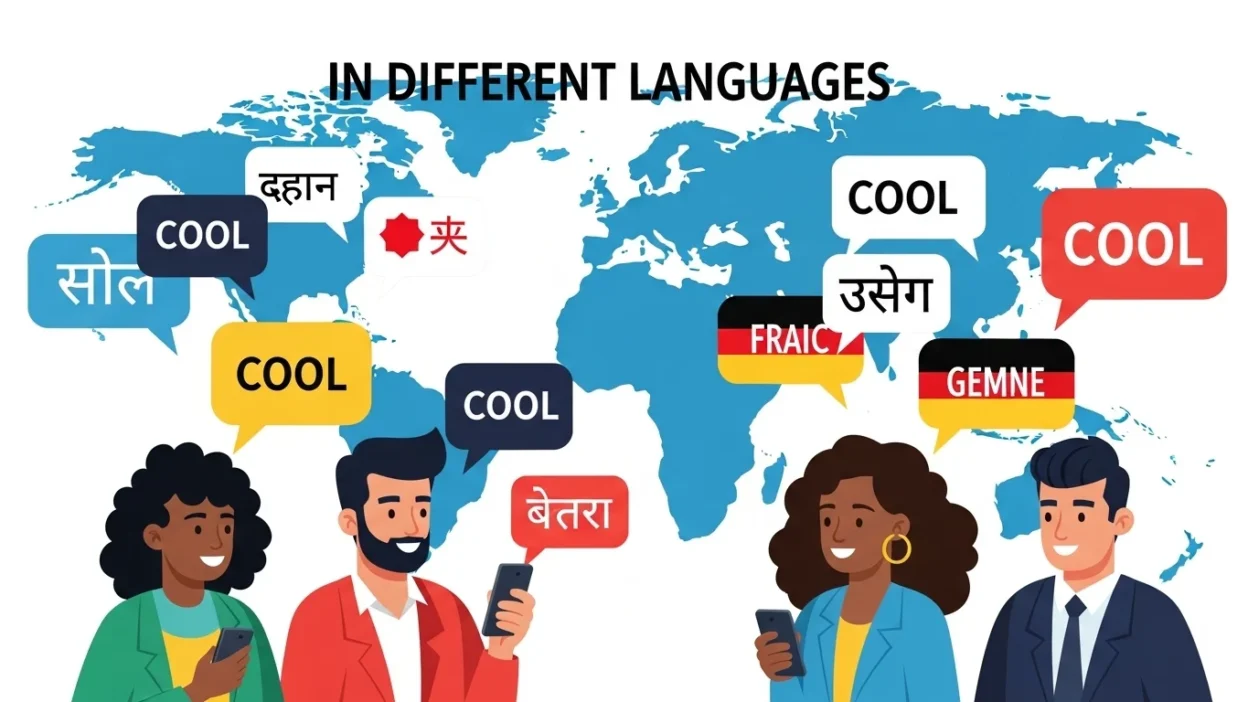
Have you ever wanted to sound trendy and confident in another language? Learning how to say cool in different languages is a fun way to connect with people, expand your cultural knowledge, and impress friends while traveling.
From casual slang to formal expressions, every language has its own unique way of expressing what’s “cool.”
In this article, you’ll explore cool in all languages, discover practical examples, and see how this popular term is used around the world.
Whether you’re a language enthusiast, a traveler, or just curious, this guide gives you a full list of cool translations that are easy to remember and use in everyday conversation.
70 Ways to Say “Cool” in Different Languages
Here’s a comprehensive table of how to say cool in different languages, complete with pronunciation and example sentences. You can use this guide to sound fluent and culturally aware anywhere you go.
| Language | Pronunciation | Example |
| Spanish | guay | Ese coche es guay. That car is cool. |
| French | cool | Ce film est cool. This movie is cool. |
| German | cool | Dein Outfit ist echt cool. Your outfit is really cool. |
| Italian | fico | La festa è davvero fico. The party is really cool. |
| Portuguese | legal | Esse lugar é muito legal. This place is very cool. |
| Dutch | gaaf | Dat kunstwerk is gaaf. That artwork is cool. |
| Russian | классно (klassno) | Твоя идея классно. Your idea is cool. |
| Japanese | かっこいい (kakkoii) | 彼の車はかっこいい。 His car is cool. |
| Chinese (Mandarin) | 酷 (kù) | 你的鞋子很酷。 Your shoes are cool. |
| Korean | 멋지다 (meotjida) | 너의 스타일 멋지다. Your style is cool. |
| Arabic | رائع (ra’i‘) | هذا الفيلم رائع. This movie is wonderful/cool. |
| Hindi | शानदार (shandaar) | यह पार्टी शानदार है। This party is cool. |
| Turkish | havalı | Bu ceket çok havalı. This jacket is very cool. |
| Greek | κουλ (koul) | Το αυτοκίνητο είναι κουλ. The car is cool. |
| Polish | fajny | Twój pies jest fajny. Your dog is cool. |
| Swedish | cool | Din idé är cool. Your idea is cool. |
| Norwegian | kul | Den filmen var kul. That movie was cool. |
| Danish | sej | Din tegning er sej. Your drawing is cool. |
| Finnish | siisti | Tämä kappale on siisti. This song is cool. |
| Hungarian | menő | Ez a ruha menő. This dress is cool. |
| Czech | super | Ten film je super. That movie is cool. |
| Slovak | super | Tvoje auto je super. Your car is cool. |
| Romanian | tare | Filmul a fost tare. The movie was cool. |
| Bulgarian | яко (yako) | Тази музика е яко. This music is cool. |
| Serbian | кул (kul) | Твој стил је кул. Your style is cool. |
| Croatian | kul | Ovaj restoran je kul. This restaurant is cool. |
| Bosnian | super | Ovaj dan je super. This day is cool. |
| Slovenian | kul | Tvoja ideja je kul. Your idea is cool. |
| Lithuanian | šaunu | Šis parkas yra šaunu. This park is cool. |
| Latvian | foršs | Tavs telefons ir foršs. Your phone is cool. |
| Estonian | lahe | See film on lahe. This movie is cool. |
| Icelandic | flott | Bílinn hans er flottur. His car is cool. |
| Maltese | kiesaħ | Din il-festa hija kiesaħ. This party is cool. |
| Thai | เจ๋ง (jeng) | รองเท้าของคุณเจ๋งมาก. Your shoes are cool. |
| Vietnamese | ngầu | Chiếc xe của anh thật ngầu. His car is cool. |
| Indonesian | keren | Pesta itu sangat keren. The party is cool. |
| Malay | hebat | Kereta itu hebat. That car is cool. |
| Filipino | astig | Ang bagong laro ay astig. The new game is cool. |
| Swahili | poa | Gari lako ni poa. Your car is cool. |
| Zulu | kuhle | Umculo wakho muhle. Your music is cool. |
| Xhosa | coo | Ingubo yakho icoo. Your coat is cool. |
| Amharic | ጎበዝ (gobez) | ዚህ መጽሔት ጎበዝ ነው. This magazine is cool. |
| Hebrew | מגניב (magniv) | הסרט הזה מגניב. This movie is cool. |
| Urdu | زبردست (zabardast) | یہ پارٹی زبردست ہے۔ This party is cool. |
| Bengali | দারুণ (darun) | তোমার জুতো দারুণ। Your shoes are cool. |
| Tamil | அருமை (aruma) | இந்த கார் அருமை. This car is cool. |
| Telugu | చల్లగా (challaga) | ఈ ఫిల్మ్ చల్లగా ఉంది. This film is cool. |
| Kannada | ಶ್ಯಾಂಡ್ (shyand) | ಈ ಹಾಡು ಶ್ಯಾಂಡ್. This song is cool. |
| Malayalam | കൂൾ (kool) | നിന്റെ ഷൂസ് കൂൾ ആണ്. Your shoes are cool. |
| Punjabi | ਵਧੀਆ (vadia) | ਇਹ ਗਾਣਾ ਵਧੀਆ ਹੈ। This song is cool. |
| Sinhala | කුල් (kul) | ඔයාගේ රෙදි කුල්. Your dress is cool. |
| Georgian | მაგარი (magari) | შენი მანქანა მაგარია. Your car is cool. |
| Kazakh | керемет (keremet) | Бұл кітап керемет. This book is cool. |
| Uzbek | zo’r | Bu film zo’r. This movie is cool. |
| Kyrgyz | сонун (sonun) | Бул ойнотуу сонун. This game is cool. |
| Mongolian | гоё (goyo) | Таны хувцас гоё байна. Your clothes are cool. |
| Nepali | धमाकेदार (dhamakedar) | यो पार्टी धमाकेदार छ। This party is cool. |
| Pashto | خوندور (khwandor) | دا فلم خوندور دی. This movie is cool. |
| Kurdish | zût | Ew kitêb zût e. This book is cool. |
| Armenian | լավ (lav) | Այս ֆիլմը լավ է. This movie is cool. |
| Azerbaijani | super | Bu maşın superdir. This car is cool. |
| Haitian Creole | fre | Mizik sa a fre. This music is cool. |
| Maori | pai | Taku waka pai. My car is cool. |
| Samoan | lelei | O le taavale lelei. The car is cool. |
| Tongan | lelei | Kuo lelei e ki’i fale. The small house is cool. |
How to Use “Cool” in Conversations Around the World
Learning how to say cool in different languages isn’t just about words—it’s about tone, context, and culture. In casual conversations, slang often changes faster than textbooks, so pay attention to local nuances. Using the right word naturally can make you sound more authentic and friendly.
Tips for Remembering Cool Translations
- Start with languages you’re most interested in.
- Repeat each phrase aloud to remember pronunciation.
- Use example sentences in everyday life or on social media.
- Pair the word with gestures, like thumbs-up, to reinforce meaning.
Conclusion
Now you can confidently say cool in 70 different languages, from Spanish guay to Japanese かっこいい (kakkoii). Whether you’re traveling, chatting with international friends, or exploring global pop culture, knowing these words makes you culturally savvy and socially versatile. Keep practicing, and you’ll soon be fluent in expressing how awesome things are around the world.
FAQs About “Cool in Different Languages”
1. What is the most common way to say “cool” globally?
The English word “cool” is widely recognized, but local slang like guay, kakkoii, or legal often feels more natural to native speakers.
2. How do I know which “cool” word to use?
Use context: casual settings favor slang, while formal situations may use words meaning “great” or “wonderful.”
3. Can “cool” have different meanings in other languages?
Yes, some languages use words that literally mean “stylish,” “awesome,” or “fun” instead of “cool.”
4. How can I remember all 70 translations?
Focus on 5–10 languages at a time, practice with real sentences, and repeat aloud to reinforce memory.
5. Is pronunciation important for being understood?
Absolutely. Correct pronunciation ensures locals understand you and makes your conversation sound natural.

Marak Robort is a content writer and researcher with a strong interest in language, meanings, and digital information. His work focuses on presenting clear, easy-to-understand explanations that help readers quickly grasp complex ideas.