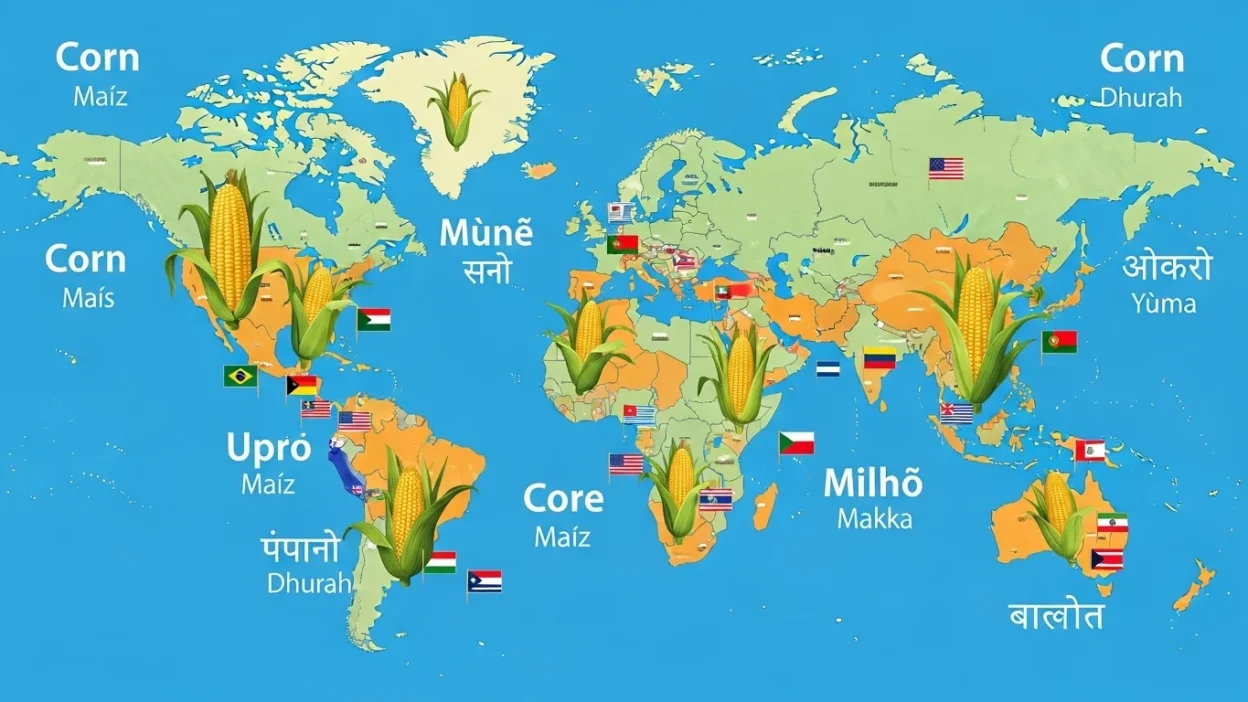
Corn is one of the most widely recognized grains globally, but did you know the word “corn” changes in nearly every language? Whether you’re traveling, learning a new language, or exploring international cuisine, understanding corn in different languages is both fun and practical.
This guide provides corn translations, pronunciations, and real-life example sentences in 70 languages, helping you communicate with confidence around the world.
Corn in 70 Different Languages
| Language | Pronunciation | Example |
| Spanish | maíz | Me gusta comer maíz en el desayuno. I like to eat corn for breakfast. |
| French | maïs | Le maïs est délicieux grillé. Corn is delicious when grilled. |
| German | Mais | Ich kaufe frischen Mais auf dem Markt. I buy fresh corn at the market. |
| Italian | mais | Il mais è usato in molte ricette. Corn is used in many recipes. |
| Portuguese | milho | O milho é cultivado no campo. Corn is grown in the field. |
| Dutch | maïs | Maïs groeit goed in de zomer. Corn grows well in the summer. |
| Russian | кукуруза | Я люблю есть кукурузу на гриле. I love to eat grilled corn. |
| Chinese (Mandarin) | 玉米 (yùmǐ) | 我喜欢吃玉米。 I like to eat corn. |
| Japanese | トウモロコシ (tōmorokoshi) | 夏にトウモロコシを食べます。 I eat corn in the summer. |
| Korean | 옥수수 (oksusu) | 옥수수는 건강에 좋습니다。 Corn is good for health. |
| Arabic | ذرة (dhurah) | أحب تناول الذرة المسلوقة. I like to eat boiled corn. |
| Hindi | मकई (makai) | मुझे मकई की रोटी पसंद है। I like corn bread. |
| Bengali | ভুট্টা (bhutta) | ভুট্টা খুব মিষ্টি। Corn is very sweet. |
| Punjabi | ਮੱਕੀ (makki) | ਮੱਕੀ ਦੀ ਰੋਟੀ ਬਹੁਤ ਵਧੀਆ ਹੈ। Cornbread is very good. |
| Tamil | மக்காச்சோளம் (makkāccōḷam) | மக்காச்சோளம் சாப்பிட விரும்புகிறேன். I want to eat corn. |
| Telugu | మొక్కజొన్న (mokkajonna) | మొక్కజొన్న తినటం నాకు ఇష్టం. I like to eat corn. |
| Marathi | मकई (makai) | मकई भाजी स्वादिष्ट आहे. Corn vegetable is delicious. |
| Gujarati | મકાઈ (makāī) | મકાઈ રસોઈમાં ઉપયોગ થાય છે. Corn is used in cooking. |
| Urdu | مکئی (makai) | میں مکئی کھانا پسند کرتا ہوں۔ I like to eat corn. |
| Thai | ข้าวโพด (khâaw phôot) | ฉันชอบกินข้าวโพด. I like to eat corn. |
| Vietnamese | ngô | Tôi thích ăn ngô nướng. I like to eat grilled corn. |
| Turkish | mısır | Mısır çok lezzetli. Corn is very tasty. |
| Greek | καλαμπόκι (kalampóki) | Το καλαμπόκι είναι γλυκό. Corn is sweet. |
| Polish | kukurydza | Lubię jeść kukurydzę. I like to eat corn. |
| Czech | kukuřice | Kukuřice je zdravá. Corn is healthy. |
| Hungarian | kukorica | A kukorica finom. Corn is delicious. |
| Romanian | porumb | Porumbul este gustos. Corn is tasty. |
| Bulgarian | царевица (tsarevitsa) | Царевицата е сладка. Corn is sweet. |
| Serbian | кукурузa (kukuruz) | Волим јести кукуруз. I like to eat corn. |
| Croatian | kukuruz | Kukuruz je dobar za zdravlje. Corn is good for health. |
| Slovak | kukurica | Kukurica rastie na poli. Corn grows in the field. |
| Slovene | koruza | Koruza je okusna. Corn is tasty. |
| Norwegian | mais | Jeg liker å spise mais. I like to eat corn. |
| Swedish | majs | Majs är nyttigt. Corn is healthy. |
| Danish | majs | Majs smager godt. Corn tastes good. |
| Finnish | maissi | Maissi on herkullista. Corn is delicious. |
| Icelandic | maís | Maís er bragðgott. Corn is tasty. |
| Maltese | qamħ tal-friefet | Nixtieq niekol il-qamħ tal-friefet. I want to eat corn. |
| Swahili | mahindi | Napenda kula mahindi. I like to eat corn. |
| Zulu | ukhukhamba | Ngithanda ukudla ukhukhamba. I like to eat corn. |
| Xhosa | ummbila | Ndiyathanda ukutya ummbila. I like to eat corn. |
| Somali | galley | Waan jeclahay inaan cuno galley. I like to eat corn. |
| Hausa | masara | Ina son cin masara. I like to eat corn. |
| Yoruba | agbado | Mo fẹ́ jẹ agbado. I want to eat corn. |
| Igbo | ọka | A hụrụ m ọka n’anya. I love corn. |
| Filipino | mais | Gusto kong kumain ng mais. I want to eat corn. |
| Malay | jagung | Saya suka makan jagung. I like to eat corn. |
| Indonesian | jagung | Jagung manis sangat enak. Sweet corn is very delicious. |
| Burmese | ပဲဆတ် (peh sat) | ငါပဲဆတ်စားချင်တယ်။ I want to eat corn. |
| Khmer | ពោត (pôt) | ខ្ញុំចូលចិត្តបរិភោគពោត. I like to eat corn. |
| Lao | ເຂົ້າໜ້າຫນຽວ (khao nah niao) | ຂ້ອຍມັກກິນເຂົ້ານ້ອຍ. I like to eat corn. |
| Nepali | मकै (makai) | म मकै खान मन पराउँछु। I like to eat corn. |
| Sinhala | කුකුළ (kukula) | මම කුකුළ කන්න කැමතියි. I like to eat corn. |
| Mongolian | эрдэнэ шиш (erdene shish) | Би эрдэнэ шиш идэх дуртай. I like to eat corn. |
| Georgian | სიმინდი (simindi) | მე მიყვარს სიმინდი. I love corn. |
| Armenian | եգիպտացորեն (yegiptats’oren) | Ես սիրում եմ եգիպտացորենը: I love corn. |
| Azerbaijani | qarğıdalı | Mən qarğıdalı yeməyi sevirəm. I like to eat corn. |
| Kazakh | жүгері (jügeri) | Мен жүгеріні жақсы көремін. I like corn. |
| Uzbek | makkajo’xori | Men makkajo’xorini yoqtiraman. I like corn. |
| Kyrgyz | жүгөрү (jügörü) | Мен жүгөрү жегим келет. I want to eat corn. |
| Tajik | ҷуворимакка (juvorimakka) | Ман ҷуворимакка мехӯрам. I eat corn. |
| Pashto | جوار (jawar) | زه د جوار خوړل خوښوم. I like to eat corn. |
| Farsi | ذرت (zorrat) | من ذرت دوست دارم. I like corn. |
How to Say Corn in Different Languages
Learning corn in all languages can improve your travel conversations, cooking instructions, and cultural knowledge.
From Spanish maíz to Japanese トウモロコシ, every language offers a unique perspective on this staple food. Use these corn translations to connect with people worldwide and explore international cuisines confidently.
Fun Facts About Corn Around the World
- Corn is a staple in over 50 countries.
- It has over 10,000 varieties globally.
- Corn is not only food but also used in biofuel and livestock feed.
- Understanding corn in different languages can help in farming, culinary, and grocery contexts internationally.
Conclusion
Exploring corn in different languages is more than memorizing words; it’s a gateway to understanding global culture and cuisine.
Whether you’re learning a new language, traveling, or cooking international dishes, these translations and examples make corn around the world accessible and fun.
FAQs
1. How do you say corn in Japanese?
Corn in Japanese is トウモロコシ (tōmorokoshi).
2. What is corn in Spanish?
In Spanish, corn is called maíz.
3. Are there different words for corn in European languages?
Yes, for example, German is Mais, French is maïs, and Italian is mais.
4. How do I learn corn in all languages easily?
Use pronunciation guides and example sentences to remember the word in context.
5. Why is it useful to know corn translations?
It helps in travel, cooking, grocery shopping, and cultural understanding worldwide.

David William is a language enthusiast, researcher, and content creator at Lingoveb. With a deep passion for words, meanings, and global communication, he focuses on making language simple, clear, and accessible for readers around the world.