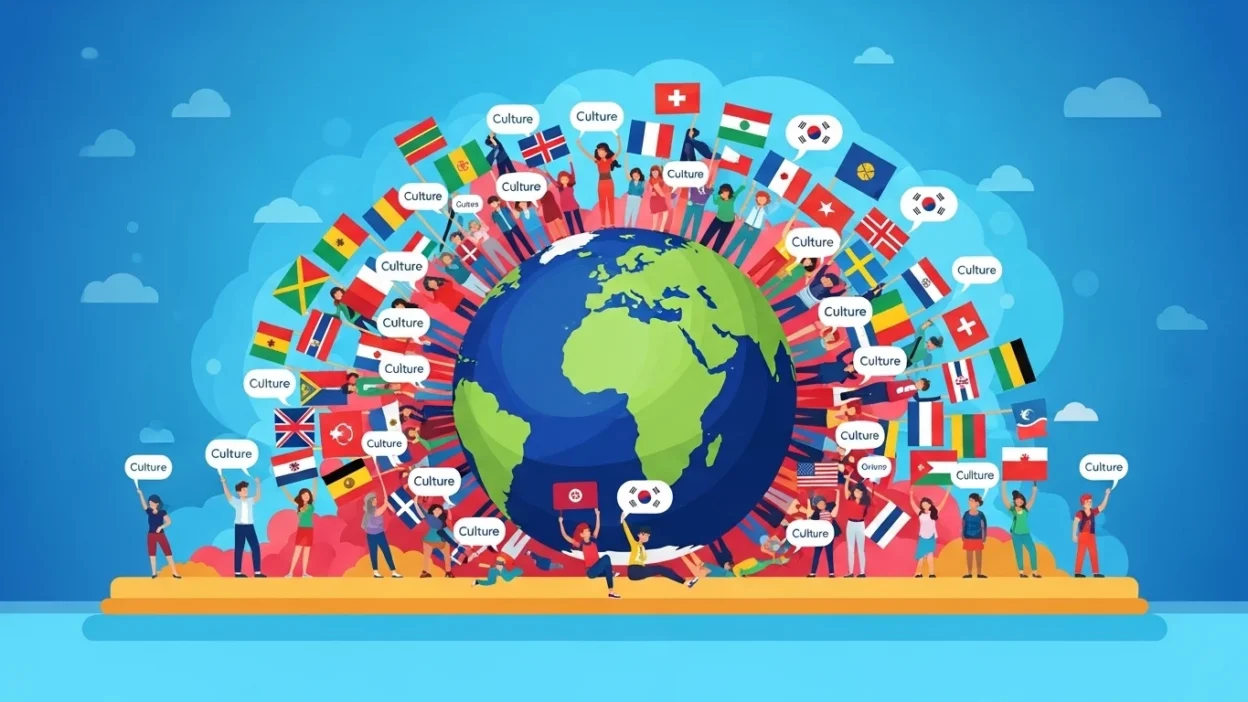
Understanding the concept of culture is essential in today’s globalized world. Learning how to say culture in different languages not only broadens your linguistic skills but also deepens your appreciation for the traditions, values, and lifestyles of people worldwide.
Whether you are traveling, studying, or just curious about global diversity, knowing culture translations can enrich your experience and help you connect with others on a deeper level.
In this article, you will find culture in all languages, from the most widely spoken to unique regional tongues, along with pronunciation and real-life examples. This guide will serve as your complete reference for how to say culture in different languages and explore culture around the world.
70 Languages: “Culture” Translations, Pronunciation, and Examples
| Language | Pronunciation | Example |
| Arabic | Thaqāfah | الثقافة مهمة في مجتمعنا |
| Mandarin Chinese | Wénhuà | 我喜欢学习不同的文化 |
| Spanish | Cultura | La cultura española es rica y diversa |
| French | Culture | La culture française est célèbre |
| German | Kultur | Die deutsche Kultur hat eine lange Geschichte |
| Hindi | Sanskṛti | भारतीय संस्कृति बहुत समृद्ध है |
| Bengali | Saṃskriti | আমাদের সংস্কৃতি খুবই সমৃদ্ধ |
| Portuguese | Cultura | A cultura portuguesa é fascinante |
| Russian | Kultura | Русская культура известна во всём мире |
| Japanese | Bunka | 日本の文化は独特です |
| Punjabi | Sabhyachar | ਸਾਡੀ ਸਭਿਆਚਾਰ ਮਜ਼ਬੂਤ ਹੈ |
| Italian | Cultura | La cultura italiana è famosa |
| Korean | Munhwa | 한국 문화는 매우 흥미롭다 |
| Turkish | Kültür | Türk kültürü çok renkli |
| Vietnamese | Văn hóa | Văn hóa Việt Nam rất phong phú |
| Thai | Wattanatham | วัฒนธรรมไทยมีเอกลักษณ์ |
| Urdu | Saqafat | ہماری ثقافت بہت پرانی ہے |
| Persian | Farhang | فرهنگ ایرانی بسیار غنی است |
| Greek | Politismós | Ο ελληνικός πολιτισμός είναι παγκοσμίως γνωστός |
| Dutch | Cultuur | De Nederlandse cultuur is interessant |
| Polish | Kultura | Polska kultura ma głębokie korzenie |
| Romanian | Cultură | Cultura română este unică |
| Czech | Kultura | Česká kultura je fascinující |
| Swedish | Kultur | Svensk kultur är mångsidig |
| Hungarian | Kultúra | A magyar kultúra gazdag |
| Finnish | Kulttuuri | Suomalainen kulttuuri on ainutlaatuinen |
| Norwegian | Kultur | Norsk kultur er spesiell |
| Danish | Kultur | Dansk kultur har lange tradisjoner |
| Hebrew | Tarbut | התרבות הישראלית מעניינת |
| Malay | Budaya | Budaya Malaysia sangat beragam |
| Indonesian | Budaya | Budaya Indonesia unik dan beragam |
| Swahili | Utamaduni | Utamaduni wa Kenya ni wa kipekee |
| Filipino | Kultura | Ang kultura ng Pilipinas ay makulay |
| Nepali | Sanskriti | नेपाली संस्कृति समृद्ध छ |
| Sinhala | Saṁskṛtiya | ශ්රී ලංකාවේ සංස්කෘතිය අලංකාරයි |
| Tamil | Kalacharam | தமிழ் கலாச்சாரம் பெருமையானது |
| Telugu | Saṃskr̥ti | తెలుగు సంస్కృతి గొప్పది |
| Marathi | Sanskriti | मराठी संस्कृती समृद्ध आहे |
| Gujarati | Sanskriti | ગુજરાતી સંસ્કૃતિ ઘણી સુંદર છે |
| Kannada | Samskruti | ಕನ್ನಡ ಸಂಸ್ಕೃತಿ ಬಹಳ ಶ್ರೀಮಂತವಾಗಿದೆ |
| Malayalam | Samskaram | മലയാളം സംസ്കാരം സമ്പന്നമാണ് |
| Burmese | Thathana | မြန်မာ့ယဉ်ကျေးမှုသည် ထူးခြားသည် |
| Khmer | Săksa | វប្បធម៌ខ្មែរ គឺសំបូរ |
| Lao | Satsana | ວັດທະນະທຳລາວ ດີແລະມີເນື້ອໃນ |
| Mongolian | Soyol | Монгол соёл маш өвөрмөц |
| Tibetan | Chos | བོད་རིགས་ལ་དགོངས་སྐྱོང་ཡོད |
| Georgian | Kultura | ქართული კულტურა უნიკალურია |
| Armenian | K’ultura | Հայկական մշակույթը հարուստ է |
| Azerbaijani | Mədəniyyət | Azərbaycan mədəniyyəti zəngindir |
| Kazakh | Mädeniet | Қазақ мәдениеті терең |
| Uzbek | Madaniyat | O‘zbek madaniyati boy |
| Tajik | Farhang | Фарҳанги тоҷикӣ бой аст |
| Kyrgyz | Madaniyat | Кыргыз маданияты бай |
| Pashto | Farhang | پښتو کلتور ډیر زړه راښکونکی دی |
| Somali | Dhaqan | Dhaqanka Soomaaliya waa hodan |
| Hausa | Al’adu | Al’adu na Najeriya suna da ban sha’awa |
| Amharic | Tarik | ባህላዊ ባህል በኢትዮጵያ ነው |
| Igbo | Omume | Omume ndị Igbo bara ụba |
| Yoruba | Asa | Asa Yoruba jẹ ọlọrọ |
| Zulu | Isiko | Isiko laseNingizimu Afrika liyathakazelisa |
| Xhosa | Inkcubeko | Inkcubeko yaseMzantsi Afrika inemibala |
| Malagasy | Kolontsaina | Kolontsaina Malagasy dia manankarena |
| Maori | Tikanga | Tikanga Māori he taonga |
| Hawaiian | Mo‘omeheu | Mo‘omeheu Hawai‘i kaulana |
| Tahitian | Fa‘a‘ā | Fa‘a‘ā Tahiti teitei |
| Fijian | Itovo | Na itovo vaka-Fiji e yaga |
| Samoan | Aganu’u | O le aganu’u Samoa e matagofie |
Why Learning Culture in Different Languages Matters
Understanding culture in different languages is more than memorizing words. It helps you appreciate customs, traditions, and values worldwide.
Culture translations foster empathy, improve communication, and enhance travel or business experiences.
Knowing how to say culture in different languages allows you to engage meaningfully in conversations and respect global diversity.
Tips for Mastering Culture Translations
- Focus on pronunciation: Pronouncing cultural terms correctly shows respect and understanding.
- Learn through context: Use example sentences to understand how the word fits in real life.
- Practice daily: Short practice sessions with phrases from multiple languages improve retention.
- Explore local customs: Reading about cultural practices helps connect the words to actions.
Conclusion
Exploring culture around the world through languages opens a window into the values, traditions, and identities of people everywhere.
By learning how to say culture in different languages, you not only expand your vocabulary but also gain a deeper understanding of the global community.
Use this guide to embrace diversity, enhance communication, and celebrate human richness everywhere.
FAQs
1. What is the meaning of culture in different languages?
It refers to the word “culture” translated, pronounced, and used in everyday sentences across multiple languages.
2. How can I pronounce culture in foreign languages?
Pronunciations are usually phonetic and can be learned through guides or example sentences provided in tables.
3. Why is it important to learn culture translations?
Knowing culture translations promotes cross-cultural understanding, better communication, and global awareness.
4. How many languages is culture translated into in this guide?
This guide provides 70 languages, covering the most widely spoken and several regional languages.
5. Can learning culture in all languages help in travel or work?
Yes. Understanding culture around the world improves interactions, relationships, and respect when traveling or working internationally.

Ely Joseph is a language researcher, writer, and contributor who specializes in words, meanings, and multilingual communication. With a strong interest in how language shapes understanding across cultures, Ely focuses on creating clear, accurate, and reader-friendly content for a global audience.