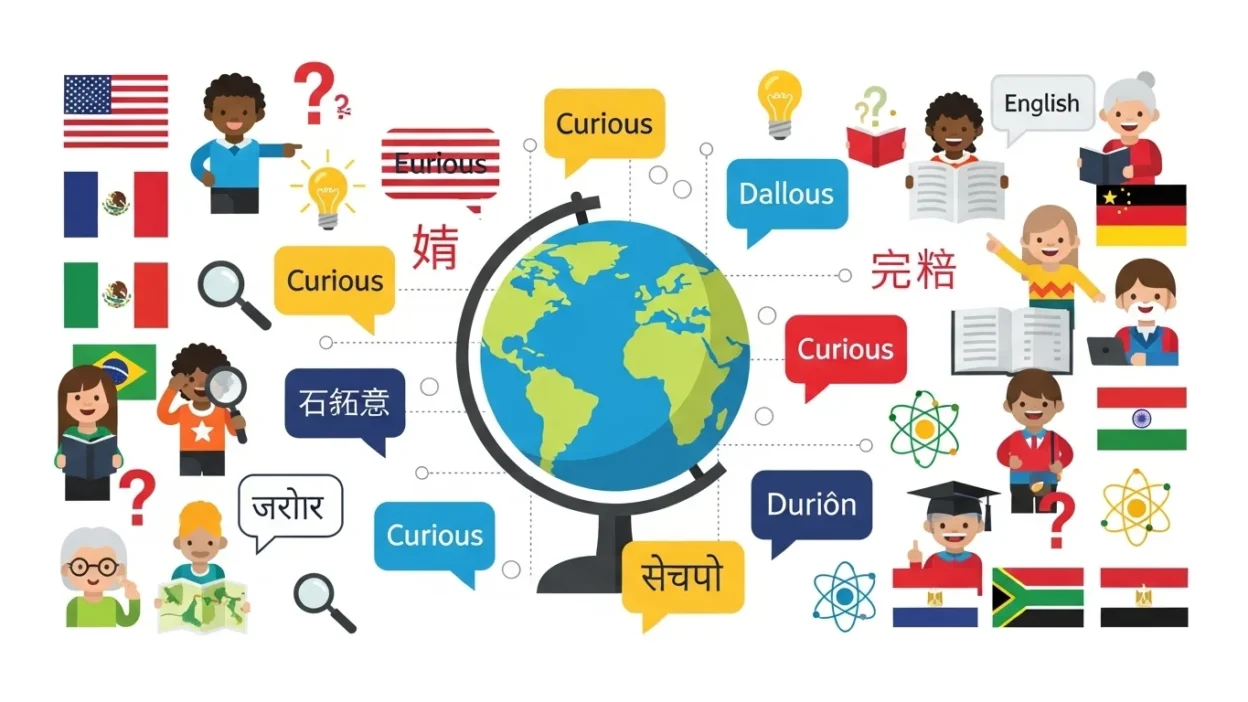
Have you ever wondered how to express the word “curious” in different languages? Whether you’re traveling, learning a new language, or simply expanding your linguistic knowledge, knowing how to say “curious” in all languages can be both fun and useful.
This guide will show you “curious” translations in 70 languages, complete with pronunciation and real-life examples to help you use them naturally.
Learning {KEYWORD} around the world opens doors to understanding cultural expressions and communicating more effectively with people from different backgrounds. Let’s dive into the fascinating world of “curious” in multiple languages.
Curious Translations in 70 Languages
| Language | Pronunciation | Example |
| Arabic | mutaʿajjib | أنا فضولي لمعرفة الأخبار الجديدة. I am curious to know the latest news. |
| Spanish | curioso | Estoy curioso por ver la película. I am curious to see the movie. |
| French | curieux | Elle est curieuse de découvrir le secret. She is curious to discover the secret. |
| German | neugierig | Er ist neugierig auf die neue Technologie. He is curious about the new technology. |
| Italian | curioso | Sono curioso di sapere cosa succederà. I am curious to know what will happen. |
| Portuguese | curioso | Ela está curiosa sobre o resultado. She is curious about the result. |
| Russian | любопытный (lyubopytnyy) | Он любопытный о жизни в других странах. He is curious about life in other countries. |
| Chinese (Mandarin) | 好奇 (hàoqí) | 她对科学很感兴趣。 She is curious about science. |
| Japanese | 好奇心が強い (kōkishin ga tsuyoi) | 彼は新しいゲームに好奇心がある。 He is curious about the new game. |
| Korean | 호기심 있는 (hogisim inneun) | 나는 새로운 음식에 호기심이 있다. I am curious about new foods. |
| Hindi | जिज्ञासु (jigyāsu) | वह नई किताबों के बारे में जिज्ञासु है। He is curious about new books. |
| Bengali | কৌতূহলী (koutuholi) | সে নতুন প্রযুক্তি নিয়ে কৌতূহলী। He is curious about new technology. |
| Urdu | تجسس (tajassus) | وہ نئے تجربات کے بارے میں تجسس رکھتا ہے۔ He is curious about new experiences. |
| Turkish | meraklı | O, yeni konulara meraklı. He is curious about new topics. |
| Greek | περίεργος (períergos) | Είμαι περίεργος για την ιστορία της πόλης. I am curious about the history of the city. |
| Dutch | nieuwsgierig | Ze is nieuwsgierig naar de resultaten. She is curious about the results. |
| Swedish | nyfiken | Han är nyfiken på sitt framtida jobb. He is curious about his future job. |
| Danish | nysgerrig | Hun er nysgerrig på nye oplevelser. She is curious about new experiences. |
| Norwegian | nysgjerrig | Jeg er nysgjerrig på hva som skjer. I am curious about what will happen. |
| Finnish | utelias | Hän on utelias tietämään lisää. He is curious to know more. |
| Polish | ciekawy | Jestem ciekawy nowej książki. I am curious about the new book. |
| Czech | zvědavý | Dítě je zvědavé na svět kolem něj. The child is curious about the world around him. |
| Slovak | zvedavý | Ona je zvedavá na novinky. She is curious about the news. |
| Hungarian | kíváncsi | Ő kíváncsi az új filmre. He is curious about the new movie. |
| Romanian | curios | Sunt curios să văd orașul. I am curious to see the city. |
| Bulgarian | любопитен (lyubopiten) | Той е любопитен за науката. He is curious about science. |
| Serbian | radoznao | Ona je radoznala o istoriji. She is curious about history. |
| Croatian | znatiželjan | Djeca su znatiželjna o prirodi. Children are curious about nature. |
| Bosnian | znatiželjan | On je znatiželjan o muzici. He is curious about music. |
| Slovenian | radoveden | Sem radoveden glede prihodnosti. I am curious about the future. |
| Maltese | kurjuż | Hu kurjuż dwar il-kultura ġdida. He is curious about the new culture. |
| Lithuanian | smalsus | Ji smalsi apie naują technologiją. She is curious about the new technology. |
| Latvian | ziņkārīgs | Viņš ir ziņkārīgs par ceļojumiem. He is curious about travels. |
| Estonian | uudishimulik | Ta on uudishimulik uute asjade vastu. He is curious about new things. |
| Finnish (alternative) | utelias | Lapsi on utelias oppimaan. The child is curious to learn. |
| Icelandic | forvitinn | Hún er forvitin um náttúruna. She is curious about nature. |
| Thai | อยากรู้อยากเห็น (yàak rúu yàak hěn) | เขาอยากรู้อยากเห็นเกี่ยวกับวัฒนธรรม. He is curious about culture. |
| Vietnamese | tò mò | Cô ấy tò mò về khoa học. She is curious about science. |
| Malay | ingin tahu | Dia ingin tahu tentang sejarah. He is curious about history. |
| Indonesian | ingin tahu | Saya ingin tahu tentang kota baru. I am curious about the new city. |
| Filipino | mausisa | Siya ay mausisa sa bagong teknolohiya. She is curious about new technology. |
| Swahili | mwenye hamu ya kujua | Ana hamu ya kujua kuhusu wanyama. He is curious about animals. |
| Zulu | ufuna ukwazi | Ufuna ukwazi ngemvelo. He is curious about nature. |
| Xhosa | unomdla wokwazi | Unomdla wokwazi ngobugcisa. He is curious about art. |
| Somali | xiisaynaya | Wuxuu xiisaynayaa sayniska. He is curious about science. |
| Hausa | mai sha’awa | Yana mai sha’awa game da tarihi. He is curious about history. |
| Amharic | የጥንቃቄ ፍላጎት (yeṭənəqāqē fəlāgōt) | እሱ ስለ ሳይንስ የጥንቃቄ ፍላጎት አለው። He is curious about science. |
| Hebrew | סקרן (sakran) | הוא סקרן לגבי הטכנולוגיה החדשה. He is curious about the new technology. |
| Persian | کنجکاو (konjkāv) | او درباره هنر کنجکاو است. He is curious about art. |
| Pashto | تجسس (tajassus) | هغه د نوي کتاب په اړه تجسس لري. He is curious about the new book. |
| Kurdish | hêrsî | Ew hêrsî li ser zimanek nû ye. He is curious about a new language. |
| Nepali | जिज्ञासु (jigyāsu) | ऊ नयाँ खाना बारे जिज्ञासु छ। He is curious about new food. |
| Sinhala | කුතුහලය (kuthuhalaya) | ඇය නව තාක්ෂණය ගැන කුතුහලය පළකරයි. She is curious about new technology. |
| Tamil | ஆர்வமுள்ள (ārvam ulla) | அவன் புதிய விஞ்ஞானத்தில் ஆர்வமுள்ளவன். He is curious about new science. |
| Telugu | ఆసక్తిగల (āsaktigala) | ఆమె కొత్త సంగీతంపై ఆసక్తిగలది. She is curious about new music. |
| Kannada | ಕುತೂಹಲ (kutūhala) | ಅವನು ಹೊಸ ಸಾಹಿತ್ಯಕ್ಕೆ ಕುತೂಹಲಪಡುವನು. He is curious about new literature. |
| Malayalam | ആസക്തി (āsakti) | അവള് പുതിയ കലാരൂപത്തില് ആസക്തിയുള്ളവളാണ്. She is curious about the new art form. |
| Georgian | ცნობისმოყვარე (tsnobismokhvare) | ის ცნობისმოყვარეა ახალ ტექნოლოგიებზე. He is curious about new technologies. |
| Armenian | հետաքրքրասեր (hetakrraser) | Նա հետաքրքրասեր է գիտության հանդեպ. He is curious about science. |
| Mongolian | сониуч (soniuch) | Тэр шинэ технологид сониуч байна. He is curious about new technology. |
| Uzbek | qiziquvchan | U yangi mavzularga qiziquvchan. He is curious about new topics. |
| Kazakh | қызыққыш (qyzýqqysh) | Ол жаңа ғылымға қызыққыш. He is curious about new science. |
| Kyrgyz | кызыккан (kyzykkan) | Ал жаңы маданиятка кызыккан. He is curious about new culture. |
| Tajik | кунҷков (kunjkov) | Ӯ дар бораи китобҳои нав кунҷков аст. He is curious about new books. |
| Thai (alternative) | ใคร่รู้ (khrài rúu) | เธอใคร่รู้เกี่ยวกับสัตว์. She is curious about animals. |
| Lao | ສົນໃຈ (sonjai) | ເຂົາສົນໃຈການທ່ອງທ່ຽວ. He is curious about traveling. |
| Burmese | စူးစမ်းချင်သော (su-sam-chin-thaw) | သူသည်သစ်တောများအကြောင်းစူးစမ်းချင်သည်။ He is curious about the forests. |
| Khmer | មានចិត្តចង់ដឹង (mean chet chong deung) | គាត់មានចិត្តចង់ដឹងអំពីវិទ្យាសាស្ត្រ។ He is curious about science. |
Tips on Using “Curious” in Conversation Around the World
- Listen first: Pay attention to how native speakers use “curious” in context.
- Pronunciation matters: Using the correct pronunciation makes your speech natural.
- Use real-life examples: Mimic sentences like those in the table to sound fluent.
- Practice regularly: Incorporate the word into daily sentences.
- Explore cultural nuances: Curiosity may be expressed differently depending on social norms.
Conclusion
“Curious in different languages” is more than just translation, it’s a doorway to understanding and connecting with people globally.
From Arabic to Khmer, these 70 translations and examples show the diversity and richness of human expression.
Now you can confidently express curiosity anywhere in the world and make your conversations more engaging.
FAQs
1. How do I say curious in Spanish and French?
In Spanish, it’s curioso, and in French, it’s curieux.
2. Are there gender differences when saying curious in other languages?
Yes, some languages like French, Spanish, and Italian have gendered forms that change depending on the subject.
3. Can I use the word curious in formal and informal settings?
Most languages allow “curious” in both, but some cultures prefer alternative polite expressions in formal settings.
4. How can I remember all 70 translations of curious?
Practice by grouping languages by region and using short example sentences from daily life.
5. Why is knowing curious in multiple languages useful?
It enhances cultural understanding, language skills, and helps you connect with people globally.

Marak Robort is a content writer and researcher with a strong interest in language, meanings, and digital information. His work focuses on presenting clear, easy-to-understand explanations that help readers quickly grasp complex ideas.