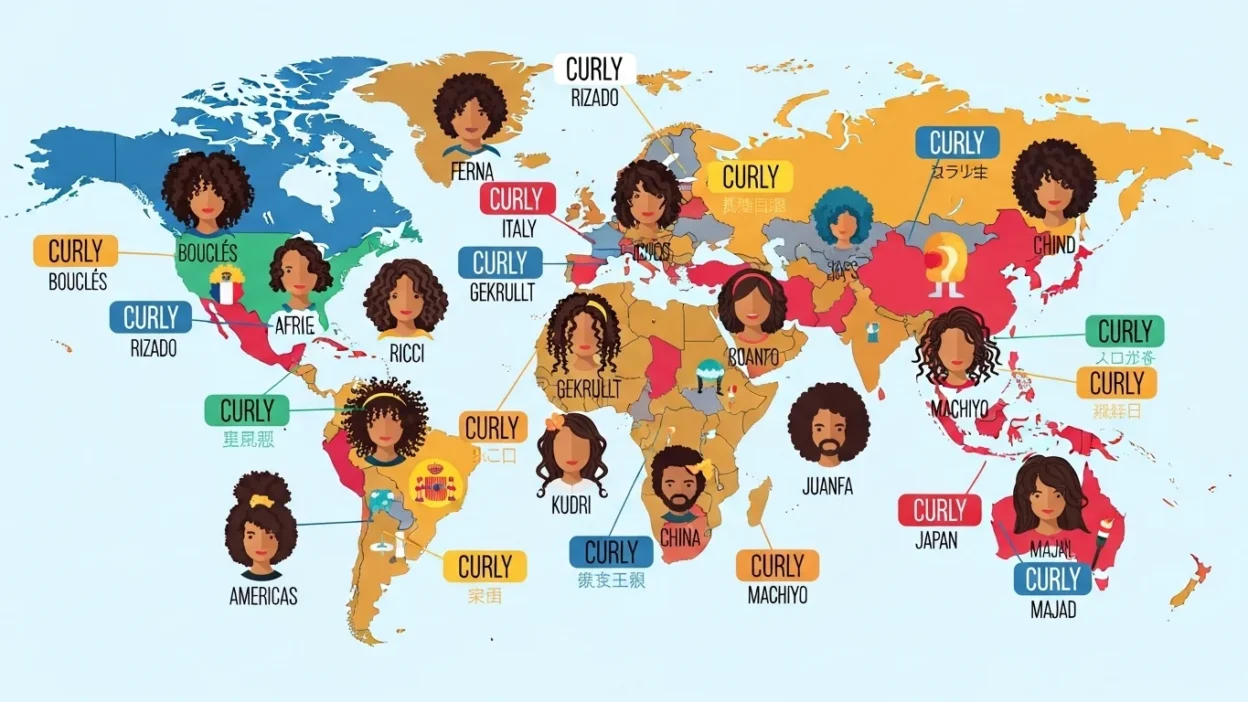
Curly hair is admired in many cultures, and sometimes, knowing how to describe “curly” in different languages can be surprisingly useful. Whether you’re traveling, learning a new language, or simply curious about linguistic diversity, understanding curly in different languages gives you a fun glimpse into how people express hair textures globally.
In this guide, we’ll explore curly translations, pronunciation, and real life examples in 70 languages, making it easy for you to use the word naturally in conversation. Here’s a comprehensive table showing curly in all languages, pronunciation tips, and example sentences so you can confidently say it no matter where you are.
| Language | Pronunciation | Example |
| Arabic | mfroosh | شعرها مفروش |
| Armenian | kraki | Նրա մազերը կռաքի են |
| Azerbaijani | qıvrım | Onun saçları qıvrımdır |
| Basque | kiribil | Bere ilea kiribil da |
| Belarusian | кучаравы | Яе валасы кучаравыя |
| Bengali | ঘূর্ণায়মান (ghurnayman) | তার চুল ঘূর্ণায়মান |
| Bosnian | kovrčav | Njena kosa je kovrčava |
| Bulgarian | къдрава | Коса ѝ е къдрава |
| Catalan | arrissat | El seu cabell és arrissat |
| Chinese (Simplified) | 卷曲 (juǎn qū) | 她的头发卷曲 |
| Chinese (Traditional) | 捲曲 (juǎn qū) | 她的頭髮捲曲 |
| Croatian | kovrčav | Njena kosa je kovrčava |
| Czech | kudrnatý | Její vlasy jsou kudrnaté |
| Danish | krøllet | Hendes hår er krøllet |
| Dutch | krullend | Haar haar is krullend |
| English | curly | Her hair is curly |
| Estonian | lokkis | Tema juuksed on lokkis |
| Filipino | kulot | Ang kanyang buhok ay kulot |
| Finnish | kihara | Hänen hiuksensa ovat kiharat |
| French | bouclé | Ses cheveux sont bouclés |
| Galician | rizado | O seu cabelo é rizado |
| Georgian | ხვეული (khveuli) | მისი თმა ხვეულია |
| German | lockig | Ihr Haar ist lockig |
| Greek | σγουρός (sgouros) | Τα μαλλιά της είναι σγουρά |
| Gujarati | વાળ મોઢું (vāḷ mōḍhū) | તેની વાળ મોઢું છે |
| Haitian Creole | boukle | Cheve li boukle |
| Hausa | curly | Gashinta na curly |
| Hebrew | מתולתל (metultal) | שיערה מתולתל |
| Hindi | घुँघराला (ghunghrala) | उसके बाल घुँघराले हैं |
| Hungarian | göndör | A haja göndör |
| Icelandic | krullað | Hárið hennar er krullað |
| Igbo | curly | Ọcha ya bụ curly |
| Indonesian | keriting | Rambutnya keriting |
| Irish | catach | Tá a cuid gruaige catach |
| Italian | riccio | I suoi capelli sono ricci |
| Japanese | 巻き毛 (makige) | 彼女の髪は巻き毛です |
| Javanese | kriting | Rambute kriting |
| Kannada | ಕೇರಳ (kēraḷa) | ಅವಳ ಕೂದಲು ಕೇರಳವಾಗಿದೆ |
| Kazakh | бұйра | Оның шашы бұйра |
| Khmer | រួចរាល់ (ruech rorl) | សក់របស់នាងរួចរាល់ |
| Korean | 곱슬 (gopseul) | 그녀의 머리는 곱슬머리이다 |
| Kurdish (Kurmanji) | qirçî | Porê wî qirçî ye |
| Kyrgyz | бурчтуу | Анын чачы бурчтуу |
| Lao | ໜ້ອຍມ້ວນ (noi muan) | ຜົວຂອງເຘົາໜ້ອຍມ້ວນ |
| Latvian | cirtaini | Viņas mati ir cirtaini |
| Lithuanian | garbanotas | Jos plaukai garbanoti |
| Luxembourgish | kraus | Hiert Hoer ass kraus |
| Macedonian | кадрава | Нејзината коса е кадрава |
| Malagasy | volo mivalona | Ny volony dia mivalona |
| Malay | kerinting | Rambutnya kerinting |
| Maltese | imqawwi | Ix-xagħar tagħha huwa imqawwi |
| Marathi | कुरळा (kurla) | तिचे केस कुरळे आहेत |
| Mongolian | буржгар | Түүний үс буржгар |
| Nepali | घुँघराले (ghungharale) | उसको कपाल घुँघराले छ |
| Norwegian | krøllete | Håret hennes er krøllete |
| Pashto | غوړیدلي (ghuridel) | د هغې وېښتان غوړیدلي دي |
| Persian | فر (far) | موهای او فر است |
| Polish | kręcony | Jej włosy są kręcone |
| Portuguese | encaracolado | O cabelo dela é encaracolado |
| Punjabi | ਘੁੰਘਰਾਲੇ (ghunghrāle) | ਉਸ ਦੇ ਵਾਲ ਘੁੰਘਰਾਲੇ ਹਨ |
| Romanian | creț | Părul ei este creț |
| Russian | кудрявый | Её волосы кудрявые |
| Scottish Gaelic | cearr | Tha a falt cearr |
| Serbian | коврџав | Њена коса је коврџава |
| Sinhala | වලු (valu) | ඇයගේ කොණ්ඩය වලු |
| Slovak | kučeravý | Jej vlasy sú kučeravé |
| Slovenian | kodrast | Njeni lasje so kodrasti |
| Somali | timaha qalloocan | Timaha ay leedahay waa qalloocan |
| Spanish | rizado | Su cabello es rizado |
| Sundanese | kriting | Rambutna kriting |
| Swahili | nywele zenye misuli | Nywele zake ni nywele zenye misuli |
| Swedish | lockigt | Hennes hår är lockigt |
| Tajik | мӯйи курашон (muyi kurashon) | Мӯи ӯ курашон аст |
| Tamil | மயில்க்கூடு (mayilkkūṭu) | அவளது முடி மயில்க்கூடு |
| Telugu | చులిక (chulika) | ఆమె జుట్టు చులిక |
| Thai | หยิก (yik) | ผมของเธอหยิก |
| Turkish | kıvırcık | Saçları kıvırcık |
| Turkmen | burçly | Onuň saçlary burçly |
| Ukrainian | кучерявий | Її волосся кучеряве |
| Urdu | گھنگریالے | اس کے بال گھنگریالے ہیں |
| Uzbek | jingalak | Uning sochlari jingalak |
| Vietnamese | xoăn | Tóc cô ấy xoăn |
| Welsh | crimpog | Mae ei gwallt yn grimpog |
| Xhosa | emijikelo | Iinwele zakhe zi-emijikelo |
| Yiddish | קרייל (kreyil) | איר האָר איז קרייל |
| Yoruba | irun didan | Irun rẹ jẹ didan |
| Zulu | curly | Izinwele zakhe ziyacwila |
How to Use “Curly” in Different Languages
Learning how to say curly in different languages can help in casual conversations, travel, or even social media captions. Most languages have simple, one-word translations, and pairing them with a short sentence like in our table makes it easier to remember. Using curly translations also showcases cultural awareness when describing hair textures around the world.
Tips for Mastering Curly in All Languages
- Start with phonetics: Pronunciation guides help you sound natural.
- Use it in context: Make small sentences like “Her hair is curly” to practice.
- Compare similar languages: Many European languages share similar roots (e.g., French bouclé, Spanish rizado, Italian riccio).
- Listen to native speakers: Apps and videos can improve your accent.
Conclusion
Now you can confidently say “curly” in 70 different languages and understand its pronunciation and use in a sentence.
Knowing curly around the world isn’t just fun it’s a great way to connect with different cultures, appreciate diversity, and enrich your language skills.
FAQs
1. How do you say “curly” in French?
In French, “curly” is bouclé. Example: Ses cheveux sont bouclés – Her hair is curly.
2. What is “curly” in Japanese?
In Japanese, it’s 巻き毛 (makige). Example: 彼女の髪は巻き毛です – Her hair is curly.
3. How can I remember “curly” in multiple languages?
Start with languages you know well, use the phonetic pronunciation, and make small example sentences to retain it naturally.
4. Are there cultural differences in describing curly hair?
Yes. Some languages differentiate between tight curls, loose curls, or wavy hair, while others use one general word for all curly textures.
5. Can I use “curly” in any language for informal conversation?
Yes, most translations are suitable for casual or descriptive conversations, but always consider context and politeness norms in each culture.

Marak Robort is a content writer and researcher with a strong interest in language, meanings, and digital information. His work focuses on presenting clear, easy-to-understand explanations that help readers quickly grasp complex ideas.