Understanding the end in different languages is more useful than it sounds. Whether you’re finishing a book, ending a movie, closing a presentation, or learning world languages, knowing how different cultures say “the end” adds clarity and global awareness.
People searching for “the end in different languages”, “how to say the end in different languages”, or “the end translations” usually want accurate phrases, easy pronunciation, and real-life examples. That’s exactly what you’ll find here—clearly organized, practical, and easy to scan.
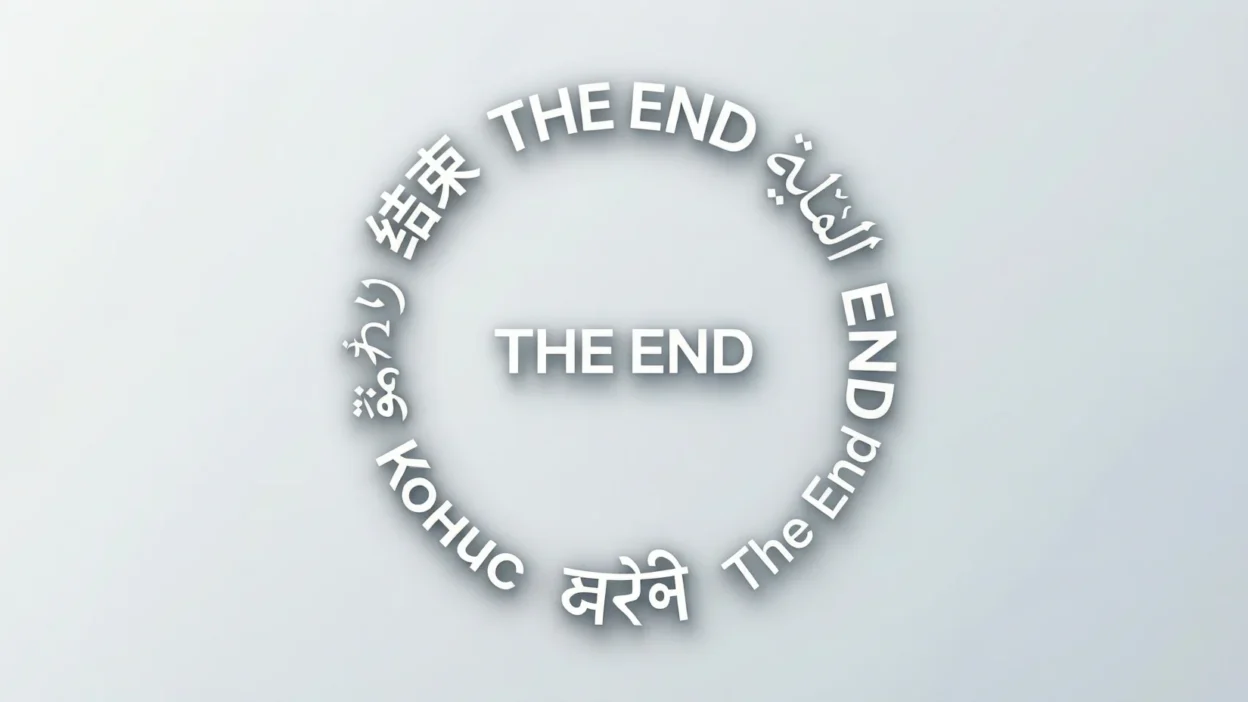
Below is a complete, user-friendly table showing the end around the world in exactly 70 different languages, perfect for learners, writers, and curious minds.
The End in All Languages (70 Translations Table)
| Language | Native Phrase & Pronunciation | Example Sentence & English Meaning |
| English | The End (theh end) | The End appears after the movie. → The movie is finished. |
| Spanish | El fin (el feen) | El fin de la historia. → The end of the story. |
| French | La fin (la fan) | La fin du film. → The end of the film. |
| German | Das Ende (das en-duh) | Das Ende ist traurig. → The end is sad. |
| Italian | La fine (la fee-neh) | La fine del libro. → The end of the book. |
| Portuguese | O fim (oo feem) | O fim do jogo. → The end of the game. |
| Dutch | Het einde (het eye-nduh) | Het einde van het verhaal. → The end of the story. |
| Russian | Конец (ka-nyets) | Это конец фильма. → This is the end of the movie. |
| Ukrainian | Кінець (kee-nets) | Кінець книги. → The end of the book. |
| Polish | Koniec (ko-nyets) | To jest koniec. → This is the end. |
| Czech | Konec (ko-nets) | Konec příběhu. → The end of the story. |
| Slovak | Koniec (ko-nyets) | Koniec hry. → The end of the game. |
| Hungarian | A vége (ah vay-geh) | A film vége. → The end of the film. |
| Romanian | Sfârșitul (sfur-shi-tul) | Sfârșitul poveștii. → The end of the story. |
| Greek | Το τέλος (to te-los) | Το τέλος της ταινίας. → The end of the movie. |
| Turkish | Son (sohn) | Hikayenin sonu. → The end of the story. |
| Arabic | النهاية (an-ni-ha-ya) | النهاية سعيدة. → The ending is happy. |
| Hebrew | הסוף (ha-sof) | זה הסוף. → This is the end. |
| Persian | پایان (pa-yan) | پایان داستان. → The end of the story. |
| Hindi | अंत (ant) | कहानी का अंत। → The end of the story. |
| Urdu | اختتام (ikh-ti-taam) | فلم کا اختتام۔ → The end of the film. |
| Bengali | শেষ (shesh) | গল্পের শেষ। → The end of the story. |
| Punjabi | ਅੰਤ (ant) | ਕਹਾਣੀ ਦਾ ਅੰਤ। → The end of the story. |
| Marathi | शेवट (sheh-vat) | कथेचा शेवट. → The end of the story. |
| Tamil | முடிவு (mu-di-vu) | படத்தின் முடிவு. → The end of the movie. |
| Telugu | ముగింపు (mu-guim-pu) | కథ ముగింపు. → Story ending. |
| Kannada | ಅಂತ್ಯ (an-tya) | ಚಿತ್ರದ ಅಂತ್ಯ. → The end of the movie. |
| Malayalam | അവസാനം (a-va-sa-nam) | കഥയുടെ അവസാനം. → The end of the story. |
| Sinhala | අවසානය (a-va-sa-na-ya) | චිත්රපට අවසානය. → Movie ending. |
| Thai | ตอนจบ (ton jop) | นี่คือตอนจบ → This is the end. |
| Vietnamese | Kết thúc (ket thook) | Kết thúc phim. → End of the movie. |
| Indonesian | Akhir (a-kheer) | Akhir cerita. → End of the story. |
| Malay | Penghujung (peng-hu-jung) | Penghujung filem. → The end of the film. |
| Filipino | Wakas (wa-kas) | Wakas ng kwento. → End of the story. |
| Japanese | 終わり (o-wa-ri) | 映画の終わり。 → End of the movie. |
| Chinese (Mandarin) | 结尾 (jie-wei) | 故事的结尾。 → The story’s end. |
| Korean | 끝 (kkeut) | 이것은 끝입니다. → This is the end. |
| Mongolian | Төгсгөл (tug-sgol) | Киноны төгсгөл. → End of the movie. |
| Lao | ສິ້ນສຸດ (sin-sut) | ເລື່ອງສິ້ນສຸດ. → Story end. |
| Khmer | ចប់ (chop) | រឿងបានចប់។ → The story ended. |
| Swahili | Mwisho (mwee-sho) | Mwisho wa hadithi. → End of the story. |
| Zulu | Isiphetho (ee-see-peh-tho) | Isiphetho sendaba. → The end of the story. |
| Afrikaans | Die einde (dee eye-nduh) | Die einde van die film. → The end of the film. |
| Amharic | መጨረሻ (me-che-ra-sha) | የታሪክ መጨረሻ. → End of the story. |
| Hausa | Ƙarshen (kar-shen) | Ƙarshen labari. → End of the story. |
| Yoruba | Opin (oh-pin) | Opin itan. → End of the story. |
| Igbo | Ngwụcha (ngwu-cha) | Ngwụcha akụkọ. → Story end. |
| Latin | Finis (fee-nis) | Finis libri. → The end of the book. |
| Esperanto | La fino (la fee-no) | La fino de rakonto. → End of the story. |
| Icelandic | Endir (en-deer) | Endir sögunnar. → The end of the story. |
| Finnish | Loppu (lop-poo) | Elokuvan loppu. → Movie ending. |
| Swedish | Slutet (sloo-tet) | Slutet på filmen. → End of the movie. |
| Norwegian | Slutten (sloot-ten) | Slutten av historien. → End of the story. |
| Danish | Slutningen (sloot-nen) | Slutningen på bogen. → End of the book. |
| Estonian | Lõpp (luhp) | Filmi lõpp. → The end of the movie. |
| Latvian | Beigas (bay-gas) | Stāsta beigas. → End of the story. |
| Lithuanian | Pabaiga (pa-bye-ga) | Filmo pabaiga. → End of the film. |
Why Learning “The End” in Different Languages Matters
Knowing how to say the end in different languages helps with language learning, storytelling, subtitles, cultural understanding, and travel. It’s a small phrase that carries a clear, universal meaning—closure.
Common Uses of “The End” Around the World
- Movies and TV series endings
- Books and short stories
- Presentations and speeches
- Cultural and linguistic learning
- Creative writing and scripts
Across cultures, the end translations may vary slightly, but the meaning is always clear.
Conclusion
Now you’ve seen the end in different languages across 70 cultures—from widely spoken global languages to regional and classical ones. This guide gives you accurate translations, simple pronunciation, and real examples, making it practical and easy to use.
Whether you’re learning, teaching, or writing, this resource covers the end in all languages in one place.
FAQs
1. How do you say the end in different languages?
You say it using language-specific phrases like El fin (Spanish), La fin (French), or 終わり (Japanese).
2. Is “the end” translated the same way in every language?
No. Each language has its own unique word or phrase, though the meaning stays the same.
3. What is the most common translation of the end worldwide?
Many languages use variations similar to “end” or “finish,” such as Fin, Konec, or Slut.
4. Can “the end” mean both a finish and an ending?
Yes. In most languages, the phrase can refer to both a final point and a conclusion.
5. Why do movies translate “the end” differently?
Translations match cultural language norms and grammatical structure, not word-for-word English.

David William is a language enthusiast, researcher, and content creator at Lingoveb. With a deep passion for words, meanings, and global communication, he focuses on making language simple, clear, and accessible for readers around the world.