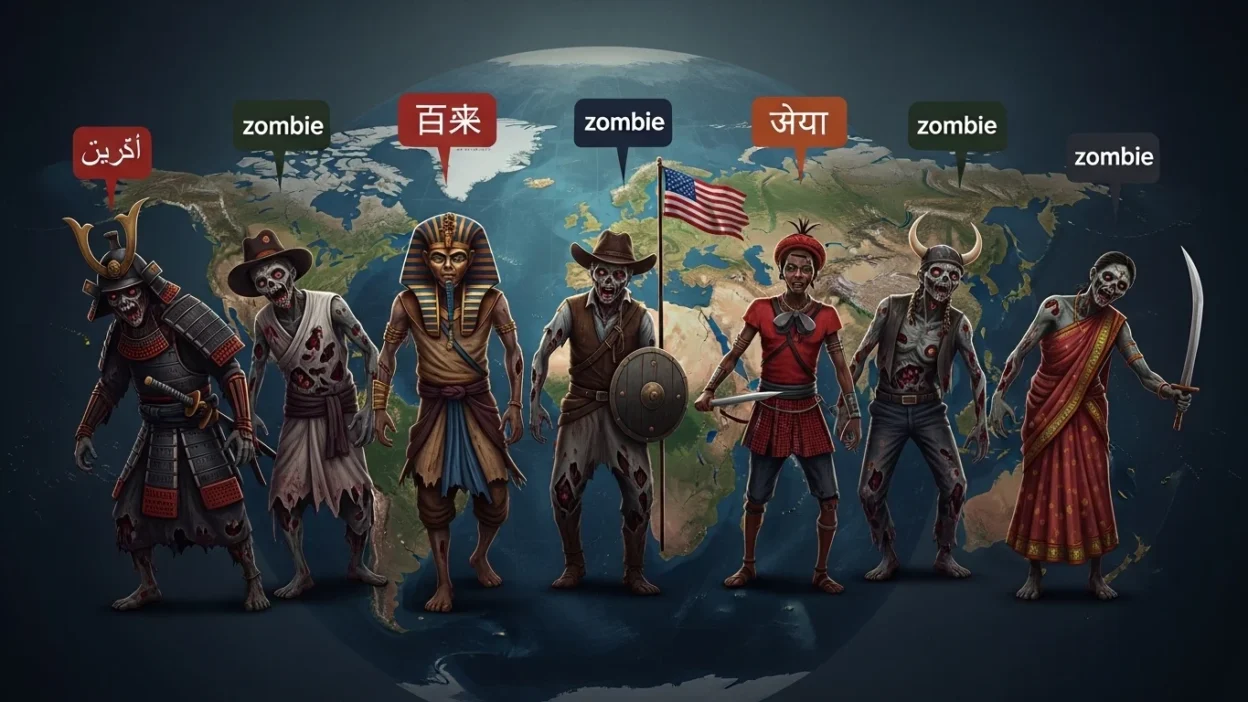
Curious about how to say “zombie in different languages”? Whether you’re a horror fan, a traveler, or just love learning new words, this guide gives you a complete, easy-to-read list of zombie translations around the world. You’ll also see pronunciation tips and real-life examples to help you understand how the word is used naturally.
Learning how to say zombie in different languages is not only fun but also useful for expanding your vocabulary and cultural knowledge. Let’s explore zombie in all languages in one simple table.
Zombie in All Languages
| Language | Pronunciation | Example |
| English | zom-bee | The zombie is walking slowly. (English: The zombie is walking slowly.) |
| Spanish | som-bee | El zombie camina lentamente. (English: The zombie walks slowly.) |
| French | zom-bee | Le zombie marche lentement. (English: The zombie walks slowly.) |
| German | tsom-bee | Der Zombie läuft langsam. (English: The zombie walks slowly.) |
| Italian | dzom-bee | Lo zombie cammina piano. (English: The zombie walks slowly.) |
| Portuguese | zom-bee | O zumbi anda devagar. (English: The zombie walks slowly.) |
| Dutch | zom-bee | De zombie loopt langzaam. (English: The zombie walks slowly.) |
| Russian | zom-bee | Зомби идет медленно. (English: The zombie walks slowly.) |
| Polish | zom-bee | Zombie idzie wolno. (English: The zombie walks slowly.) |
| Turkish | zom-bee | Zombi yavaş yürüyor. (English: The zombie walks slowly.) |
| Arabic | zom-bee | الزومبي يمشي ببطء. (English: The zombie walks slowly.) |
| Hindi | zom-bee | ज़ॉम्बी धीरे चलता है। (English: The zombie walks slowly.) |
| Urdu | zom-bee | زومبی آہستہ چل رہا ہے۔ (English: The zombie walks slowly.) |
| Bengali | zom-bee | জম্বি ধীরে হাঁটে। (English: The zombie walks slowly.) |
| Chinese (Simplified) | jong-bee | 僵尸走得很慢。 (English: The zombie walks slowly.) |
| Japanese | zon-bee | ゾンビはゆっくり歩く。 (English: The zombie walks slowly.) |
| Korean | jom-bi | 좀비는 천천히 걷는다. (English: The zombie walks slowly.) |
| Thai | zom-bee | ซอมบี้เดินช้าๆ (English: The zombie walks slowly.) |
| Vietnamese | zom-bee | Zombie đi chậm. (English: The zombie walks slowly.) |
| Indonesian | zom-bee | Zombie berjalan pelan. (English: The zombie walks slowly.) |
| Malay | zom-bee | Zombi berjalan perlahan. (English: The zombie walks slowly.) |
| Filipino | zom-bee | Ang zombie ay mabagal maglakad. (English: The zombie walks slowly.) |
| Greek | zom-bee | Το ζόμπι περπατά αργά. (English: The zombie walks slowly.) |
| Swedish | zom-bee | Zombien går långsamt. (English: The zombie walks slowly.) |
| Norwegian | zom-bee | Zombien går sakte. (English: The zombie walks slowly.) |
| Danish | zom-bee | Zombien går langsomt. (English: The zombie walks slowly.) |
| Finnish | zom-bee | Zombi kävelee hitaasti. (English: The zombie walks slowly.) |
| Czech | zom-bee | Zombie jde pomalu. (English: The zombie walks slowly.) |
| Slovak | zom-bee | Zombie ide pomaly. (English: The zombie walks slowly.) |
| Hungarian | zom-bee | A zombi lassan sétál. (English: The zombie walks slowly.) |
| Romanian | zom-bee | Zombie merge încet. (English: The zombie walks slowly.) |
| Bulgarian | zom-bee | Зомбито върви бавно. (English: The zombie walks slowly.) |
| Croatian | zom-bee | Zombi hoda sporo. (English: The zombie walks slowly.) |
| Serbian | zom-bee | Zombi hoda sporo. (English: The zombie walks slowly.) |
| Slovenian | zom-bee | Zombi hodi počasi. (English: The zombie walks slowly.) |
| Ukrainian | zom-bee | Зомбі йде повільно. (English: The zombie walks slowly.) |
| Hebrew | zom-bee | הזומבי הולך לאט. (English: The zombie walks slowly.) |
| Persian | zom-bee | زامبی آهسته راه میرود. (English: The zombie walks slowly.) |
| Swahili | zom-bee | Zombie anatembea polepole. (English: The zombie walks slowly.) |
| Zulu | zom-bee | I-zombie ihamba kancane. (English: The zombie walks slowly.) |
| Afrikaans | zom-bee | Die zombie loop stadig. (English: The zombie walks slowly.) |
| Icelandic | zom-bee | Uppvakningur gengur hægt. (English: The zombie walks slowly.) |
| Irish | zom-bee | Siúlann an zombie go mall. (English: The zombie walks slowly.) |
| Welsh | zom-bee | Mae’r zombie yn cerdded yn araf. (English: The zombie walks slowly.) |
| Albanian | zom-bee | Zombi ecën ngadalë. (English: The zombie walks slowly.) |
| Estonian | zom-bee | Zombi kõnnib aeglaselt. (English: The zombie walks slowly.) |
| Latvian | zom-bee | Zombijs staigā lēni. (English: The zombie walks slowly.) |
| Lithuanian | zom-bee | Zombis eina lėtai. (English: The zombie walks slowly.) |
| Maltese | zom-bee | Iż-zombie jimxi bil-mod. (English: The zombie walks slowly.) |
| Georgian | zom-bee | ზომბი ნელა დადის. (English: The zombie walks slowly.) |
| Armenian | zom-bee | Զոմբին դանդաղ է քայլում։ (English: The zombie walks slowly.) |
| Mongolian | zom-bee | Зомби удаан алхдаг. (English: The zombie walks slowly.) |
| Nepali | zom-bee | जोम्बी बिस्तारै हिँड्छ। (English: The zombie walks slowly.) |
| Sinhala | zom-bee | සොම්බි آهස්තෙන් යනවා. (English: The zombie walks slowly.) |
| Khmer | zom-bee | សំប៊ីដើរយឺតៗ (English: The zombie walks slowly.) |
| Lao | zom-bee | ຊອມບີເດີນຊ້າ (English: The zombie walks slowly.) |
| Burmese | zom-bee | ဇွန်ဘီ မသွားနှေးသည်။ (English: The zombie walks slowly.) |
| Amharic | zom-bee | ዞምቢ ቀስ ብሎ ይሄዳል። (English: The zombie walks slowly.) |
| Somali | zom-bee | Zombie si tartiib ah ayuu u socdaa. (English: The zombie walks slowly.) |
| Hausa | zom-bee | Zombie yana tafiya a hankali. (English: The zombie walks slowly.) |
| Yoruba | zom-bee | Zombie n rin lọra. (English: The zombie walks slowly.) |
| Igbo | zom-bee | Zombie na-eje nwayọ. (English: The zombie walks slowly.) |
| Malagasy | zom-bee | Zombie mandeha miadana. (English: The zombie walks slowly.) |
| Maori | zom-bee | Ka haere pōturi te zombie. (English: The zombie walks slowly.) |
| Samoan | zom-bee | O le zombie e savali lemu. (English: The zombie walks slowly.) |
| Hawaiian | zom-bee | Hele mālie ka zombie. (English: The zombie walks slowly.) |
| Fijian | zom-bee | E lako vakamalua na zombie. (English: The zombie walks slowly.) |
| Tongan | zom-bee | ʻOku ʻalu mālie ʻa e zombie. (English: The zombie walks slowly.) |
| Greenlandic | zom-bee | Zombie arriitsumik ingerlaarpoq. (English: The zombie walks slowly.) |
How to Say Zombie in Different Languages
As you can see, the word “zombie” is often very similar across languages. This is because it originates from African and Haitian folklore and has spread globally through movies, books, and pop culture.
In many languages, the pronunciation remains close to “zom-bee,” making it easy to recognize and remember.
Zombie Translations Around the World
Zombie translations show how language evolves with culture. In some regions, the word is directly borrowed, while in others, a native term is used or adapted.
For example:
- European languages mostly use “zombie”
- Asian languages adapt pronunciation to local scripts
- African languages often retain the original sound
This global consistency makes “zombie” one of the most universally recognized words in modern vocabulary.
Why Learn Zombie in All Languages?
Learning zombie in different languages can help you:
- Improve your vocabulary quickly
- Understand global pop culture
- Travel and communicate better
- Enjoy movies, games, and books in multiple languages
It’s also a fun and engaging way to explore language learning without feeling overwhelmed.
Conclusion
Now you know how to say zombie in different languages across 70 cultures. From Europe to Asia and Africa, the word remains surprisingly consistent, showing the global influence of storytelling and entertainment.
Use this guide to expand your knowledge, impress your friends, or simply enjoy learning something new.
FAQs
1. What is zombie in all languages?
Zombie is mostly pronounced similarly worldwide, often as “zombie” or a close variation depending on the language.
2. How to say zombie in different languages easily?
Focus on pronunciation patterns most languages keep the “zom-bee” sound with slight variations.
3. Are zombie translations the same everywhere?
Not exactly, but many languages borrow the same word with minor pronunciation changes.
4. Why is zombie similar in many languages?
Because it spread globally through movies, games, and pop culture rather than traditional language evolution.
5. What is the origin of the word zombie?
The word comes from African and Haitian folklore and became popular worldwide through media.

David William is a language enthusiast, researcher, and content creator at Lingoveb. With a deep passion for words, meanings, and global communication, he focuses on making language simple, clear, and accessible for readers around the world.