Understanding how to say bean in different languages is useful for students, travelers, translators, and language learners. The word “bean” is commonly used in food culture, agriculture, and daily communication across the world. In this guide, you will learn bean translations in all languages, how to pronounce them, and how the word is used in real life sentences.
This article is designed to help you quickly understand how to say bean in different languages, improve vocabulary, and explore global linguistic diversity in a simple and structured way.
Bean in Different Languages Around the World
| Language | Pronunciation | Example |
| English | been | I like to eat a bean soup. — I like to eat a bean soup. |
| Spanish | frijol | Como frijol en el almuerzo. — I eat beans for lunch. |
| French | haricot | Je mange un haricot. — I eat a bean. |
| German | bohne | Ich esse eine Bohne. — I eat a bean. |
| Italian | fagiolo | Mangio un fagiolo. — I eat a bean. |
| Portuguese | feijão | Eu como feijão. — I eat beans. |
| Dutch | boon | Ik eet een boon. — I eat a bean. |
| Russian | фасоль (fasol) | Я ем фасоль. — I eat beans. |
| Ukrainian | квасоля | Я їм квасолю. — I eat beans. |
| Polish | fasola | Jem fasolę. — I eat beans. |
| Czech | fazole | Jím fazole. — I eat beans. |
| Slovak | fazuľa | Jem fazuľu. — I eat beans. |
| Hungarian | bab | Babot eszem. — I eat beans. |
| Romanian | fasole | Mănânc fasole. — I eat beans. |
| Greek | φασόλι (fasoli) | Τρώω φασόλια. — I eat beans. |
| Turkish | fasulye | Fasulye yiyorum. — I eat beans. |
| Arabic | فاصوليا (fasolia) | آكل الفاصوليا. — I eat beans. |
| Persian | لوبیا | من لوبیا میخورم. — I eat beans. |
| Hebrew | שעועית | אני אוכל שעועית. — I eat beans. |
| Hindi | सेम | मैं सेम खाता हूँ। — I eat beans. |
| Urdu | لوبیا | میں لوبیا کھاتا ہوں۔ — I eat beans. |
| Bengali | বিন | আমি বিন খাই। — I eat beans. |
| Punjabi | ਸੇਮ | ਮੈਂ ਸੇਮ ਖਾਂਦਾ ਹਾਂ। — I eat beans. |
| Gujarati | શીંગ | હું શીંગ ખાઉં છું। — I eat beans. |
| Tamil | பீன்ஸ் | நான் பீன்ஸ் சாப்பிடுகிறேன். — I eat beans. |
| Telugu | బీన్స్ | నేను బీన్స్ తింటాను. — I eat beans. |
| Malayalam | ബീൻസ് | ഞാൻ ബീൻസ് കഴിക്കുന്നു. — I eat beans. |
| Kannada | ಬೀನ್ಸ್ | ನಾನು ಬೀನ್ಸ್ ತಿನ್ನುತ್ತೇನೆ. — I eat beans. |
| Marathi | शेंग | मी शेंग खातो. — I eat beans. |
| Sinhala | බෝංචි | මම බෝංචි කනවා. — I eat beans. |
| Nepali | सिमी | म सिमी खान्छु. — I eat beans. |
| Thai | ถั่ว | ฉันกินถั่ว. — I eat beans. |
| Vietnamese | đậu | Tôi ăn đậu. — I eat beans. |
| Indonesian | kacang | Saya makan kacang. — I eat beans. |
| Malay | kacang | Saya makan kacang. — I eat beans. |
| Filipino | sitaw | Kumakain ako ng sitaw. — I eat beans. |
| Chinese (Mandarin) | 豆 (dòu) | 我吃豆。 — I eat beans. |
| Cantonese | 豆 (dau) | 我食豆。 — I eat beans. |
| Japanese | 豆 (mame) | 豆を食べます。 — I eat beans. |
| Korean | 콩 | 나는 콩을 먹는다. — I eat beans. |
| Swahili | maharagwe | Ninakula maharagwe. — I eat beans. |
| Hausa | wake | Ina cin wake. — I eat beans. |
| Yoruba | ewa | Mo n jẹ ewa. — I eat beans. |
| Igbo | agwa | A na m eri agwa. — I eat beans. |
| Zulu | ubhontshisi | Ngidla ubhontshisi. — I eat beans. |
| Afrikaans | boontjie | Ek eet boontjie. — I eat beans. |
| Danish | bønne | Jeg spiser bønne. — I eat beans. |
| Swedish | böna | Jag äter böna. — I eat beans. |
| Norwegian | bønne | Jeg spiser bønne. — I eat beans. |
| Finnish | papu | Syön papu. — I eat beans. |
| Icelandic | baun | Ég borða baun. — I eat beans. |
| Lithuanian | pupelė | Aš valgau pupelę. — I eat beans. |
| Latvian | pupiņa | Es ēdu pupiņu. — I eat beans. |
| Estonian | uba | Ma söön uba. — I eat beans. |
| Slovenian | fižol | Jem fižol. — I eat beans. |
| Croatian | grah | Jedem grah. — I eat beans. |
| Serbian | пасуљ | Једем пасуљ. — I eat beans. |
| Bosnian | grah | Jedem grah. — I eat beans. |
| Bulgarian | фасул | Ям фасул. — I eat beans. |
| Macedonian | грав | Јадам грав. — I eat beans. |
| Albanian | fasule | Unë ha fasule. — I eat beans. |
| Armenian | լոբի | Ես լոբի եմ ուտում. — I eat beans. |
| Georgian | ლობიო | მე ვჭამ ლობიო. — I eat beans. |
| Kazakh | бұршақ | Мен бұршақ жеймін. — I eat beans. |
| Uzbek | loviya | Men loviya yeyman. — I eat beans. |
| Turkmen | fasulya | Men fasulya iýýärin. — I eat beans. |
| Mongolian | шош | Би шош иддэг. — I eat beans. |
| Lao | ໝາກຖົ່ວ | ຂ້ອຍກິນໝາກຖົ່ວ. — I eat beans. |
| Burmese | ပဲ | ကျွန်တော် ပဲ စားတယ်။ — I eat beans. |
| Khmer | សណ្តែក | ខ្ញុំញ៉ាំសណ្តែក។ — I eat beans. |
How to Say Bean in Different Languages
The word bean changes based on culture and region. In European languages, it often comes from Latin roots like faba, while in Asian languages, it is usually represented with native agricultural terms such as “豆” or “콩”.
Learning these variations helps improve global communication and vocabulary depth.
Importance of Bean Translations in Global Languages
- Useful in international food trade
- Helpful for language learners and translators
- Important in agricultural communication
- Supports multicultural understanding
Understanding bean translations in all languages helps connect food culture across the world.
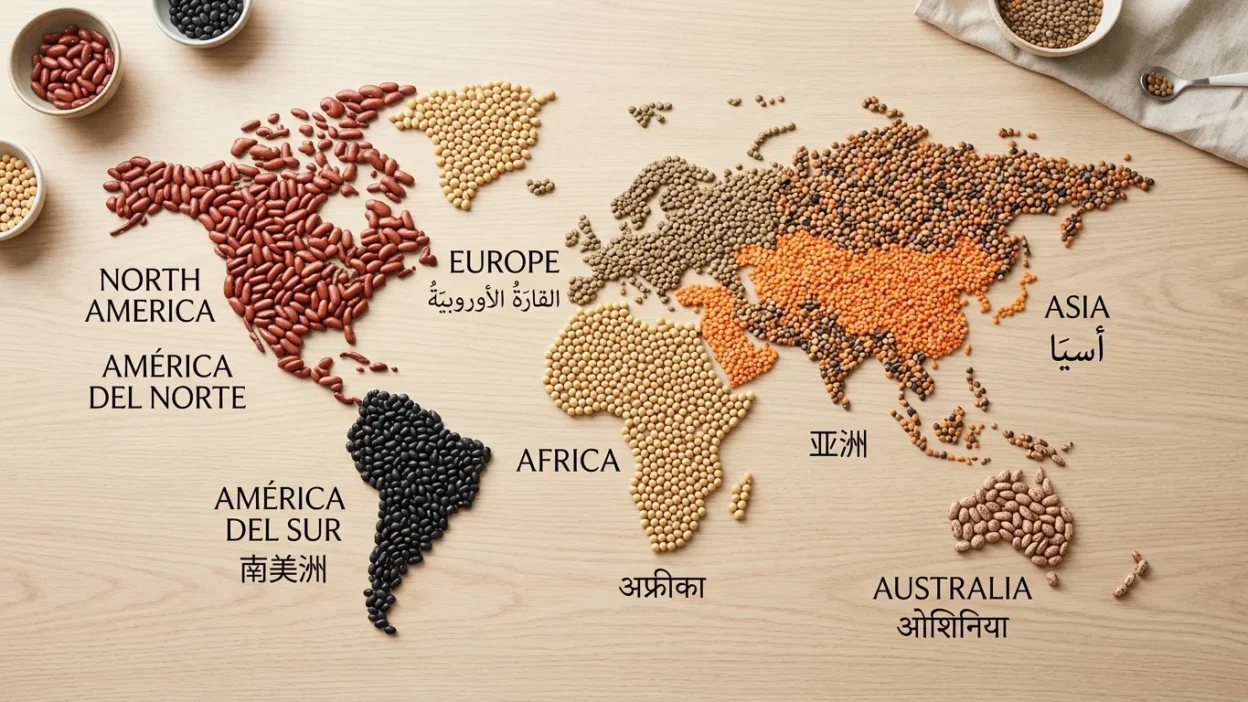
Bean Around the World: Language Diversity
Different regions use different words for bean based on local farming traditions. For example:
- Asia uses short root words like “dou”, “kong”, and “mame”
- Europe uses variations like “fasole”, “bønne”, and “bohne”
- Africa uses native terms like “ewa”, “maharagwe”, and “agwa”
Conclusion
The word bean in different languages shows how food connects cultures globally. From Europe to Asia and Africa, each language reflects its own history and agricultural identity. Learning these translations improves both language skills and cultural awareness.
FAQs
1. What is bean in different languages?
Bean is translated into many words like “frijol”, “fagiolo”, “fasulye”, and “豆” depending on the language.
2. How do you say bean in Spanish?
In Spanish, bean is called “frijol”.
3. What is bean called in Asian languages?
It is often called “豆 (dòu)” in Chinese, “콩” in Korean, and “豆 (mame)” in Japanese.
4. Why do bean names differ in languages?
Because each language developed independently based on local agriculture and culture.
5. Is bean the same word everywhere?
No, every language has its own unique translation and pronunciation.

Ely Joseph is a language researcher, writer, and contributor who specializes in words, meanings, and multilingual communication. With a strong interest in how language shapes understanding across cultures, Ely focuses on creating clear, accurate, and reader-friendly content for a global audience.