
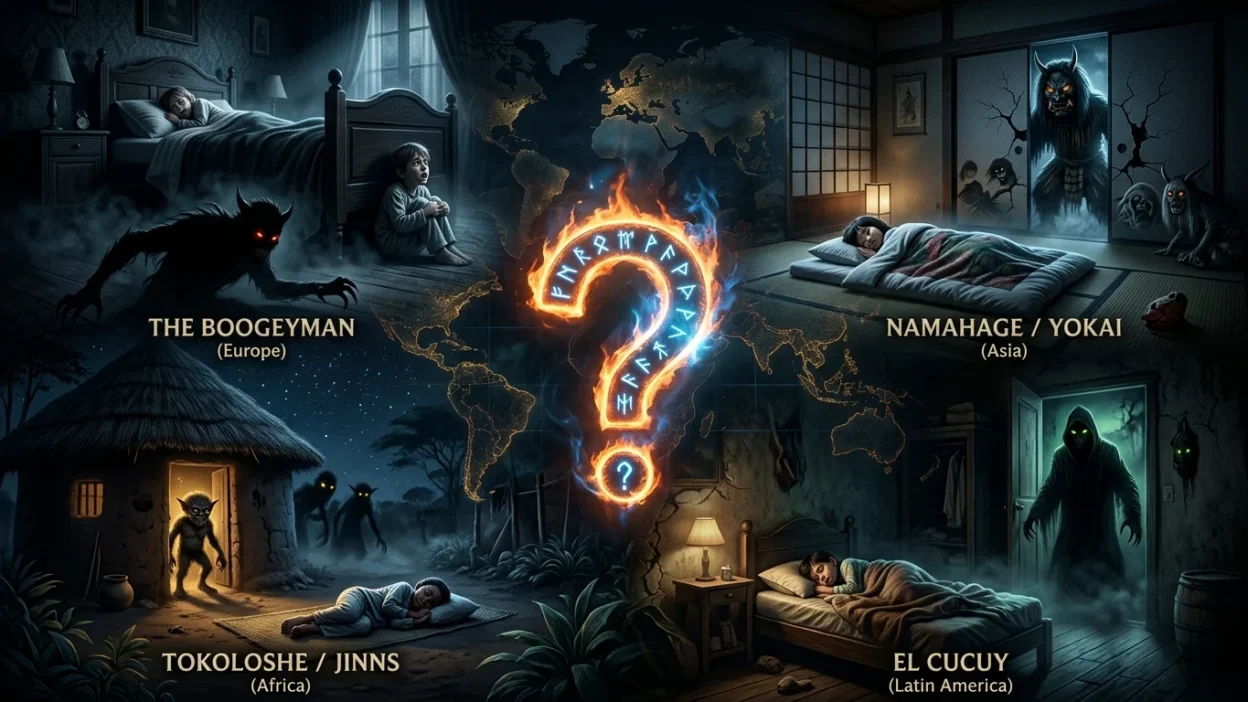
The concept of the “boogeyman” exists in almost every culture on earth. It is a mysterious figure used to warn children, represent fear, or describe an unknown scary presence. While the idea is similar globally, the name changes dramatically from language to language.
Understanding 100+ boogeyman in different languages helps you explore cultural storytelling, folklore traditions, and how fear is expressed worldwide. In this guide, you will learn how to say boogeyman in different languages, see real examples, and compare translations across the globe.
Below is a structured, list showing how the boogeyman concept is expressed in many languages with pronunciation and real usage examples.
Boogeyman in Languages Around the World
| Language | Pronunciation | Example |
| English | boo-gee-man | The boogeyman hides in the dark room. — Meaning: A scary creature is said to hide in dark places. |
| Spanish | el hombre del saco | El hombre del saco viene por la noche. — Meaning: The sack man comes at night. |
| French | croquemitaine | Le croquemitaine fait peur aux enfants. — Meaning: The bogeyman scares children. |
| German | der schwarze Mann | Der schwarze Mann versteckt sich im Wald. — Meaning: The black man hides in the forest. |
| Italian | l’uomo nero | L’uomo nero è sotto il letto. — Meaning: The boogeyman is under the bed. |
| Portuguese | bicho-papão | O bicho-papão vive no armário. — Meaning: The boogeyman lives in the closet. |
| Russian | babayka | Бабайка пугает детей ночью. — Meaning: The boogeyman scares children at night. |
| Chinese (Simplified) | guǐ guǐ / bogeyman | 妖怪在黑暗中出现。 — Meaning: The monster appears in the dark. |
| Chinese (Traditional) | guǐ guǐ | 妖怪在床下。 — Meaning: The monster is under the bed. |
| Japanese | namahage / obake | なまはげが来るよ。 — Meaning: The boogeyman is coming. |
| Korean | dokkaebi | 도깨비가 숨어 있다. — Meaning: The goblin is hiding. |
| Arabic | أبو رجل مسلوخة | الوحش يأتي في الليل. — Meaning: The monster comes at night. |
| Hindi | bhoot / darawana aadmi | भूत अंधेरे में है। — Meaning: A ghost is in the dark. |
| Urdu | bhut / darawana admi | بھوت رات کو آتا ہے۔ — Meaning: A ghost comes at night. |
| Bengali | bhuter golpo | ভূত রাতে আসে। — Meaning: The ghost comes at night. |
| Turkish | öcü | Öcü karanlıkta saklanır. — Meaning: The boogeyman hides in the dark. |
| Persian | lulu khorkhore | لولو در تاریکی است. — Meaning: The boogeyman is in the dark. |
| Dutch | boeman | De boeman zit onder het bed. — Meaning: The boogeyman is under the bed. |
| Greek | baboulas | Ο μπαμπούλας κρύβεται. — Meaning: The boogeyman is hiding. |
| Swedish | bus eller monstret | Monstret gömmer sig i skogen. — Meaning: The monster hides in the forest. |
| Norwegian | bussemann | Bussemannen kommer om natten. — Meaning: The boogeyman comes at night. |
| Danish | bukkemand | Bukkemanden er i skabet. — Meaning: The boogeyman is in the closet. |
| Finnish | mörkö | Mörkö on sängyn alla. — Meaning: The boogeyman is under the bed. |
| Polish | baba-jaga / strach na wróble | Potwór jest w ciemności. — Meaning: The monster is in the dark. |
| Czech | bubák | Bubák je pod postelí. — Meaning: The boogeyman is under the bed. |
| Slovak | bubák | Bubák straší deti. — Meaning: The boogeyman scares children. |
| Hungarian | mumus | A mumus a szekrényben van. — Meaning: The boogeyman is in the closet. |
| Romanian | bau-bau | Bau-bau vine noaptea. — Meaning: The boogeyman comes at night. |
| Bulgarian | babau | Бабау е в тъмното. — Meaning: The boogeyman is in the dark. |
| Serbian | bau-bau | Bau-bau se krije. — Meaning: The boogeyman is hiding. |
| Croatian | babaroga | Babaroga dolazi noću. — Meaning: The boogeyman comes at night. |
| Ukrainian | babai | Бабай ховається вночі. — Meaning: The boogeyman hides at night. |
| Hebrew | ba’al ha’bayit shel ha’choshech | המפלצת באה בלילה. — Meaning: The monster comes at night. |
| Thai | phi krasue / phi am | ผีมาซ่อนอยู่ในความมืด — Meaning: The ghost hides in darkness. |
| Vietnamese | ông ba bị | Ông ba bị trong bóng tối. — Meaning: The boogeyman is in the dark. |
| Indonesian | hantu jahat | Hantu itu datang malam hari. — Meaning: The ghost comes at night. |
| Malay | hantu jahat | Hantu ada di dalam bilik. — Meaning: The ghost is in the room. |
| Filipino | aswang | Ang aswang ay nasa dilim. — Meaning: The monster is in the dark. |
| Swahili | jini mbaya | Jini yuko gizani. — Meaning: The evil spirit is in the dark. |
| Amharic | bubua | ጭራቅ በጨለማ ነው። — Meaning: The monster is in the dark. |
| Yoruba | abiku / ẹ̀rù | Ẹ̀rù wa ninu okunkun. — Meaning: The fear is in the dark. |
| Igbo | akalogoli | Mmụọ dị n’ọchịchịrị. — Meaning: The spirit is in the dark. |
| Zulu | isilwane | Isilo sisezimnyama. — Meaning: The monster is in darkness. |
| Afrikaans | boeman | Die boeman is in die kas. — Meaning: The boogeyman is in the closet. |
| Icelandic | tröll | Tröllið felur sig. — Meaning: The troll is hiding. |
| Latvian | bubulis | Bubulis slēpjas tumsā. — Meaning: The boogeyman hides in the dark. |
| Lithuanian | baubas | Baubas slepiasi po lova. — Meaning: The boogeyman hides under the bed. |
| Estonian | koll | Koll on kapis. — Meaning: The monster is in the closet. |
| Slovenian | bavbav | Bavbav se skriva. — Meaning: The boogeyman is hiding. |
| Armenian | bogeyman | Հրեշը մթության մեջ է։ — Meaning: The monster is in the dark. |
| Georgian | buba | ბუბა ღამით მოდის. — Meaning: The boogeyman comes at night. |
| Mongolian | bogeyman | Чөтгөр харанхуйд байна. — Meaning: The demon is in the dark. |
| Kazakh | quyrshaq | Құбыжық қараңғыда. — Meaning: The monster is in the dark. |
| Uzbek | yalmog’iz | Yalmog’iz qorong’ida. — Meaning: The witch is in the dark. |
| Kyrgyz | jalmooz | Желмогуз караңгыда. — Meaning: The monster is in the dark. |
| Tamil | pisaasu | பேய் இருளில் உள்ளது. — Meaning: The ghost is in the dark. |
| Telugu | boocha | భూతం చీకటిలో ఉంది. — Meaning: The ghost is in the dark. |
| Malayalam | yakshi | ഭൂതം ഇരുട്ടിലാണ്. — Meaning: The ghost is in the dark. |
| Kannada | bhootha | ಭೂತ ಕತ್ತಲೆಯಲ್ಲಿ ಇದೆ. — Meaning: The ghost is in the dark. |
| Marathi | bhutya | भूत अंधारात आहे. — Meaning: The ghost is in the dark. |
| Gujarati | bhut | ભૂત અંધારામાં છે. — Meaning: The ghost is in the dark. |
| Punjabi | bhut | ਭੂਤ ਹਨੇਰੇ ਵਿੱਚ ਹੈ. — Meaning: The ghost is in the dark. |
| Sinhala | yaksha | යක්ෂයා අඳුරේ ඉන්නවා. — Meaning: The demon is in the dark. |
| Nepali | bhoot | भूत अँध्यारोमा छ। — Meaning: The ghost is in the dark. |
| Burmese | nat | နတ်သည် အမှောင်ထဲတွင်ရှိသည်။ — Meaning: The spirit is in the dark. |
| Khmer | arak | អារក្សនៅក្នុងភាពងងឹត។ — Meaning: The spirit is in the dark. |
| Lao | phi | ຜີຢູ່ໃນຄວາມມືດ. — Meaning: The ghost is in the dark. |
| Tibetan | dre | འདྲེ་ནི་མུན་པའི་ནང་ཡོད། — Meaning: The demon is in the dark. |
| Maori | taniwha | Kei te pouri te taniwha. — Meaning: The monster is in the dark. |
| Welsh | bwci | Mae’r bwci yn y tywyllwch. — Meaning: The bogeyman is in the dark. |
Boogeyman Across Cultures: What It Really Means
The boogeyman concept around the world is not always a single creature. In some cultures, it is a ghost, while in others it is a monster, spirit, or imaginary figure used to control fear in children.
Despite differences, the purpose remains the same: teaching caution and obedience through storytelling.
Why Boogeyman Translations Are So Different
Different regions adapt the boogeyman idea based on:
- Local myths and folklore
- Religious beliefs
- Language structure
- Cultural fear symbols
This is why boogeyman translations across languages vary from “ghost” to “monster” to “spirit.”
How to Say Boogeyman in Different Languages Easily
If you are learning languages or exploring folklore, remembering boogeyman names helps you understand cultural storytelling faster. Many languages use:
- Monsters (Europe)
- Ghosts or spirits (Asia & Africa)
- Mythical creatures (Americas)
Conclusion
The boogeyman is a universal idea, but its name changes in almost every language. Learning 100+ boogeyman in different languages helps you understand global cultures, myths, and how fear is expressed in storytelling traditions worldwide.
FAQs
1. What is the boogeyman called in different languages?
It changes widely, such as “bicho-papão” in Portuguese and “croquemitaine” in French.
2. Why does every culture have a boogeyman?
It is used in storytelling to teach children about fear, safety, and behavior.
3. How do you say boogeyman in Spanish?
It is “el hombre del saco” or sometimes “coco.”
4. Is the boogeyman real or imaginary?
It is a fictional character used in folklore and cultural stories.
5. What is the origin of the boogeyman?
It comes from ancient folklore traditions across Europe and later spread worldwide.

Ely Joseph is a language researcher, writer, and contributor who specializes in words, meanings, and multilingual communication. With a strong interest in how language shapes understanding across cultures, Ely focuses on creating clear, accurate, and reader-friendly content for a global audience.