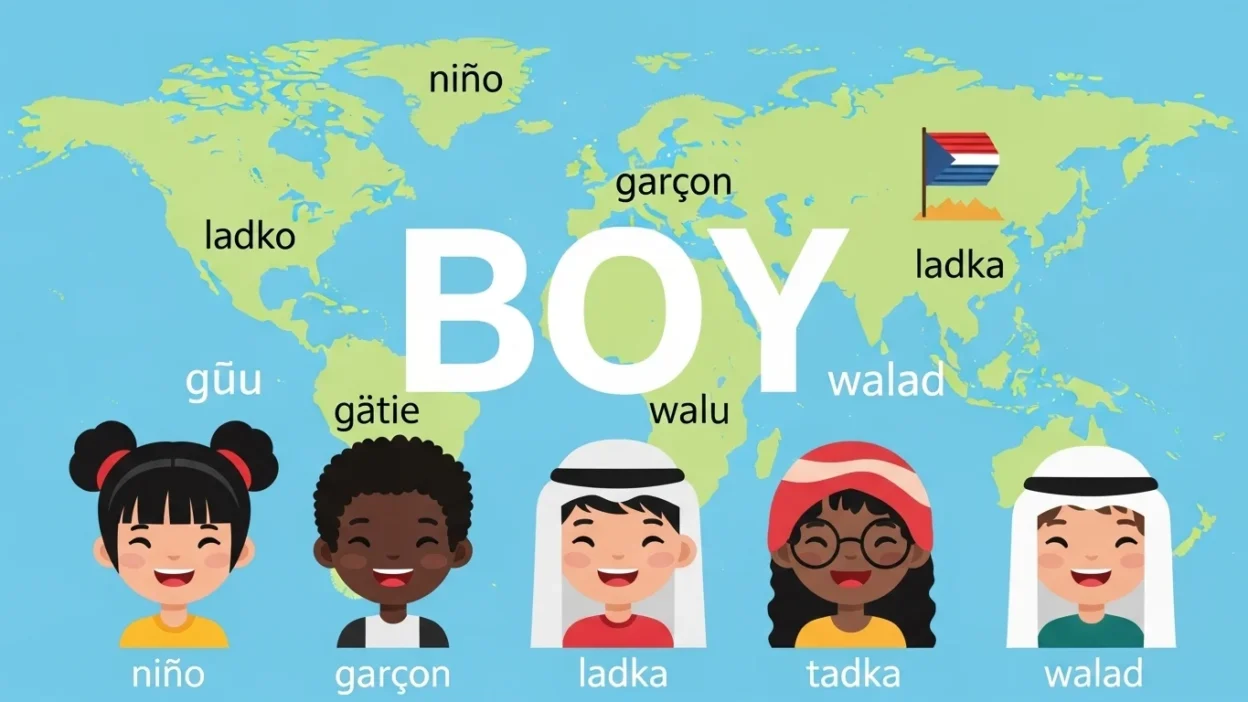
Understanding how to say “boy in different languages” is useful for travelers, language learners, and anyone curious about global cultures.
Whether you’re expanding your vocabulary or exploring how languages express everyday words, this guide gives you clear, simple, and practical translations.
In this article, you’ll discover boy in all languages, along with pronunciation and real life examples. This helps you not just memorize words, but also understand how they’re used naturally in conversation.
How to Say “Boy” in Different Languages
| Language | Pronunciation | Example |
| English | Boy | The boy is playing. (English meaning: The boy is playing.) |
| Spanish | Niño | El niño corre. (The boy runs.) |
| French | Garçon | Le garçon mange. (The boy eats.) |
| German | Junge | Der Junge lacht. (The boy laughs.) |
| Italian | Ragazzo | Il ragazzo studia. (The boy studies.) |
| Portuguese | Menino | O menino dorme. (The boy sleeps.) |
| Dutch | Jongen | De jongen speelt. (The boy plays.) |
| Russian | Мальчик (Malchik) | Мальчик читает. (The boy reads.) |
| Arabic | ولد (Walad) | الولد يجري. (The boy runs.) |
| Urdu | لڑکا (Larka) | لڑکا کھیل رہا ہے۔ (The boy is playing.) |
| Hindi | लड़का (Ladka) | लड़का हँस रहा है। (The boy is laughing.) |
| Bengali | ছেলে (Chele) | ছেলে খেলে। (The boy plays.) |
| Punjabi | ਮੁੰਡਾ (Munda) | ਮੁੰਡਾ ਦੌੜਦਾ ਹੈ। (The boy runs.) |
| Turkish | Erkek çocuk | Erkek çocuk uyuyor. (The boy sleeps.) |
| Greek | Αγόρι (Agori) | Το αγόρι παίζει. (The boy plays.) |
| Polish | Chłopiec | Chłopiec czyta. (The boy reads.) |
| Swedish | Pojke | Pojken springer. (The boy runs.) |
| Danish | Dreng | Drengen leger. (The boy plays.) |
| Norwegian | Gutt | Gutten spiser. (The boy eats.) |
| Finnish | Poika | Poika juoksee. (The boy runs.) |
| Czech | Chlapec | Chlapec se směje. (The boy laughs.) |
| Slovak | Chlapec | Chlapec číta. (The boy reads.) |
| Hungarian | Fiú | A fiú játszik. (The boy plays.) |
| Romanian | Băiat | Băiatul aleargă. (The boy runs.) |
| Bulgarian | Момче (Momche) | Момчето играе. (The boy plays.) |
| Croatian | Dječak | Dječak čita. (The boy reads.) |
| Serbian | Дечак (Decak) | Дечак трчи. (The boy runs.) |
| Ukrainian | Хлопець (Khlopets) | Хлопець сміється. (The boy laughs.) |
| Hebrew | ילד (Yeled) | הילד משחק. (The boy plays.) |
| Persian | پسر (Pesar) | پسر میدود. (The boy runs.) |
| Pashto | هلک (Halak) | هلک لوبې کوي. (The boy plays.) |
| Chinese (Mandarin) | 男孩 (Nánhái) | 男孩在跑。 (The boy runs.) |
| Japanese | 男の子 (Otoko no ko) | 男の子が遊ぶ。 (The boy plays.) |
| Korean | 소년 (Sonyeon) | 소년이 웃는다. (The boy laughs.) |
| Thai | เด็กผู้ชาย | เด็กผู้ชายวิ่ง (The boy runs.) |
| Vietnamese | Cậu bé | Cậu bé chơi. (The boy plays.) |
| Indonesian | Anak laki-laki | Anak laki-laki makan. (The boy eats.) |
| Malay | Budak lelaki | Budak lelaki tidur. (The boy sleeps.) |
| Filipino | Batang lalaki | Batang lalaki tumatakbo. (The boy runs.) |
| Swahili | Mvulana | Mvulana anacheza. (The boy plays.) |
| Zulu | Umfana | Umfana ugijima. (The boy runs.) |
| Afrikaans | Seun | Die seun speel. (The boy plays.) |
| Amharic | ወንድ ልጅ | ወንድ ልጅ ይጫወታል. (The boy plays.) |
| Somali | Wiil | Wiilku ciyaaraya. (The boy plays.) |
| Hausa | Yaro | Yaron yana gudu. (The boy runs.) |
| Yoruba | Ọmọkùnrin | Ọmọkùnrin ń ṣeré. (The boy plays.) |
| Igbo | Nwoke nta | Nwoke nta na-agba ọsọ. (The boy runs.) |
| Malagasy | Zazalahy | Zazalahy mihazakazaka. (The boy runs.) |
| Hawaiian | Keiki kāne | Keiki kāne holo. (The boy runs.) |
| Maori | Tama | Kei te oma te tama. (The boy runs.) |
| Samoan | Tama | O le tama e tamo’e. (The boy runs.) |
| Latin | Puer | Puer currit. (The boy runs.) |
| Esperanto | Knabo | La knabo ludas. (The boy plays.) |
| Irish | Buachaill | Tá an buachaill ag rith. (The boy runs.) |
| Welsh | Bachgen | Mae’r bachgen yn chwarae. (The boy plays.) |
| Scottish Gaelic | Balach | Tha am balach a’ ruith. (The boy runs.) |
| Icelandic | Drengur | Drengurinn leikur. (The boy plays.) |
| Estonian | Poiss | Poiss jookseb. (The boy runs.) |
| Latvian | Zēns | Zēns spēlē. (The boy plays.) |
| Lithuanian | Berniukas | Berniukas bėga. (The boy runs.) |
| Albanian | Djalë | Djali luan. (The boy plays.) |
| Macedonian | Момче | Момчето трча. (The boy runs.) |
| Slovenian | Fant | Fant teče. (The boy runs.) |
| Armenian | Տղա (Tgha) | Տղան վազում է։ (The boy runs.) |
| Georgian | ბიჭი (Bichi) | ბიჭი თამაშობს. (The boy plays.) |
| Khmer | ក្មេងប្រុស | ក្មេងប្រុសរត់ (The boy runs.) |
| Lao | ເດັກຊາຍ | ເດັກຊາຍຫຼິ້ນ (The boy plays.) |
| Burmese | ကောင်လေး | ကောင်လေးပြေးသည် (The boy runs.) |
| Nepali | केटा (Keta) | केटा दौडन्छ। (The boy runs.) |
| Sinhala | පිරිමි ළමයා | පිරිමි ළමයා දුවයි (The boy runs.) |
Why Learn “Boy” in All Languages?
Learning how to say boy in different languages improves your vocabulary and cultural awareness. It’s especially useful for:
- Travelers communicating with locals
- Students learning new languages
- Writers and translators
- Curious learners exploring global expressions
Knowing simple words like this helps you build confidence quickly.
Tips to Remember Boy Translations Easily
To remember boy translations around the world, try these simple techniques:
- Group languages by region (European, Asian, African)
- Practice with short daily sentences
- Focus on pronunciation along with meaning
- Use repetition and real life examples
Consistency makes memorization easier and faster.
Conclusion
Now you’ve explored boy in different languages across 70 global languages, complete with pronunciation and real-world usage.
This knowledge not only expands your vocabulary but also connects you with cultures worldwide.
Keep practicing these words, and you’ll quickly improve your language skills.
FAQs
1. How do you say “boy” in different languages?
You can say “boy” differently depending on the language, such as “niño” in Spanish, “garçon” in French, and “ladka” in Hindi.
2. What is the most common translation of boy worldwide?
There isn’t one universal translation, but words like “niño,” “garçon,” and “boy” are widely recognized.
3. Why should I learn boy in all languages?
It helps improve vocabulary, communication skills, and cultural understanding, especially for beginners.
4. Is pronunciation important when learning translations?
Yes, correct pronunciation ensures people understand you clearly in real conversations.
5. What is the easiest way to memorize boy translations?
Practice daily, use example sentences, and group languages by similarity.