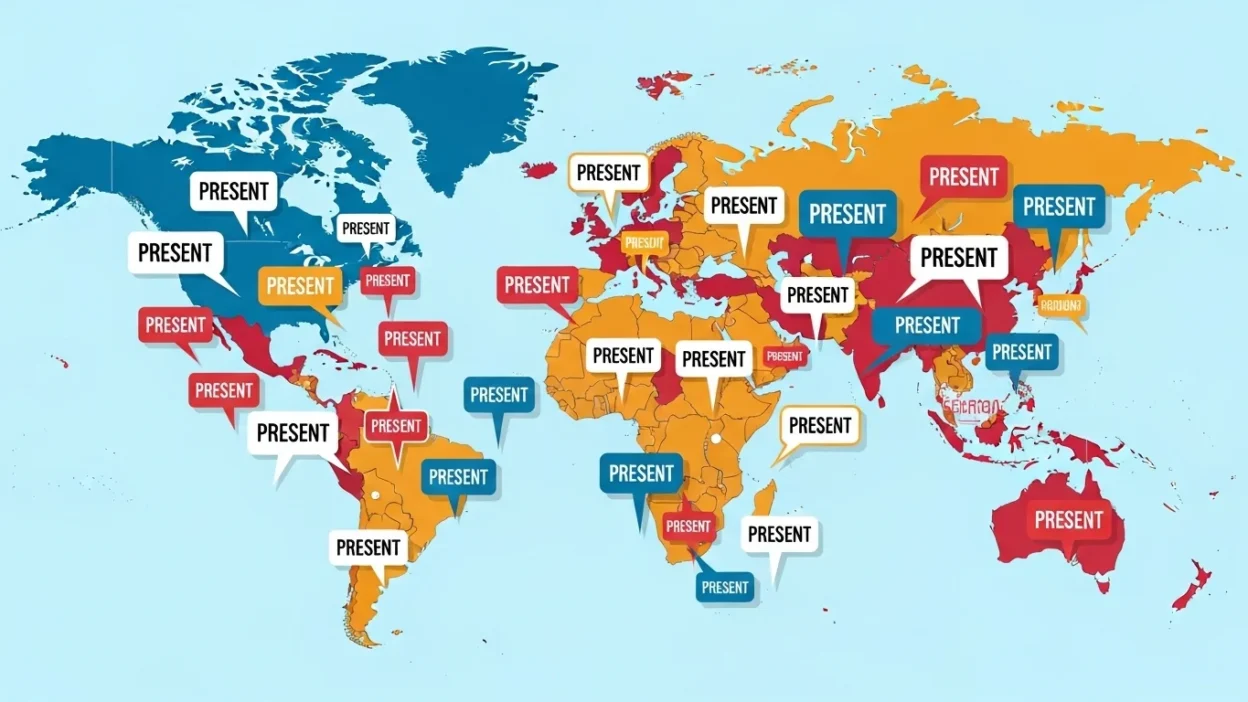
Learning how to say “present” in different languages is not only fun but also useful in everyday communication, travel, and cultural exchanges. Whether you want to greet a teacher in class, announce your presence in a meeting, or simply expand your language skills, knowing the present translations in multiple languages opens doors to global interaction.
In this guide, you’ll discover how to say “present” in all languages, with pronunciations and example sentences to make learning simple and practical.
70 Languages: How to Say “Present” Around the World
| Language | Pronunciation | Example |
| Arabic | haadir | أنا حاضر في الصف. |
| Spanish | presente | Estoy presente en la reunión. |
| French | présent | Je suis présent à la conférence. |
| German | anwesend | Ich bin anwesend heute. |
| Italian | presente | Sono presente alla lezione. |
| Portuguese | presente | Estou presente na reunião. |
| Russian | присутствую (prisutstvuyu) | Я присутствую на уроке. |
| Chinese (Mandarin) | 出席 (chūxí) | 我出席会议。 |
| Japanese | 出席 (shusseki) | 会議に出席しています。 |
| Korean | 출석 (chulseok) | 저는 수업에 출석합니다. |
| Hindi | उपस्थित (upasthit) | मैं कक्षा में उपस्थित हूँ। |
| Bengali | উপস্থিত (upasthit) | আমি ক্লাসে উপস্থিত আছি। |
| Punjabi | ਮੌਜੂਦ (maujood) | ਮੈਂ ਕਲਾਸ ਵਿੱਚ ਮੌਜੂਦ ਹਾਂ। |
| Urdu | موجود (maujud) | میں کلاس میں موجود ہوں۔ |
| Turkish | hazır | Toplantıda hazırım. |
| Persian | حاضر (hazir) | من در جلسه حاضر هستم. |
| Thai | อยู่ (yuu) | ฉันอยู่ในชั้นเรียน |
| Vietnamese | có mặt | Tôi có mặt trong lớp. |
| Malay | hadir | Saya hadir di mesyuarat. |
| Indonesian | hadir | Saya hadir di kelas. |
| Swahili | mko | Niko mko kwenye kikao. |
| Zulu | khona | Ngikhona ekilasini. |
| Xhosa | khoyo | Ndikhoyo engxoxweni. |
| Somali | joogaa | Waxaan joogaa fasalka. |
| Amharic | ቀርቶ ነኝ (qerṭo neñ) | እኔ በክፍል ቀርቻለሁ። |
| Greek | παρών (parón) | Είμαι παρών στη συνάντηση. |
| Hebrew | נוכח (nokheakh) | אני נוכח בכיתה. |
| Polish | obecny | Jestem obecny na lekcji. |
| Czech | přítomen | Jsem přítomen na schůzce. |
| Slovak | prítomný | Som prítomný na hodine. |
| Hungarian | jelen van | Jelen vagyok az órán. |
| Romanian | prezent | Sunt prezent la întâlnire. |
| Bulgarian | присъствам (prisŭstvam) | Присъствам на урока. |
| Serbian | присутан (prisutna/prisutno) | Присутан сам на часу. |
| Croatian | prisutan | Prisutna sam na sastanku. |
| Bosnian | prisutan | Ja sam prisutan na času. |
| Slovenian | prisoten | Sem prisoten na sestanku. |
| Lithuanian | esu | Esu klasėje. |
| Latvian | klāt | Es esmu klāt sapulcē. |
| Estonian | kohal | Olen kohal tunnis. |
| Finnish | läsnä | Olen läsnä kokouksessa. |
| Norwegian | til stede | Jeg er til stede i timen. |
| Swedish | närvarande | Jag är närvarande på mötet. |
| Danish | til stede | Jeg er til stede i klassen. |
| Icelandic | viðstödd | Ég er viðstödd fundinn. |
| Irish | i láthair | Tá mé i láthair sa rang. |
| Scottish Gaelic | an làthair | Tha mi an làthair anns a’ chlas. |
| Welsh | presennol | Rwy’n bresennol yn y dosbarth. |
| Maltese | preżenti | Jien preżenti fil-lezzjoni. |
| Georgian | παρόν (paron) | მე მყავს კლასში. |
| Armenian | ներկայ (nerkats) | Ես ներկայ եմ դասին։ |
| Kazakh | қатысамын (qatysamyn) | Мен сабаққа қатысамын. |
| Uzbek | mavjud | Men darsda mavjudman. |
| Kyrgyz | катышуучу (katyshuu) | Мен сабакта катышуучумун. |
| Tajik | ҳозир (hozir) | Ман дар синф ҳозир ҳастам. |
| Mongolian | оролцож байна (oroltsokh baina) | Би хичээлд оролцож байна. |
| Nepali | उपस्थित (upasthit) | म कक्षामा उपस्थित छु। |
| Sinhala | පැවති (pævati) | මම පන්තියේ පැවතිමි. |
| Burmese | ရှိနေသည် (shi nei) | ကျွန်တော်တန်းထဲမှာရှိနေတယ်။ |
| Khmer | មានសមត្ថភាព (mean samatthapheap) | ខ្ញុំមានសមត្ថភាពក្នុងថ្នាក់។ |
| Lao | ຢູ່ (yuu) | ຂ້ອຍຢູ່ໃນຫ້ອງຮຽນ |
| Malay (Brunei) | hadir | Saya hadir di kelas. |
| Filipino | naroroon | Ako ay naroroon sa klase. |
| Hawaiian | aia | Aia au i ka papa. |
| Tahitian | i teie nei | Ua i teie nei i te fare haapiiraa. |
How to Use “Present” in Different Languages
Knowing present translations helps in classrooms, meetings, and international conversations. You can practice the pronunciation using simple sentences, like “I am present in the class” or “I am present at the meeting,” and gradually expand your vocabulary with other daily phrases.
Tips for Learning “Present” in All Languages
- Repeat aloud: Hearing and speaking the word reinforces memory.
- Use examples: Apply the word in daily sentences.
- Flashcards: Create cards with the language, pronunciation, and example.
- Consistency: Practice 5–10 minutes daily for better retention.
- Cultural context: Some languages use “present” differently; observe native usage.
Conclusion
Learning how to say present in different languages enriches communication and cultural understanding. With this guide, you now have 70 languages, pronunciations, and examples ready for use. Practice regularly, and you’ll confidently use “present” across the world.
FAQs About “Present in Different Languages”
1. How do you say “present” in multiple languages?
You can say “present” in different languages using this guide, with pronunciation and example sentences for context.
2. What is the easiest way to learn “present” in all languages?
Start with the languages most relevant to you and use repetition, examples, and flashcards for practice.
3. Can “present” have different meanings in other languages?
Yes, some languages use “present” to mean “attending” while others may use it for “gift” depending on context.
4. Is there a universal way to pronounce “present”?
There is no universal pronunciation, but practicing each language’s version with examples improves accuracy.
5. Why is learning “present” translations useful?
It helps in classrooms, meetings, travel, and cross cultural communication, making you more confident in global interactions.

Ely Joseph is a language researcher, writer, and contributor who specializes in words, meanings, and multilingual communication. With a strong interest in how language shapes understanding across cultures, Ely focuses on creating clear, accurate, and reader-friendly content for a global audience.