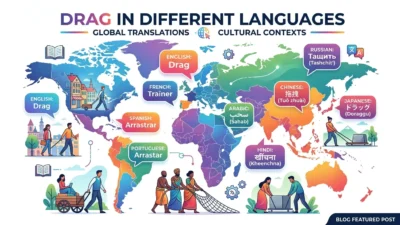

Fear, anxiety, and worry are emotions shared by people everywhere. If you are searching for “dread in different languages,” this guide will help you discover how the word “dread” is expressed across cultures and countries. Learning these translations is useful for language learners, writers, travelers, students, and anyone interested in global communication.
In this article, you will explore how to say “dread” in different languages, along with pronunciation guides and simple real life example sentences. These dread translations around the world are presented in a clean and easy-to-read format for quick learning and better understanding.
How to Say Dread in Different Languages
| Language | Pronunciation | Example |
| English | Dred | I feel dread before the exam. (Meaning: I feel fear before the exam.) |
| Spanish | Temor | I felt temor during the storm. (Meaning: I felt fear during the storm.) |
| French | Crainte | She had crainte about the future. (Meaning: She feared the future.) |
| German | Furcht | He spoke with furcht in his voice. (Meaning: He spoke fearfully.) |
| Italian | Terrore | The child felt terrore at night. (Meaning: The child felt dread at night.) |
| Portuguese | Pavor | They watched the movie with pavor. (Meaning: They watched the movie with fear.) |
| Dutch | Angst | She looked at the dark room with angst. (Meaning: She looked fearfully at the room.) |
| Russian | Strakh | He felt strakh before speaking. (Meaning: He felt dread before speaking.) |
| Ukrainian | Strakh | I saw strakh in his eyes. (Meaning: I saw fear in his eyes.) |
| Polish | Groza | The silence created groza. (Meaning: The silence created dread.) |
| Czech | Hrůza | She screamed in hrůza. (Meaning: She screamed in fear.) |
| Slovak | Hrôza | The news filled him with hrôza. (Meaning: The news filled him with dread.) |
| Hungarian | Rettegés | They lived in rettegés. (Meaning: They lived in fear.) |
| Romanian | Groază | He felt groază before surgery. (Meaning: He felt dread before surgery.) |
| Bulgarian | Strah | The child had strah of thunder. (Meaning: The child feared thunder.) |
| Greek | Fovos | She spoke with fovos. (Meaning: She spoke with fear.) |
| Turkish | Korku | I felt korku in the forest. (Meaning: I felt dread in the forest.) |
| Arabic | Khawf | He showed khawf during the battle. (Meaning: He showed fear during the battle.) |
| Hebrew | Pachad | The loud noise caused pachad. (Meaning: The loud noise caused dread.) |
| Persian | Tars | She hid her tars well. (Meaning: She hid her fear well.) |
| Hindi | Dar | I have dar of failure. (Meaning: I fear failure.) |
| Urdu | Khauf | The village lived in khauf. (Meaning: The village lived in dread.) |
| Bengali | Bhoy | The sound gave me bhoy. (Meaning: The sound gave me fear.) |
| Punjabi | Dar | He felt dar before the interview. (Meaning: He felt dread before the interview.) |
| Gujarati | Bhay | The child had bhay of darkness. (Meaning: The child feared darkness.) |
| Marathi | Bhiti | She looked at him with bhiti. (Meaning: She looked at him fearfully.) |
| Tamil | Bayam | I sensed bayam in her voice. (Meaning: I sensed dread in her voice.) |
| Telugu | Bhayam | The accident caused bhayam. (Meaning: The accident caused fear.) |
| Kannada | Bhaya | He lived in bhaya for years. (Meaning: He lived in dread for years.) |
| Malayalam | Bhayam | The movie created bhayam. (Meaning: The movie created fear.) |
| Sinhala | Biya | She felt biya at night. (Meaning: She felt dread at night.) |
| Nepali | Dar | I saw dar on his face. (Meaning: I saw fear on his face.) |
| Chinese (Mandarin) | Kongju | The story filled me with kongju. (Meaning: The story filled me with dread.) |
| Japanese | Kyōfu | He experienced kyōfu alone. (Meaning: He experienced fear alone.) |
| Korean | Gongpo | The sound caused gongpo. (Meaning: The sound caused dread.) |
| Vietnamese | So Hai | She felt so hai during the flight. (Meaning: She felt fear during the flight.) |
| Thai | Khwam Klua | The child showed khwam klua. (Meaning: The child showed fear.) |
| Indonesian | Ketakutan | He ran in ketakutan. (Meaning: He ran in dread.) |
| Malay | Ketakutan | The noise created ketakutan. (Meaning: The noise created fear.) |
| Filipino | Takot | I felt takot in the dark. (Meaning: I felt dread in the dark.) |
| Swahili | Hofu | The villagers lived in hofu. (Meaning: The villagers lived in fear.) |
| Afrikaans | Vrees | She carried vrees inside her. (Meaning: She carried dread inside her.) |
| Zulu | Ukwesaba | He showed ukwesaba clearly. (Meaning: He showed fear clearly.) |
| Xhosa | Uloyiko | The child felt uloyiko. (Meaning: The child felt dread.) |
| Yoruba | Iberu | The sound brought iberu. (Meaning: The sound brought fear.) |
| Igbo | Egwu | She lived with egwu daily. (Meaning: She lived with dread daily.) |
| Hausa | Tsoro | He spoke with tsoro. (Meaning: He spoke fearfully.) |
| Somali | Cabsi | I felt cabsi before traveling. (Meaning: I felt dread before traveling.) |
| Amharic | Fira | The people had fira of war. (Meaning: The people feared war.) |
| Finnish | Pelko | She felt pelko at midnight. (Meaning: She felt dread at midnight.) |
| Swedish | Rädsla | The film created rädsla. (Meaning: The film created fear.) |
| Norwegian | Frykt | He looked at me with frykt. (Meaning: He looked at me fearfully.) |
| Danish | Frygt | The storm caused frygt. (Meaning: The storm caused dread.) |
| Icelandic | Ótti | She hid her ótti well. (Meaning: She hid her fear well.) |
| Estonian | Hirm | I sensed hirm nearby. (Meaning: I sensed dread nearby.) |
| Latvian | Bailes | The child showed bailes. (Meaning: The child showed fear.) |
| Lithuanian | Baimė | He spoke with baimė. (Meaning: He spoke with dread.) |
| Serbian | Strah | The silence created strah. (Meaning: The silence created fear.) |
| Croatian | Strah | I felt strah before speaking. (Meaning: I felt dread before speaking.) |
| Bosnian | Strah | She lived in strah for years. (Meaning: She lived in fear for years.) |
| Slovenian | Strah | The dark forest caused strah. (Meaning: The dark forest caused dread.) |
| Albanian | Frikë | He showed frikë openly. (Meaning: He showed fear openly.) |
| Georgian | Shishi | The sound created shishi. (Meaning: The sound created dread.) |
| Armenian | Vakh | I saw vakh in her eyes. (Meaning: I saw fear in her eyes.) |
| Azerbaijani | Qorxu | He felt qorxu before the test. (Meaning: He felt dread before the test.) |
| Kazakh | Qorqynysh | The noise caused qorqynysh. (Meaning: The noise caused fear.) |
| Uzbek | Qorquv | She lived with qorquv daily. (Meaning: She lived with dread daily.) |
| Mongolian | Aidas | The storm brought aidas. (Meaning: The storm brought fear.) |
| Lao | Khwam Nyan | The child felt khwam nyan. (Meaning: The child felt dread.) |
| Khmer | Khlach | He had khlach at night. (Meaning: He had fear at night.) |
| Burmese | Kyauk | I sensed kyauk in the room. (Meaning: I sensed dread in the room.) |
| Hawaiian | Makaʻu | She carried makaʻu inside. (Meaning: She carried fear inside.) |
| Maori | Mataku | The loud sound caused mataku. (Meaning: The loud sound caused dread.) |
Dread Translations Around the World
The word “dread” can describe fear, anxiety, terror, or deep worry depending on the situation. Different cultures use unique words that reflect emotional intensity and social context. Understanding dread in all languages helps improve vocabulary, translation skills, and cultural awareness.
Many learners search for how to say dread in different languages because it is a common emotional expression used in conversations, literature, films, and daily life.
Why Learn Dread in Different Languages?
Learning emotional vocabulary is important in any language. Words like “dread” help people express feelings naturally and understand native speakers more effectively.
Benefits include:
- Better communication skills
- Improved translation knowledge
- Stronger language memory
- More natural conversations
- Greater cultural understanding
These dread translations are also useful for writers, bloggers, travelers, and multilingual students.
Common Uses of the Word Dread
The term “dread” is often used in:
- Daily conversations
- Horror stories and movies
- Mental health discussions
- Literature and poetry
- News and media reports
Because it carries strong emotional meaning, the word appears frequently in many global languages.
Conclusion
Learning dread in different languages is a great way to expand your vocabulary and understand emotional expression across cultures. From European and Asian languages to African and Middle Eastern translations, every language has its own unique way of expressing fear and anxiety. This collection of translations helps you discover how dread is spoken around the world in a simple and practical format.
FAQs
1. How do you say dread in different languages?
You can say dread in different languages using words like “temor” in Spanish, “furcht” in German, “dar” in Hindi, and “korku” in Turkish.
2. What does dread mean in English?
Dread means extreme fear, anxiety, or worry about something unpleasant that may happen.
3. Why do people search for dread translations?
People search for dread translations to learn new languages, improve vocabulary, understand emotions, and communicate globally.
4. Is dread the same as fear in all languages?
Not always. Some languages use separate words for fear, terror, anxiety, or emotional dread depending on the context.
5. Which language has the most unique word for dread?
Every language has unique emotional expressions, but words like “kyōfu” in Japanese and “makaʻu” in Hawaiian sound especially distinctive.

Ely Joseph is a language researcher, writer, and contributor who specializes in words, meanings, and multilingual communication. With a strong interest in how language shapes understanding across cultures, Ely focuses on creating clear, accurate, and reader-friendly content for a global audience.