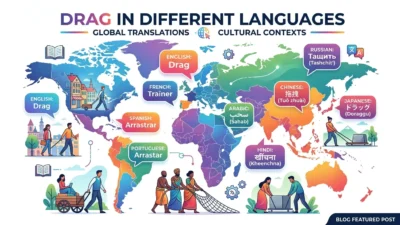

The word “dry” is commonly used in daily conversations, weather reports, food descriptions, skincare discussions, and clothing care.
Learning how to say “dry” in different languages can help travelers, language learners, students, and global communicators understand cultures more effectively.
In this guide, you’ll discover how to say “dry” in different languages with pronunciation and real life examples.
Dry in Different Languages
| Language | Pronunciation | Example |
| English | Dry | The clothes are dry. (Meaning: The clothes have no water.) |
| Spanish | Seco | La ropa está seca. (Meaning: The clothes are dry.) |
| French | Sec | Les vêtements sont secs. (Meaning: The clothes are dry.) |
| German | Trocken | Die Kleidung ist trocken. (Meaning: The clothing is dry.) |
| Italian | Asciutto | Gli abiti sono asciutti. (Meaning: The clothes are dry.) |
| Portuguese | Seco | A roupa está seca. (Meaning: The clothes are dry.) |
| Dutch | Droog | De kleren zijn droog. (Meaning: The clothes are dry.) |
| Russian | Sukhoy | Odezhda sukhaya. (Meaning: The clothes are dry.) |
| Ukrainian | Sukhyy | Odyah sukhyy. (Meaning: The clothes are dry.) |
| Polish | Suchy | Ubrania są suche. (Meaning: The clothes are dry.) |
| Czech | Suchý | Oblečení je suché. (Meaning: The clothes are dry.) |
| Slovak | Suchý | Oblečenie je suché. (Meaning: The clothes are dry.) |
| Hungarian | Száraz | A ruhák szárazak. (Meaning: The clothes are dry.) |
| Romanian | Uscat | Hainele sunt uscate. (Meaning: The clothes are dry.) |
| Bulgarian | Sukh | Drekhite sa sukhi. (Meaning: The clothes are dry.) |
| Greek | Xirós | Ta rouha einai xirá. (Meaning: The clothes are dry.) |
| Turkish | Kuru | Kıyafetler kuru. (Meaning: The clothes are dry.) |
| Arabic | Jaf | Almalabis jafah. (Meaning: The clothes are dry.) |
| Hebrew | Yavesh | Habegadim yeveshim. (Meaning: The clothes are dry.) |
| Persian | Khoshk | Lebasha khoshk hastand. (Meaning: The clothes are dry.) |
| Hindi | Sukha | Kapde sukhe hain. (Meaning: The clothes are dry.) |
| Urdu | Khushk | Kapray khushk hain. (Meaning: The clothes are dry.) |
| Punjabi | Sukka | Kapde sukke han. (Meaning: The clothes are dry.) |
| Bengali | Shukno | Jama shukno. (Meaning: The clothes are dry.) |
| Tamil | Ularndha | Thunigal ularndhullana. (Meaning: The clothes are dry.) |
| Telugu | Podi | Battalu podiga unnayi. (Meaning: The clothes are dry.) |
| Kannada | Ona | Batte ona ide. (Meaning: The clothes are dry.) |
| Malayalam | Unangi | Vasthrangal unangi. (Meaning: The clothes are dry.) |
| Marathi | Korade | Kapde korade ahet. (Meaning: The clothes are dry.) |
| Gujarati | Sukhu | Kapda sukha che. (Meaning: The clothes are dry.) |
| Nepali | Sukha | Luga sukha chan. (Meaning: The clothes are dry.) |
| Sinhala | Viyali | Andum viyali. (Meaning: The clothes are dry.) |
| Chinese Mandarin | Gān | Yīfu gān le. (Meaning: The clothes are dry.) |
| Cantonese | Gon | Saam gon la. (Meaning: The clothes are dry.) |
| Japanese | Kansō | Fuku wa kansō shiteimasu. (Meaning: The clothes are dry.) |
| Korean | Mareun | Ot-i mareosseoyo. (Meaning: The clothes are dry.) |
| Vietnamese | Khô | Quần áo khô rồi. (Meaning: The clothes are dry.) |
| Thai | Haeng | Suea pha haeng laeo. (Meaning: The clothes are dry.) |
| Indonesian | Kering | Pakaiannya kering. (Meaning: The clothes are dry.) |
| Malay | Kering | Baju itu kering. (Meaning: The clothes are dry.) |
| Filipino | Tuyo | Tuyo na ang damit. (Meaning: The clothes are dry.) |
| Swahili | Kavu | Nguo zimekauka. (Meaning: The clothes are dry.) |
| Zulu | Omile | Izingubo zomile. (Meaning: The clothes are dry.) |
| Afrikaans | Droog | Die klere is droog. (Meaning: The clothes are dry.) |
| Somali | Qalalan | Dharku waa qalalan yahay. (Meaning: The clothes are dry.) |
| Amharic | Derek | Libsochu derek new. (Meaning: The clothes are dry.) |
| Hausa | Bushe | Tufafin sun bushe. (Meaning: The clothes are dry.) |
| Yoruba | Gbigbẹ | Aso naa ti gbẹ. (Meaning: The clothes are dry.) |
| Igbo | Akọrọ | Uwe ahụ akọrọla. (Meaning: The clothes are dry.) |
| Finnish | Kuiva | Vaatteet ovat kuivia. (Meaning: The clothes are dry.) |
| Swedish | Torr | Kläderna är torra. (Meaning: The clothes are dry.) |
| Norwegian | Tørr | Klærne er tørre. (Meaning: The clothes are dry.) |
| Danish | Tør | Tøjet er tørt. (Meaning: The clothes are dry.) |
| Icelandic | Þurr | Fötin eru þurr. (Meaning: The clothes are dry.) |
| Estonian | Kuiv | Riided on kuivad. (Meaning: The clothes are dry.) |
| Latvian | Sauss | Drēbes ir sausas. (Meaning: The clothes are dry.) |
| Lithuanian | Sausas | Drabužiai yra sausi. (Meaning: The clothes are dry.) |
| Irish | Tirim | Tá na héadaí tirim. (Meaning: The clothes are dry.) |
| Welsh | Sych | Mae’r dillad yn sych. (Meaning: The clothes are dry.) |
| Scottish Gaelic | Tioram | Tha an t-aodach tioram. (Meaning: The clothes are dry.) |
| Albanian | Thatë | Rrobat janë të thata. (Meaning: The clothes are dry.) |
| Serbian | Suv | Odeća je suva. (Meaning: The clothes are dry.) |
| Croatian | Suho | Odjeća je suha. (Meaning: The clothes are dry.) |
| Bosnian | Suho | Odjeća je suha. (Meaning: The clothes are dry.) |
| Slovenian | Suho | Oblačila so suha. (Meaning: The clothes are dry.) |
| Macedonian | Suv | Obekata e suva. (Meaning: The clothes are dry.) |
| Georgian | Mshrali | Samosi mshraliა. (Meaning: The clothes are dry.) |
| Armenian | Chor | Hagusdnerը chor en. (Meaning: The clothes are dry.) |
| Azerbaijani | Quru | Paltarlar qurudur. (Meaning: The clothes are dry.) |
| Kazakh | Qurgaq | Kiimder qurgaq. (Meaning: The clothes are dry.) |
| Uzbek | Quruq | Kiyimlar quruq. (Meaning: The clothes are dry.) |
| Mongolian | Huurai | Hubtsas huurai baina. (Meaning: The clothes are dry.) |
| Khmer | Suot | Khnaey suot haey. (Meaning: The clothes are dry.) |
Why Learn Dry Translations in All Languages?
Learning “dry” translations can improve communication in many real-life situations. Travelers may need the word while discussing weather, laundry, skin conditions, or food textures. Language learners also benefit from understanding commonly used adjectives like “dry.”
Knowing how to say “dry” around the world can help with:
- International travel
- Language learning
- Cultural understanding
- Daily communication
- Translation practice
How to Say Dry in Different Languages Correctly
Pronunciation is important when learning new vocabulary. Some languages use sounds that may not exist in English, so practicing with native pronunciation can improve fluency.
Here are simple tips:
- Repeat words aloud daily
- Learn example sentences
- Practice with native speakers
- Focus on common everyday situations
- Use the word naturally in conversation
Dry Around the World: Common Usage
The word “dry” is used differently across cultures and contexts. In some countries, it is commonly used for weather conditions, while in others it is often connected to food, farming, or skincare.
Examples include:
- Dry weather
- Dry clothes
- Dry skin
- Dry food
- Dry season
Because it is a universal descriptive word, “dry in different languages” remains a popular search topic among students and travelers.
Conclusion
Learning how to say “dry” in different languages is a useful and practical way to expand your vocabulary and communicate globally. From European languages to Asian and African languages, this guide helps you understand “dry translations” around the world in a simple and beginner friendly format.
FAQs
1. How do you say dry in different languages?
You can say dry as “Seco” in Spanish, “Trocken” in German, “Kuru” in Turkish, “Khô” in Vietnamese, and “Gān” in Chinese.
2. What is the most common translation of dry?
The translation depends on the language. For example, “Dry” becomes “Sec” in French and “Asciutto” in Italian.
3. Why do people search for dry in all languages?
People search for dry translations for travel, language learning, education, translation work, and cultural understanding.
4. Is dry a commonly used word worldwide?
Yes, dry is a basic everyday adjective used globally in weather, clothing, food, and skincare conversations.
5. What is the easiest way to learn dry translations?
The best way is to learn through example sentences, pronunciation practice, and repeated daily usage.

Marak Robort is a content writer and researcher with a strong interest in language, meanings, and digital information. His work focuses on presenting clear, easy-to-understand explanations that help readers quickly grasp complex ideas.