Many people get confused between “vender” and “vendor” because the two words look almost the same. They sound similar, and both are connected to selling things. Because of this, students, English learners, and even native speakers sometimes use the wrong spelling.
The good news is that the difference is actually very simple.
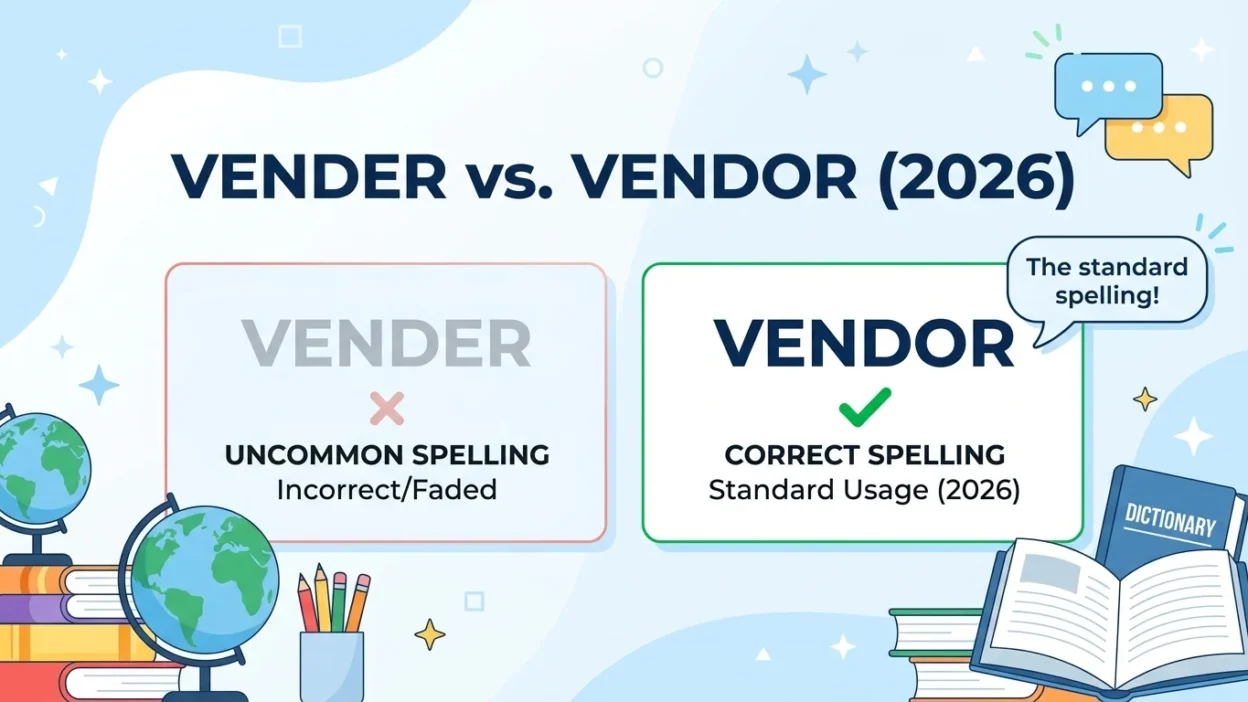
In most situations, “vendor” is the correct and common word.
“Vender” exists too, but people rarely use it today.
This article will explain everything in very easy English so you can understand the difference clearly and never feel confused again.
Quick Answer
Here is the short and simple answer:
- Vendor = the common and correct word for a person or company that sells something
- Vender = an old or less common spelling of a seller
- In modern English, people almost always use vendor
- You will see vendor in:
- business
- schools
- news articles
- online shopping
- contracts
- everyday English
Simple Example
✅ Correct:
- The food vendor sells ice cream.
❌ Rare/Uncommon:
- The food vender sells ice cream.
Simple Origin and Background
To understand the difference better, it helps to know where the words came from.
Both words come from old forms of English and Latin words connected to selling.
Long ago, English spelling was not always fixed. Different spellings were common. Because of this, both vendor and vender appeared in writing.
Over time, English speakers slowly chose one spelling more often.
That spelling became:
Vendor
Today, “vendor” is the standard spelling in modern English.
“Vender” still exists in some dictionaries, but it is very uncommon and often sounds outdated.
Clear Explanation of the Difference
The biggest difference is usage.
Vendor
“Vendor” is the modern and widely accepted word.
It means:
- a person who sells something
- a company that sells products or services
You can use it in:
- business
- shopping
- technology
- schools
- events
- law
- daily conversation
Examples
- A street vendor sells snacks.
- The software vendor updated the app.
- We spoke to the book vendor.
- Food vendors were outside the stadium.
Vender
“Vender” can also mean someone who sells something, but people rarely use this spelling now.
Most English speakers may think it is:
- a spelling mistake
- old fashioned English
- incorrect usage
In modern writing, “vender” is uncommon.
Example
- The vender offered fresh fruit.
This sentence is understandable, but most people would still write:
✅ The vendor offered fresh fruit.
Vendor vs Vender Comparison
| Feature | Vendor | Vender |
| Common today? | Yes | No |
| Modern standard spelling? | Yes | No |
| Meaning | Seller | Seller |
| Used in business English? | Yes | Rarely |
| Used in schools and books? | Yes | Very rarely |
| Seen online often? | Yes | Almost never |
| Best choice for learners? | Yes | No |
| Sounds natural today? | Yes | Usually not |
Which One Should You Use?
The simple answer is:
Use “vendor” almost all the time.
This is the safest and most natural choice.
You should use vendor when talking about:
- sellers
- companies
- businesses
- online stores
- market sellers
- event sellers
- software companies
- service providers
Examples
- The vendor delivered the supplies.
- We hired a wedding vendor.
- The vendor sells computer parts.
- Street vendors sell fresh juice.
When Might You See “Vender”?
You may still see “vender”:
- in very old books
- in legal writing
- in historical texts
- as a family name
- as a spelling mistake online
But for normal English today, you do not need to use it.
Common Mistakes People Make
1. Thinking Both Words Are Equally Common
This is not true.
“Vendor” is far more common.
2. Using “Vender” in School Writing
Students sometimes think:
- seller = vender
But teachers usually expect:
- seller = vendor
3. Confusing the Word Because of Pronunciation
Some accents make “vendor” sound close to “vender.”
This causes spelling mistakes.
4. Copying Incorrect Online Spelling
Sometimes websites or social media posts contain spelling mistakes. Learners copy them without checking.
Always remember:
✅ Vendor = standard modern spelling
5. Mixing Vendor with Vending
People also get confused because of the word:
Vending
Example:
- vending machine
Since “vending” uses an “e,” some learners write “vender.”
But the correct noun is still:
✅ vendor
Everyday Real Life Examples
Here are simple examples from daily life.
In Emails
✅ Correct:
- Please contact the vendor for payment details.
- The vendor sent the invoice yesterday.
❌ Uncommon:
- Please contact the vender.
In News Articles
You often read:
- Local vendors joined the festival.
- Street vendors protested new rules.
You almost never see:
- street venders
In Social Media Posts
Examples:
- Support local vendors!
- Looking for wedding vendors near me.
- Small vendors need more customers.
In Online Shopping
E-commerce websites often use:
- vendor account
- vendor payment
- vendor support
“Vendor” is the normal business word.
In Schools and Colleges
Teachers may write:
- food vendors on campus
- approved vendors
- book vendors
Again, “vendor” is standard English.
In Daily Conversation
- fruit vendor
- ticket vendor
- market vendor
- software vendor
Most people do not say “vender.”
Short Learning Section for Students and Beginners
Here is an easy way to remember the difference.
Memory Trick
Think:
Vendor = Very common
Both words start with “V.”
This can help you remember that vendor is the normal modern spelling.
Simple Rule
If you are unsure, always choose:
✅ Vendor
You will almost never be wrong with this choice.
Practice Sentences
Fill in the blank:
- The street _____ sells flowers.
✅ vendor - We contacted the software _____.
✅ vendor - The food _____ arrived early.
✅ vendor
Beginner Tip
If your keyboard or spell checker marks “vender” as unusual, that is because modern English strongly prefers “vendor.”
FAQ Section
1. Is “vender” a real word?
Yes, “vender” is a real word, but it is very uncommon today.
2. Which spelling is correct: vendor or vender?
“Vendor” is the standard and preferred modern spelling.
3. Do both words mean the same thing?
Yes, both words can mean a seller, but “vendor” is the common modern form.
4. Why do people confuse vendor and vender?
People confuse them because:
- they look similar
- they sound similar
- “vending” contains the letter “e”
5. Should students use “vendor” or “vender”?
Students should use:
✅ vendor
This is the spelling teachers and modern English books expect.
6. Is “vender” wrong?
Not completely, but it sounds outdated and uncommon in modern English.
7. Which spelling is used in business English?
Business English almost always uses:
✅ vendor
Examples:
- software vendor
- approved vendor
- vendor payment
8. Can I use “vendor” in formal writing?
Yes. “Vendor” is correct in:
- formal writing
- academic writing
- business writing
- professional emails
Conclusion
The difference between “vendor” and “vender” is mostly about modern usage.
Both words are connected to selling, but today:
- vendor is the standard, common, and correct choice
- vender is rare and old fashioned
If you want your English to sound natural and correct, use:
✅ Vendor
This is the spelling used in schools, businesses, news articles, online shopping, and everyday English.
For students, ESL learners, and beginners, the easiest rule is simple:
When talking about a seller, choose “vendor.”

David William is a language enthusiast, researcher, and content creator at Lingoveb. With a deep passion for words, meanings, and global communication, he focuses on making language simple, clear, and accessible for readers around the world.