Understanding how to say number 1 in different languages is useful for travel, education, business, and everyday communication. Whether you’re learning a new language or just curious, knowing basic numbers is one of the first and most practical steps.
In this guide, you’ll discover number 1 translations around the world, along with pronunciation and simple example sentences to help you remember them easily.
Number 1 in All Languages (70 Examples)
| Language | Pronunciation | Example |
| English | One | I have one apple. (English meaning: I have one apple.) |
| Spanish | Uno | Tengo uno perro. (English meaning: I have one dog.) |
| French | Un | J’ai un chat. (English meaning: I have one cat.) |
| German | Eins | Ich habe eins Buch. (English meaning: I have one book.) |
| Italian | Uno | Ho uno cane. (English meaning: I have one dog.) |
| Portuguese | Um | Eu tenho um carro. (English meaning: I have one car.) |
| Dutch | Eén | Ik heb één fiets. (English meaning: I have one bike.) |
| Russian | Odin | U menya odin drug. (English meaning: I have one friend.) |
| Chinese (Mandarin) | Yi | Wo you yi zhi mao. (English meaning: I have one cat.) |
| Japanese | Ichi | Watashi wa ichi ringo o motteimasu. (English meaning: I have one apple.) |
| Korean | Hana | Naneun hana chaek-i issda. (English meaning: I have one book.) |
| Arabic | Wahid | Ladayya wahid kitab. (English meaning: I have one book.) |
| Hindi | Ek | Mere paas ek kitab hai. (English meaning: I have one book.) |
| Urdu | Aik | Mere paas aik kitab hai. (English meaning: I have one book.) |
| Turkish | Bir | Benim bir arabam var. (English meaning: I have one car.) |
| Greek | Ena | Echo ena vivlio. (English meaning: I have one book.) |
| Polish | Jeden | Mam jeden kot. (English meaning: I have one cat.) |
| Swedish | Ett | Jag har ett hus. (English meaning: I have one house.) |
| Danish | En | Jeg har en hund. (English meaning: I have one dog.) |
| Norwegian | En | Jeg har en bil. (English meaning: I have one car.) |
| Finnish | Yksi | Minulla on yksi kirja. (English meaning: I have one book.) |
| Hungarian | Egy | Van egy macskám. (English meaning: I have one cat.) |
| Czech | Jeden | Mám jeden dům. (English meaning: I have one house.) |
| Slovak | Jeden | Mám jeden pes. (English meaning: I have one dog.) |
| Romanian | Unu | Am unu frate. (English meaning: I have one brother.) |
| Bulgarian | Edno | Imam edno dete. (English meaning: I have one child.) |
| Serbian | Jedan | Imam jedan auto. (English meaning: I have one car.) |
| Croatian | Jedan | Imam jedan pas. (English meaning: I have one dog.) |
| Slovenian | Ena | Imam ena knjiga. (English meaning: I have one book.) |
| Ukrainian | Odyn | Ya mayu odyn dim. (English meaning: I have one house.) |
| Hebrew | Echad | Yesh li echad sefer. (English meaning: I have one book.) |
| Persian | Yek | Man yek ketab daram. (English meaning: I have one book.) |
| Thai | Nueng | Chan mee nueng maew. (English meaning: I have one cat.) |
| Vietnamese | Mot | Toi co mot con cho. (English meaning: I have one dog.) |
| Indonesian | Satu | Saya punya satu mobil. (English meaning: I have one car.) |
| Malay | Satu | Saya ada satu buku. (English meaning: I have one book.) |
| Filipino | Isa | May isa akong aso. (English meaning: I have one dog.) |
| Swahili | Moja | Nina moja kitabu. (English meaning: I have one book.) |
| Zulu | Kunye | Ngine kunye inja. (English meaning: I have one dog.) |
| Afrikaans | Een | Ek het een kat. (English meaning: I have one cat.) |
| Icelandic | Einn | Ég á einn hund. (English meaning: I have one dog.) |
| Irish | Aon | Tá aon cat agam. (English meaning: I have one cat.) |
| Welsh | Un | Mae gen i un ci. (English meaning: I have one dog.) |
| Scottish Gaelic | Aon | Tha aon leabhar agam. (English meaning: I have one book.) |
| Latvian | Viens | Man ir viens suns. (English meaning: I have one dog.) |
| Lithuanian | Vienas | Turiu vienas katė. (English meaning: I have one cat.) |
| Estonian | Üks | Mul on üks maja. (English meaning: I have one house.) |
| Albanian | Nje | Kam nje liber. (English meaning: I have one book.) |
| Macedonian | Eden | Imam eden avtomobil. (English meaning: I have one car.) |
| Armenian | Mek | Yes mek girk unem. (English meaning: I have one book.) |
| Georgian | Erti | Me erti tsigni maqvs. (English meaning: I have one book.) |
| Mongolian | Neg | Bi neg nomtai. (English meaning: I have one book.) |
| Nepali | Ek | Ma sanga ek kitab cha. (English meaning: I have one book.) |
| Sinhala | Eka | Mata eka potak thiyenawa. (English meaning: I have one book.) |
| Khmer | Muoy | Khnhom mean muoy seavphov. (English meaning: I have one book.) |
| Lao | Neung | Khoi mi neung pum. (English meaning: I have one book.) |
| Burmese | Tit | Nga tit sar oak shi de. (English meaning: I have one book.) |
| Tamil | Ondru | Enakku ondru pusthagam ulladhu. (English meaning: I have one book.) |
| Telugu | Okati | Na daggara okati pustakam undi. (English meaning: I have one book.) |
| Kannada | Ondu | Nanna hatra ondu pustaka ide. (English meaning: I have one book.) |
| Malayalam | Onnu | Enikku onnu pustakam undu. (English meaning: I have one book.) |
| Bengali | Ek | Amar kache ek boi ache. (English meaning: I have one book.) |
| Gujarati | Ek | Mari pase ek pustak chhe. (English meaning: I have one book.) |
| Punjabi | Ik | Mere kol ik kitab hai. (English meaning: I have one book.) |
| Marathi | Ek | Majhya kade ek pustak aahe. (English meaning: I have one book.) |
| Pashto | Yaw | Zama sara yaw kitab de. (English meaning: I have one book.) |
| Kazakh | Bir | Mende bir kitap bar. (English meaning: I have one book.) |
| Uzbek | Bir | Menda bir kitob bor. (English meaning: I have one book.) |
How to Say Number 1 in Different Languages
Learning how to say number 1 in different languages is one of the easiest ways to begin language learning. Numbers are universal and frequently used in daily conversations like counting, shopping, and telling time.
Across languages, you’ll notice similarities such as:
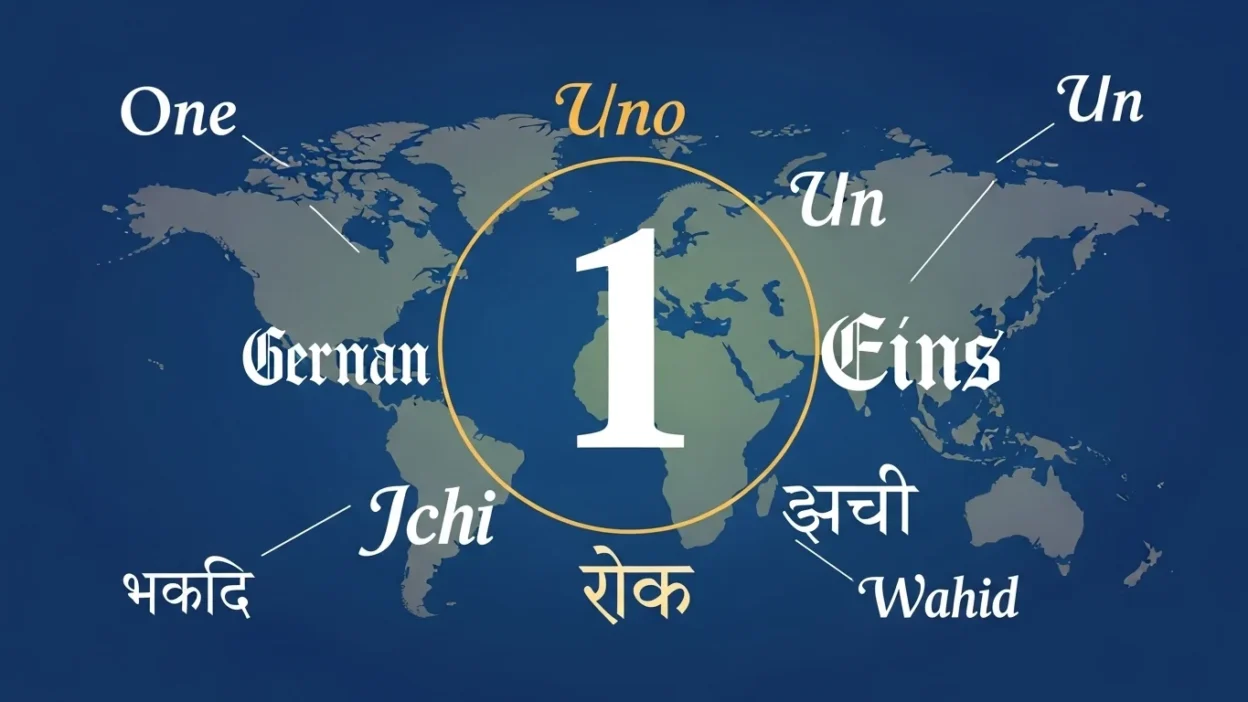
- “Uno” in Spanish and Italian
- “Un” in French
- “Ein/Eins” in Germanic languages
These patterns make learning faster and more intuitive.
Why Learn Number 1 Translations?
Knowing number 1 in all languages helps you:
- Build a strong foundation in new languages
- Communicate basic ideas quickly
- Improve memory through simple repetition
- Travel more confidently
Even a single word like “one” connects you with cultures worldwide.
Number 1 Around the World: Quick Insights
- Many European languages share similar roots for numbers
- Asian languages often have completely unique systems
- Pronunciation varies widely, even when spelling looks similar
Exploring number 1 translations gives you a glimpse into linguistic diversity.
Conclusion
Learning number 1 in different languages is simple, practical, and surprisingly fun. It opens the door to understanding global communication and helps you take the first step in mastering any language. Start with “one,” and you’re already on your way.
FAQs
1. How do you say number 1 in all languages?
You can’t list every language, but common translations include “one,” “uno,” “un,” “eins,” and “ichi.”
2. Why is learning numbers important in languages?
Numbers are used daily in counting, shopping, dates, and time, making them essential for beginners.
3. What is the easiest way to remember number 1 in different languages?
Practice with simple sentences and group similar-sounding words together.
4. Are number systems similar across languages?
Some languages share similarities due to common roots, while others are completely different.
5. How can I practice number 1 translations daily?
Use flashcards, repeat aloud, and include numbers in everyday conversations.