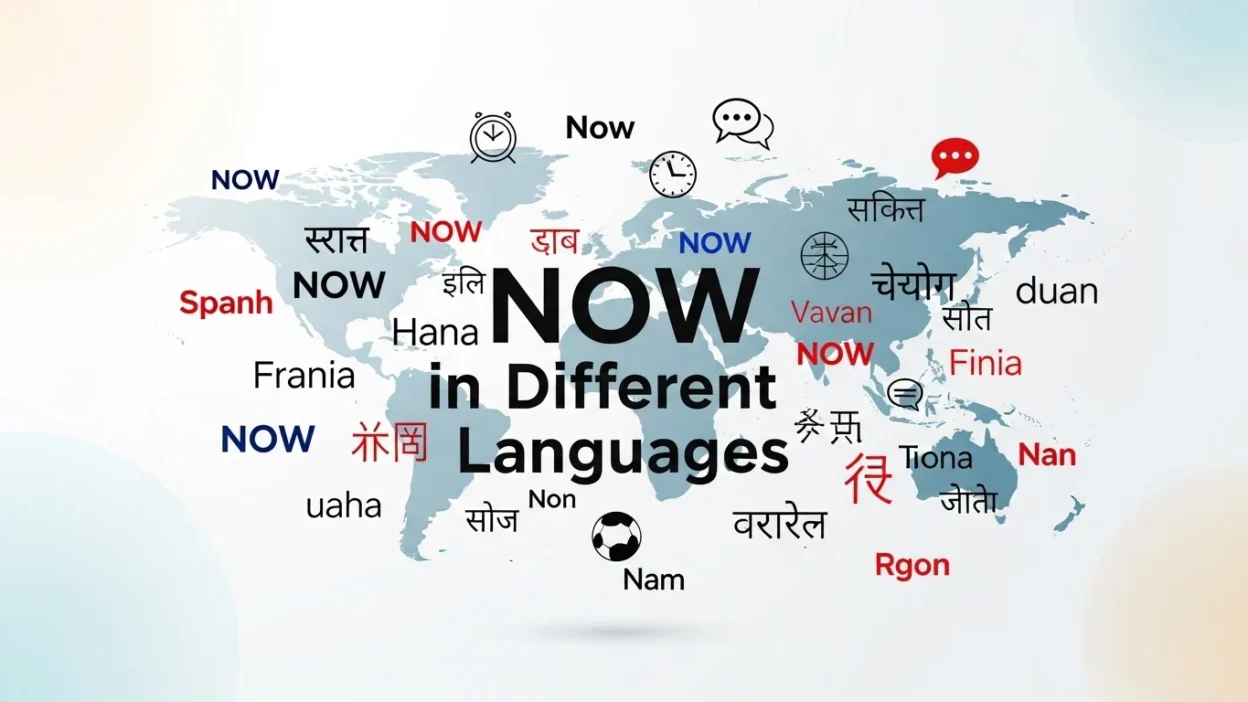
Understanding how to say “now” in different languages is incredibly useful for travelers, language learners, and anyone interested in global communication. Whether you’re trying to express urgency, talk about the present moment, or simply expand your vocabulary, knowing these translations can make conversations smoother and more meaningful.
In this guide, you’ll discover “now in all languages”, along with pronunciation and real life examples. This will help you confidently use the word in everyday situations across cultures.
How to Say “Now” in Different Languages (70 Examples)
| Language | Pronunciation | Example |
| English | nau | I need it now. (I need it at this moment.) |
| Spanish | ahora | Lo necesito ahora. (I need it now.) |
| French | maintenant | J’en ai besoin maintenant. (I need it now.) |
| German | jetzt | Ich brauche es jetzt. (I need it now.) |
| Italian | adesso | Ne ho bisogno adesso. (I need it now.) |
| Portuguese | agora | Eu preciso disso agora. (I need it now.) |
| Dutch | nu | Ik heb het nu nodig. (I need it now.) |
| Russian | seychas | Мне нужно это сейчас. (I need it now.) |
| Arabic | al-aan | أحتاجه الآن. (I need it now.) |
| Turkish | şimdi | Buna şimdi ihtiyacım var. (I need it now.) |
| Hindi | abhi | मुझे यह अभी चाहिए। (I need it now.) |
| Urdu | abhi | مجھے یہ ابھی چاہیے۔ (I need it now.) |
| Bengali | ekhon | আমার এখন এটা দরকার। (I need it now.) |
| Punjabi | hun | ਮੈਨੂੰ ਇਹ ਹੁਣ ਚਾਹੀਦਾ ਹੈ। (I need it now.) |
| Chinese (Mandarin) | xianzai | 我现在需要它。 (I need it now.) |
| Japanese | ima | 今それが必要です。 (I need it now.) |
| Korean | jigeum | 지금 필요해요. (I need it now.) |
| Thai | ton-nee | ฉันต้องการมันตอนนี้ (I need it now.) |
| Vietnamese | bay gio | Tôi cần nó bây giờ. (I need it now.) |
| Indonesian | sekarang | Saya membutuhkannya sekarang. (I need it now.) |
| Malay | sekarang | Saya perlukan sekarang. (I need it now.) |
| Filipino | ngayon | Kailangan ko ito ngayon. (I need it now.) |
| Greek | tora | Το χρειάζομαι τώρα. (I need it now.) |
| Polish | teraz | Potrzebuję tego teraz. (I need it now.) |
| Czech | ted | Potřebuji to teď. (I need it now.) |
| Slovak | teraz | Potrebujem to teraz. (I need it now.) |
| Hungarian | most | Most szükségem van rá. (I need it now.) |
| Romanian | acum | Am nevoie de asta acum. (I need it now.) |
| Bulgarian | sega | Трябва ми сега. (I need it now.) |
| Serbian | sada | Treba mi sada. (I need it now.) |
| Croatian | sada | Trebam to sada. (I need it now.) |
| Bosnian | sada | Trebam to sada. (I need it now.) |
| Slovenian | zdaj | Potrebujem to zdaj. (I need it now.) |
| Ukrainian | zaraz | Мені це потрібно зараз. (I need it now.) |
| Finnish | nyt | Tarvitsen sen nyt. (I need it now.) |
| Swedish | nu | Jag behöver det nu. (I need it now.) |
| Norwegian | na | Jeg trenger det nå. (I need it now.) |
| Danish | nu | Jeg har brug for det nu. (I need it now.) |
| Icelandic | nu | Ég þarf það núna. (I need it now.) |
| Estonian | nuud | Ma vajan seda nüüd. (I need it now.) |
| Latvian | tagad | Man to vajag tagad. (I need it now.) |
| Lithuanian | dabar | Man to reikia dabar. (I need it now.) |
| Swahili | sasa | Nahitaji sasa. (I need it now.) |
| Zulu | manje | Ngiyidinga manje. (I need it now.) |
| Xhosa | ngoku | Ndiyayifuna ngoku. (I need it now.) |
| Afrikaans | nou | Ek het dit nou nodig. (I need it now.) |
| Amharic | ahun | አሁን እፈልጋለሁ። (I need it now.) |
| Somali | hadda | Waxaan u baahanahay hadda. (I need it now.) |
| Yoruba | bayi | Mo nilo bayi. (I need it now.) |
| Igbo | ugbu a | Achọrọ m ya ugbu a. (I need it now.) |
| Hausa | yanzu | Ina bukatar yanzu. (I need it now.) |
| Persian | alan | الان به آن نیاز دارم. (I need it now.) |
| Pashto | اوس | زه اوس ورته اړتیا لرم. (I need it now.) |
| Nepali | ahile | मलाई अहिले चाहिन्छ। (I need it now.) |
| Sinhala | den | මට දැන් එය අවශ්යයි. (I need it now.) |
| Tamil | ippo | எனக்கு இப்போது தேவை. (I need it now.) |
| Telugu | ippudu | నాకు ఇప్పుడు అవసరం. (I need it now.) |
| Kannada | iga | ನನಗೆ ಈಗ ಬೇಕು. (I need it now.) |
| Malayalam | ippol | എനിക്ക് ഇപ്പോൾ വേണം. (I need it now.) |
| Marathi | atta | मला आत्ता हवे आहे. (I need it now.) |
| Gujarati | have | મને હવે જોઈએ છે. (I need it now.) |
| Khmer | ilov | ខ្ញុំត្រូវការឥឡូវនេះ។ (I need it now.) |
| Lao | tonni | ຂ້ອຍຕ້ອງການດຽວນີ້. (I need it now.) |
| Burmese | a-khu | အခုလိုအပ်တယ်။ (I need it now.) |
| Mongolian | odoo | Надад одоо хэрэгтэй. (I need it now.) |
| Georgian | akhla | ახლა მჭირდება. (I need it now.) |
| Armenian | hima | Հիմա պետք է ինձ։ (I need it now.) |
| Albanian | tani | Më duhet tani. (I need it now.) |
| Macedonian | sega | Ми треба сега. (I need it now.) |
Why Learning “Now” in All Languages Matters
Knowing how to say “now in different languages” helps you express urgency and timing in conversations worldwide. It’s one of the most commonly used words in daily speech, making it essential for beginners and advanced learners alike.
It also improves listening skills, travel communication, and cultural understanding.
Tips to Remember “Now” Translations Easily
Learning “how to say now in different languages” can feel overwhelming, but these tips help:
- Focus on similar-sounding words like “nu” (Dutch, Swedish, Danish)
- Practice daily with simple sentences
- Use repetition and real-life examples
- Group languages by region
“Now” Around the World: Usage Insight
Across cultures, the word “now” is often used not just for time but also to express urgency, emotion, or importance. In some languages, tone and context can change its intensity, making it even more powerful in communication.
Conclusion
Learning “now in all languages” is a simple yet powerful step toward mastering global communication. With these 70 translations, you can confidently express the present moment anywhere in the world.
FAQs
1. What is the most common translation of “now” worldwide?
Most languages have a short, simple word for “now,” such as “nu,” “ahora,” or “jetzt.”
2. How do you say “now” in Asian languages?
Examples include “ima” (Japanese), “xianzai” (Chinese), and “jigeum” (Korean).
3. Why is “now” important in language learning?
It’s a basic word used daily to express time, urgency, and immediate action.
4. Are there similar words for “now” in different languages?
Yes, many European languages share similar forms like “nu” or “now”-like sounds.
5. How can I memorize “now translations” faster?
Practice with sentences, repetition, and grouping languages by similarity.