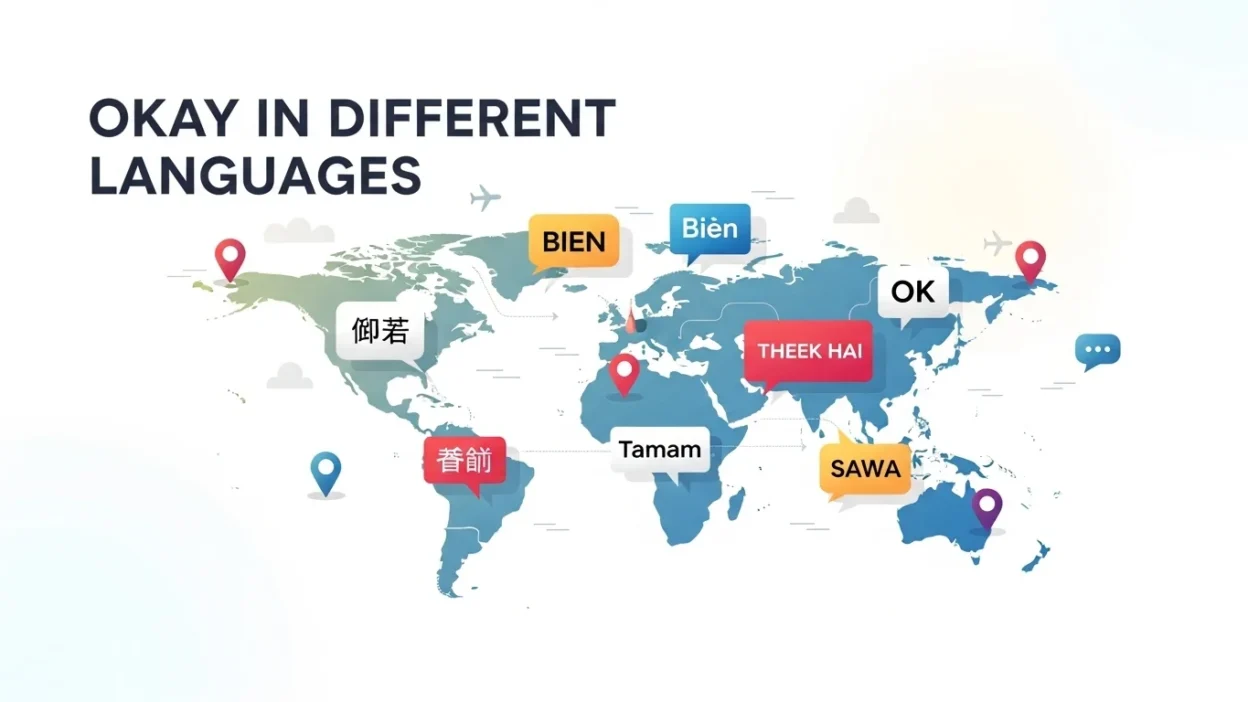
Understanding how to say “okay” in different languages is one of the easiest and most practical ways to connect with people globally.
Whether you’re traveling, learning a new language, or simply curious, knowing these simple expressions helps you communicate agreement, understanding, or approval anywhere in the world.
In this guide, you’ll discover how to say okay in different languages, along with pronunciation and real-life examples. This makes it easy to learn, remember, and use in daily conversations.
How to Say Okay in Different Languages
| Language | Pronunciation | Example |
| English | oh-kay | Okay, I will call you later. (Meaning: Agreement) |
| Spanish | oh-kah | Está bien, vamos. (Meaning: It’s okay, let’s go) |
| French | oh-kay | C’est okay pour moi. (Meaning: It’s okay for me) |
| German | oh-kay | Okay, ich komme. (Meaning: Okay, I’m coming) |
| Italian | oh-kay | Okay, va bene. (Meaning: Okay, that’s fine) |
| Portuguese | oh-kay | Está ok agora. (Meaning: It’s okay now) |
| Dutch | oh-kay | Oké, dat is goed. (Meaning: Okay, that’s good) |
| Russian | khah-rah-shoh | Хорошо, я согласен. (Meaning: Okay, I agree) |
| Chinese (Mandarin) | hǎo | 好,我们走吧。 (Meaning: Okay, let’s go) |
| Japanese | daijoubu | 大丈夫です。 (Meaning: It’s okay) |
| Korean | gwaen-chan-ah | 괜찮아요. (Meaning: It’s okay) |
| Arabic | tayyib | طيب، حاضر. (Meaning: Okay, sure) |
| Hindi | theek hai | ठीक है, मैं आऊंगा। (Meaning: Okay, I will come) |
| Urdu | theek hai | ٹھیک ہے، میں آؤں گا۔ (Meaning: Okay, I will come) |
| Turkish | ta-mam | Tamam, geliyorum. (Meaning: Okay, I’m coming) |
| Greek | en-dah-xi | Εντάξει, πάμε. (Meaning: Okay, let’s go) |
| Polish | doh-bzhe | Dobrze, zrobię to. (Meaning: Okay, I’ll do it) |
| Swedish | oh-kay | Okej, jag förstår. (Meaning: Okay, I understand) |
| Norwegian | oh-kay | Ok, vi går. (Meaning: Okay, we go) |
| Danish | oh-kay | Okay, jeg er klar. (Meaning: Okay, I’m ready) |
| Finnish | oh-kay | Okei, mennään. (Meaning: Okay, let’s go) |
| Czech | doh-bzhe | Dobře, přijdu. (Meaning: Okay, I’ll come) |
| Slovak | doh-bre | Dobre, urobím to. (Meaning: Okay, I’ll do it) |
| Hungarian | rend-ben | Rendben, megyek. (Meaning: Okay, I’m going) |
| Romanian | bine | Bine, vin. (Meaning: Okay, I’m coming) |
| Bulgarian | doh-breh | Добре, ще дойда. (Meaning: Okay, I’ll come) |
| Serbian | oh-kay | Ok, dolazim. (Meaning: Okay, I’m coming) |
| Croatian | oh-kay | Ok, vidimo se. (Meaning: Okay, see you) |
| Ukrainian | do-breh | Добре, зроблю. (Meaning: Okay, I’ll do it) |
| Hebrew | beh-seh-der | בסדר, אני בא. (Meaning: Okay, I’m coming) |
| Persian | khoob | خوب، انجام میدهم. (Meaning: Okay, I’ll do it) |
| Thai | dai | ได้, ไปกัน. (Meaning: Okay, let’s go) |
| Vietnamese | ok/duoc | Được, tôi đồng ý. (Meaning: Okay, I agree) |
| Indonesian | oh-kay | Oke, saya datang. (Meaning: Okay, I’m coming) |
| Malay | oh-kay | Okey, saya setuju. (Meaning: Okay, I agree) |
| Filipino | oh-kay | Okay, pupunta ako. (Meaning: Okay, I’ll go) |
| Swahili | sa-wa | Sawa, nitakuja. (Meaning: Okay, I’ll come) |
| Zulu | kulungile | Kulungile, ngiyavuma. (Meaning: Okay, I agree) |
| Afrikaans | oh-kay | Oukei, ek verstaan. (Meaning: Okay, I understand) |
| Amharic | ishi | እሺ, እመጣለሁ. (Meaning: Okay, I’ll come) |
| Somali | ha-yay | Haye, waan imaanayaa. (Meaning: Okay, I’m coming) |
| Bengali | theek ache | ঠিক আছে, আসছি। (Meaning: Okay, coming) |
| Tamil | sa-ri | சரி, வருகிறேன். (Meaning: Okay, I’m coming) |
| Telugu | sare | సరే, వస్తాను. (Meaning: Okay, I’ll come) |
| Marathi | theek ahe | ठीक आहे, येतो. (Meaning: Okay, I’ll come) |
| Gujarati | sa-ru | સારું, આવીશ. (Meaning: Okay, I’ll come) |
| Punjabi | theek hai | ਠੀਕ ਹੈ, ਆਵਾਂਗਾ। (Meaning: Okay, I’ll come) |
| Sinhala | hari | හරි, එන්නම්. (Meaning: Okay, I’ll come) |
| Nepali | theek cha | ठीक छ, म आउँछु। (Meaning: Okay, I’ll come) |
| Khmer | ban | បាន, ខ្ញុំនឹងទៅ។ (Meaning: Okay, I’ll go) |
| Lao | dai | ໄດ້, ຂ້ອຍຈະໄປ. (Meaning: Okay, I’ll go) |
| Burmese | ho-deh | ဟုတ်တယ်, သွားမယ်။ (Meaning: Okay, I’ll go) |
| Mongolian | za | За, явъя. (Meaning: Okay, let’s go) |
| Kazakh | zha-ra-y | Жарайды, келемін. (Meaning: Okay, I’ll come) |
| Uzbek | ho-p | Xo‘p, boraman. (Meaning: Okay, I’ll go) |
| Azerbaijani | ya-khshi | Yaxşı, gəlirəm. (Meaning: Okay, I’m coming) |
| Georgian | kar-gi | კარგი, მოვალ. (Meaning: Okay, I’ll come) |
| Armenian | la-v | Լավ, կգամ. (Meaning: Okay, I’ll come) |
| Albanian | oh-kay | Ok, po vij. (Meaning: Okay, I’m coming) |
| Macedonian | doh-bro | Добро, ќе дојдам. (Meaning: Okay, I’ll come) |
| Icelandic | oh-kay | Ok, ég kem. (Meaning: Okay, I’ll come) |
| Irish | go mah | Go maith, tuigim. (Meaning: Okay, I understand) |
| Welsh | iawn | Iawn, dwi’n dod. (Meaning: Okay, I’m coming) |
| Basque | a-dos | Ados, etorriko naiz. (Meaning: Okay, I’ll come) |
| Maltese | sew-wa | Sewwa, ġej. (Meaning: Okay, I’m coming) |
| Haitian Creole | dakò | Dakò, mwen vini. (Meaning: Okay, I’m coming) |
| Luxembourgish | oh-kay | Okay, ech kommen. (Meaning: Okay, I’m coming) |
| Estonian | oh-kay | Okei, tulen. (Meaning: Okay, I’m coming) |
| Latvian | la-bi | Labi, nākšu. (Meaning: Okay, I’ll come) |
| Lithuanian | ge-rai | Gerai, ateisiu. (Meaning: Okay, I’ll come) |
Why Learning “Okay” Translations Matters
Knowing okay translations helps in everyday conversations more than you might expect. It’s one of the most frequently used words globally. Whether you’re confirming plans, showing understanding, or agreeing politely, this simple word plays a key role.
It’s also one of the first words language learners memorize because of its universal usefulness.
Tips to Remember “Okay” Around the World
To master how to say okay in different languages, focus on patterns:
- Many languages directly use “okay” or “ok”
- Others use words meaning “good” or “fine”
- Practice with short sentences instead of memorizing single words
- Repeat pronunciation out loud for better retention
Common Variations of “Okay” Globally
Different cultures use variations of “okay” depending on tone and context:
- Formal vs informal usage
- Slang variations in casual speech
- Body language paired with the word
Understanding these nuances improves real-life communication and avoids confusion.
Conclusion
Learning okay in different languages is a simple yet powerful step toward global communication. From “theek hai” in South Asia to “tamam” in Turkey and “sawa” in Africa, this small word connects people everywhere.
By practicing these phrases, you’ll quickly build confidence and sound more natural in multilingual conversations.
FAQs
1. What is the most common way to say okay worldwide?
“Okay” or “OK” is widely understood globally, especially in informal contexts.
2. How do you say okay in Asian languages?
Examples include “theek hai” (Hindi/Urdu), “hao” (Chinese), and “daijoubu” (Japanese).
3. Are okay translations the same in every situation?
No, some languages use different words depending on formality or context.
4. Why is “okay” important in language learning?
It’s a high-frequency word used in daily conversations for agreement and understanding.
5. Is “okay” universally understood?
In many countries, yes but learning local alternatives improves communication.

Ely Joseph is a language researcher, writer, and contributor who specializes in words, meanings, and multilingual communication. With a strong interest in how language shapes understanding across cultures, Ely focuses on creating clear, accurate, and reader-friendly content for a global audience.