
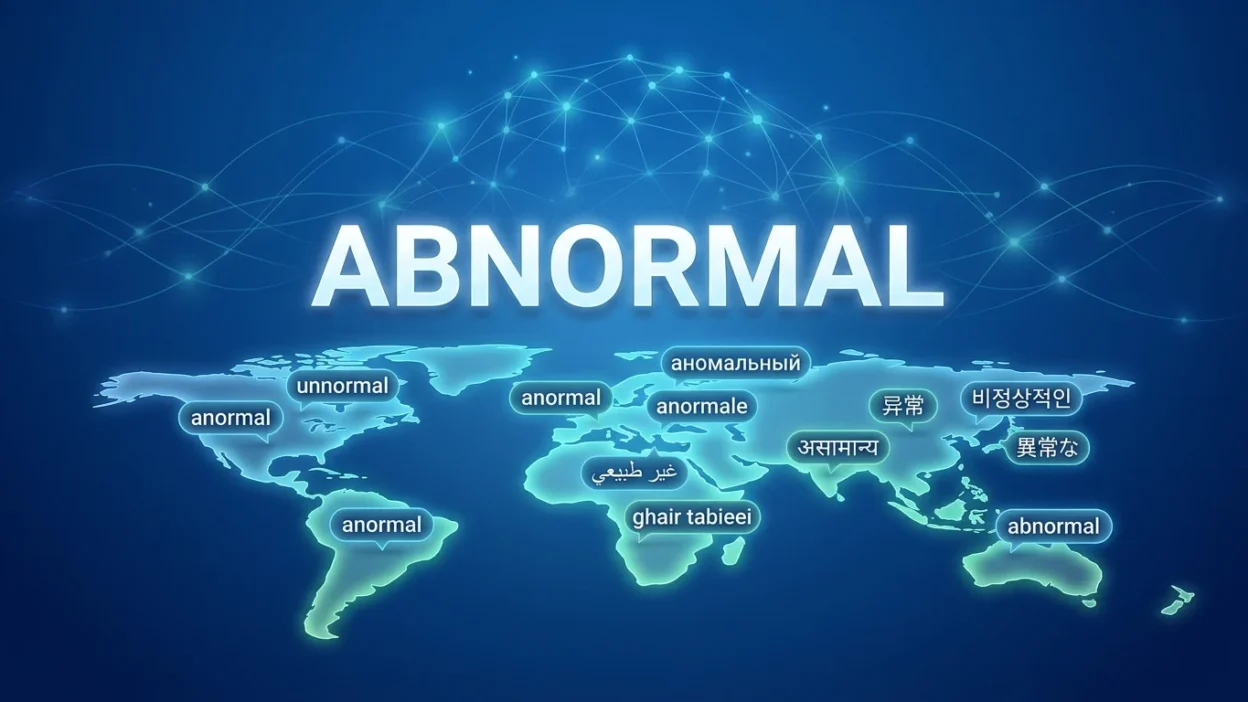
The word “abnormal” is widely used in everyday communication, science, medicine, psychology, and general descriptions to indicate something that is unusual or not normal. Understanding how to say abnormal in different languages helps learners, travelers, translators, and researchers communicate more effectively across cultures.
Abnormal in Different Languages
| Language | Pronunciation | Example | English Meaning |
| English | ab-NOR-mal | His behavior is abnormal today. | His behavior is not normal today. |
| Spanish | a-nor-MAL | Su comportamiento es anormal hoy. | His behavior is abnormal today. |
| French | a-nor-MAL | Son comportement est anormal. | His behavior is abnormal. |
| German | ab-NOR-mal | Sein Verhalten ist abnormal. | His behavior is abnormal. |
| Italian | a-nor-MA-le | Il suo comportamento è anormale. | His behavior is abnormal. |
| Portuguese | a-nor-MAL | Seu comportamento é anormal. | His behavior is abnormal. |
| Russian | a-no-MAL-nyy | Его поведение аномальное. | His behavior is abnormal. |
| Chinese (Simplified) | yì cháng | 他的行为异常。 | His behavior is abnormal. |
| Chinese (Traditional) | yì cháng | 他的行為異常。 | His behavior is abnormal. |
| Japanese | i-jō | 彼の行動は異常です。 | His behavior is abnormal. |
| Korean | bi-jeong-sang | 그의 행동은 비정상이다. | His behavior is abnormal. |
| Arabic | ghayr ta-bi’i | سلوكه غير طبيعي. | His behavior is abnormal. |
| Hindi | a-sa-ma-ny | उसका व्यवहार असामान्य है। | His behavior is abnormal. |
| Urdu | ghair ma-mooli | اس کا رویہ غیر معمولی ہے۔ | His behavior is abnormal. |
| Bengali | o-sho-bha-bik | তার আচরণ অস্বাভাবিক। | His behavior is abnormal. |
| Punjabi | a-sa-dha-ran | ਉਸ ਦਾ ਵਿਵਹਾਰ ਅਸਧਾਰਨ ਹੈ। | His behavior is abnormal. |
| Turkish | a-nor-mal | Davranışı anormal. | His behavior is abnormal. |
| Persian | gheyr-e a-di | رفتارش غیرعادی است. | His behavior is abnormal. |
| Thai | phit po-ka-ti | พฤติกรรมของเขาผิดปกติ | His behavior is abnormal. |
| Vietnamese | bat thuong | Hành vi của anh ấy bất thường. | His behavior is abnormal. |
| Indonesian | ab-nor-mal | Perilakunya abnormal. | His behavior is abnormal. |
| Malay | ti-da-k no-rmal | Tingkah lakunya tidak normal. | His behavior is abnormal. |
| Filipino | ab-nor-mal | Abnormal ang kanyang ugali. | His behavior is abnormal. |
| Dutch | ab-nor-maal | Zijn gedrag is abnormaal. | His behavior is abnormal. |
| Greek | a-no-ma-los | Η συμπεριφορά του είναι ανώμαλη. | His behavior is abnormal. |
| Polish | a-nor-mal-ny | Jego zachowanie jest anormalne. | His behavior is abnormal. |
| Czech | ab-nor-mál-ní | Jeho chování je abnormální. | His behavior is abnormal. |
| Slovak | ab-nor-mál-ny | Jeho správanie je abnormálne. | His behavior is abnormal. |
| Hungarian | ab-nor-má-lis | A viselkedése abnormális. | His behavior is abnormal. |
| Romanian | a-nor-mal | Comportamentul lui este anormal. | His behavior is abnormal. |
| Bulgarian | a-no-ma-len | Поведението му е аномално. | His behavior is abnormal. |
| Serbian | ab-nor-ma-lan | Njegovo ponašanje je abnormalno. | His behavior is abnormal. |
| Croatian | ab-nor-ma-lan | Njegovo ponašanje je abnormalno. | His behavior is abnormal. |
| Bosnian | ab-nor-ma-lan | Njegovo ponašanje je abnormalno. | His behavior is abnormal. |
| Ukrainian | a-no-mal-nyy | Його поведінка аномальна. | His behavior is abnormal. |
| Swedish | o-nor-mal | Hans beteende är onormalt. | His behavior is abnormal. |
| Norwegian | u-nor-mal | Hans oppførsel er unormal. | His behavior is abnormal. |
| Danish | u-nor-mal | Hans adfærd er unormal. | His behavior is abnormal. |
| Finnish | e-pä-nor-maa-li | Hänen käytöksensä on epänormaali. | His behavior is abnormal. |
| Icelandic | ó-eð-li-leg-ur | Hegðun hans er óeðlileg. | His behavior is abnormal. |
| Hebrew | lo nor-ma-li | ההתנהגות שלו לא נורמלית. | His behavior is abnormal. |
| Swahili | si-yo ya ka-i-da | Tabia yake si ya kawaida. | His behavior is abnormal. |
| Zulu | oku-ng-a-jwa-ye-le-ki-le | Ukuziphatha kwakhe akujwayelekile. | His behavior is abnormal. |
| Xhosa | e-nga-qha-kek-ile | Ukuziphatha kwakhe akuqhelekanga. | His behavior is abnormal. |
| Amharic | ya-l-te-le-me-de | ባህሪው ያልተለመደ ነው። | His behavior is abnormal. |
| Yoruba | ai-ba-mu | Iwa rẹ jẹ aibamu. | His behavior is abnormal. |
| Igbo | na-a-di-ghi mma | Omume ya adịghị mma. | His behavior is abnormal. |
| Hausa | ma-ra al-ada | Halinsa mara al’ada ne. | His behavior is abnormal. |
| Tamil | a-sa-dha-ra-na | அவரது நடத்தை அசாதாரணம். | His behavior is abnormal. |
| Telugu | a-sa-dha-ra-na | అతని ప్రవర్తన అసాధారణం. | His behavior is abnormal. |
| Kannada | a-sa-ma-ny-a | ಅವನ ವರ್ತನೆ ಅಸಾಮಾನ್ಯವಾಗಿದೆ. | His behavior is abnormal. |
| Malayalam | a-sa-dha-ra-na | അവന്റെ പെരുമാറ്റം അസാധാരണമാണ്. | His behavior is abnormal. |
| Marathi | a-sa-ma-ny | त्याचे वर्तन असामान्य आहे. | His behavior is abnormal. |
| Gujarati | a-sa-ma-ny | તેનું વર્તન અસામાન્ય છે. | His behavior is abnormal. |
| Sinhala | a-sa-ma-ny-a | ඔහුගේ හැසිරීම අසාමාන්යය. | His behavior is abnormal. |
| Nepali | a-sa-ma-ny | उसको व्यवहार असामान्य छ। | His behavior is abnormal. |
| Lao | phit pok-ka-ti | ພຶດຕິກຳຂອງລາວຜິດປົກກະຕິ. | His behavior is abnormal. |
| Khmer | min thom-meta | អាកប្បកិរិយារបស់គាត់មិនធម្មតា។ | His behavior is abnormal. |
| Mongolian | khe-viin bus | Түүний зан байдал хэвийн бус. | His behavior is abnormal. |
| Kazakh | qa-lyp-tan tıs | Оның мінез-құлқы қалыптан тыс. | His behavior is abnormal. |
| Uzbek | g’ay-ri-od-di-y | Uning xulqi g’ayrioddiy. | His behavior is abnormal. |
| Azerbaijani | a-nor-mal | Onun davranışı anormaldır. | His behavior is abnormal. |
| Georgian | a-ra-nor-ma-lu-ri | მისი ქცევა არანორმალურია. | His behavior is abnormal. |
| Armenian | an-nor-mal | Նրա վարքագիծը աննորմալ է. | His behavior is abnormal. |
| Lithuanian | ne-nor-ma-lus | Jo elgesys nenormalus. | His behavior is abnormal. |
| Latvian | ne-nor-māls | Viņa uzvedība ir nenormāla. | His behavior is abnormal. |
| Estonian | e-ba-nor-maal-ne | Tema käitumine on ebanormaalne. | His behavior is abnormal. |
| Irish | neam-hgh-nách | Tá a iompar neamhghnách. | His behavior is abnormal. |
| Welsh | an-nor-mal | Mae ei ymddygiad yn annormal. | His behavior is abnormal. |
| Scottish Gaelic | neo-àbhaisteach | Tha a ghiùlan neo-àbhaisteach. | His behavior is abnormal. |
| Basque | a-nor-mal | Bere portaera anormala da. | His behavior is abnormal. |
| Catalan | a-nor-mal | El seu comportament és anormal. | His behavior is abnormal. |
| Galician | a-nor-mal | O seu comportamento é anormal. | His behavior is abnormal. |
How to Say Abnormal in Different Languages Around the World
Learning abnormal translations helps in medical studies, psychology research, travel communication, and multilingual writing. Many languages use similar Latin-based roots like “anormal” or “abnormal,” while others use completely unique native words.
Why Learning “Abnormal” in Multiple Languages Matters
Understanding how to express abnormal in different languages improves:
- Cross cultural communication
- Medical and psychological understanding
- Translation accuracy
- Language learning speed
Common Usage of Abnormal Worldwide
The word “abnormal” is commonly used in:
- Medical diagnosis
- Behavioral studies
- Scientific reports
- Everyday conversations
Conclusion
The word “abnormal” may seem simple, but its translation across languages shows the diversity and richness of global communication. Learning these variations helps improve understanding, translation quality, and cultural awareness.
FAQs
1. What does abnormal mean in different languages?
It refers to something unusual, not normal, or outside standard behavior or condition.
2. How do you say abnormal in Spanish?
It is “anormal.”
3. Is abnormal the same in all languages?
No, each language has its own pronunciation and form.
4. Why is learning abnormal translations useful?
It helps in education, translation, and communication across cultures.
5. What is the most common translation of abnormal globally?
“Anormal” or similar variations are most common in many languages.

David William is a language enthusiast, researcher, and content creator at Lingoveb. With a deep passion for words, meanings, and global communication, he focuses on making language simple, clear, and accessible for readers around the world.