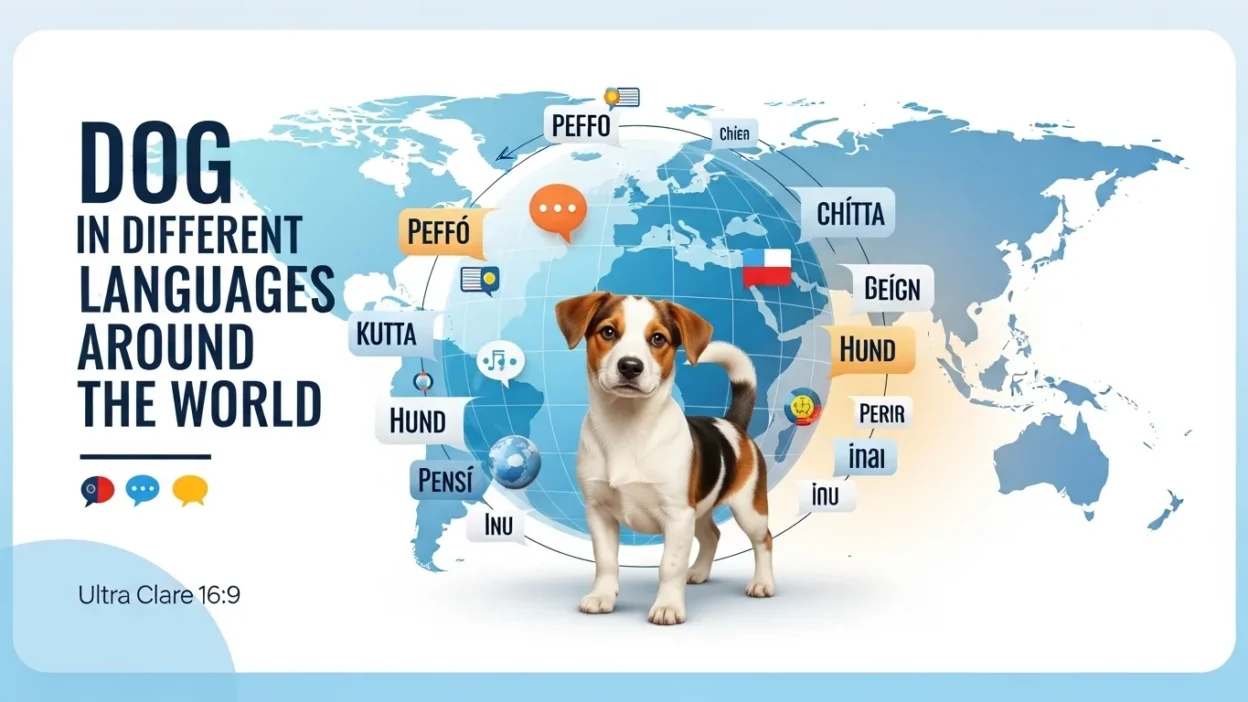
Understanding dog in different languages is a fun and useful way to explore global communication. Whether you are a language learner, traveler, researcher knowing how to say dog in all languages helps you connect with people and cultures worldwide.
In this guide, you will discover how to say dog in different languages, along with pronunciation and real life example sentences.
Dog in Different Languages
| Language | Pronunciation | Example |
| English | dog | I saw a dog in the park. (A pet animal was seen in the park.) |
| Spanish | perro | Vi un perro en la calle. (I saw a dog on the street.) |
| French | chien | J’ai un chien à la maison. (I have a dog at home.) |
| German | Hund | Der Hund schläft im Garten. (The dog is sleeping in the garden.) |
| Italian | cane | Il cane corre veloce. (The dog runs fast.) |
| Portuguese | cão | O cão está feliz. (The dog is happy.) |
| Dutch | hond | De hond speelt buiten. (The dog is playing outside.) |
| Russian | sobaka | Sobaka igraet vo dvore. (The dog is playing in the yard.) |
| Arabic | kalb | الكلب في البيت. (The dog is in the house.) |
| Hindi | kutta | कुत्ता सो रहा है। (The dog is sleeping.) |
| Urdu | kuttā | کتا باہر ہے۔ (The dog is outside.) |
| Bengali | kukur | কুকুর দৌড়াচ্ছে। (The dog is running.) |
| Punjabi | kutta | ਕੁੱਤਾ ਬਾਹਰ ਹੈ। (The dog is outside.) |
| Chinese (Mandarin) | gǒu | 狗在跑。 (The dog is running.) |
| Japanese | inu | 犬が公園にいる。 (The dog is in the park.) |
| Korean | gae | 개가 집에 있다. (The dog is at home.) |
| Turkish | köpek | Köpek bahçede. (The dog is in the garden.) |
| Greek | skýlos | Ο σκύλος τρέχει. (The dog is running.) |
| Swedish | hund | Hunden sover. (The dog is sleeping.) |
| Norwegian | hund | Hunden leker. (The dog is playing.) |
| Danish | hund | Hunden er glad. (The dog is happy.) |
| Finnish | koira | Koira juoksee. (The dog is running.) |
| Polish | pies | Pies biega. (The dog is running.) |
| Czech | pes | Pes spí. (The dog is sleeping.) |
| Slovak | pes | Pes je doma. (The dog is at home.) |
| Hungarian | kutya | A kutya fut. (The dog is running.) |
| Romanian | câine | Câinele aleargă. (The dog is running.) |
| Bulgarian | kuche | Куче играе. (The dog is playing.) |
| Serbian | pas | Pas spava. (The dog is sleeping.) |
| Croatian | pas | Pas je vani. (The dog is outside.) |
| Bosnian | pas | Pas trči. (The dog is running.) |
| Albanian | qen | Qeni është këtu. (The dog is here.) |
| Hebrew | kelev | הכלב רץ. (The dog is running.) |
| Persian | sag | سگ میدود. (The dog is running.) |
| Thai | maa | หมาอยู่บ้าน (The dog is at home.) |
| Vietnamese | chó | Con chó đang chạy. (The dog is running.) |
| Indonesian | anjing | Anjing itu tidur. (The dog is sleeping.) |
| Malay | anjing | Anjing bermain. (The dog is playing.) |
| Filipino | aso | Ang aso ay tumatakbo. (The dog is running.) |
| Swahili | mbwa | Mbwa anakimbia. (The dog is running.) |
| Zulu | inja | Inja iyadlala. (The dog is playing.) |
| Xhosa | inja | Inja ilele. (The dog is sleeping.) |
| Afrikaans | hond | Die hond speel. (The dog is playing.) |
| Icelandic | hundur | Hundurinn sover. (The dog is sleeping.) |
| Latvian | suns | Suns skrien. (The dog is running.) |
| Lithuanian | šuo | Šuo bėga. (The dog is running.) |
| Estonian | koer | Koer magab. (The dog is sleeping.) |
| Ukrainian | sobaka | Собака грає. (The dog is playing.) |
| Belarusian | sabaka | Сабака бяжыць. (The dog is running.) |
| Mongolian | nohoi | Нохой гүйж байна. (The dog is running.) |
| Nepali | kukur | कुकुर दौडिरहेको छ। (The dog is running.) |
| Sinhala | balu | බල්ලා දුවනවා. (The dog is running.) |
| Tamil | nai | நாய் ஓடுகிறது. (The dog is running.) |
| Telugu | kukka | కుక్క పరుగెడుతోంది. (The dog is running.) |
| Kannada | naayi | ನಾಯಿ ಓಡುತ್ತಿದೆ. (The dog is running.) |
| Malayalam | naay | നായ ഓടുന്നു. (The dog is running.) |
| Gujarati | kutro | કૂતરો દોડી રહ્યો છે. (The dog is running.) |
| Marathi | kutra | कुत्रा धावत आहे. (The dog is running.) |
| Uzbek | it | It yugurmoqda. (The dog is running.) |
| Kazakh | it | Ит жүгіріп жүр. (The dog is running.) |
| Kyrgyz | it | Ит чуркап жатат. (The dog is running.) |
| Azerbaijani | it | It qaçır. (The dog is running.) |
| Armenian | shun | Շունը վազում է. (The dog is running.) |
| Georgian | dzaghli | ძაღლი დარბის. (The dog is running.) |
| Lao | maa | ຫມາກຳລັງແລ່ນ. (The dog is running.) |
| Khmer | chkae | ឆ្កែរត់។ (The dog is running.) |
| Burmese | khway | ခွေးပြေးနေသည်။ (The dog is running.) |
| Haitian Creole | chen | Chen an ap kouri. (The dog is running.) |
| Irish | madra | Tá an madra ag rith. (The dog is running.) |
| Welsh | ci | Mae’r ci yn rhedeg. (The dog is running.) |
How to Say Dog in Different Languages Around the World
Learning dog translations across languages shows how diverse human communication is. Some languages use completely different roots like “chien” in French or “perro” in Spanish, while others share similarities like “hund” in Germanic languages.
Why Learning “Dog in All Languages” is Useful
- Helps in language learning
- Improves cultural understanding
- Useful for travel communication
- Enhances vocabulary building
Dog Translations and Global Language Patterns
Many languages group words for animals differently. For example:
- Indo European languages often use similar sounding roots
- Asian languages often have unique native terms
- African languages use short, phonetic words like “mbwa” or “inja”
Conclusion
Learning dog in different languages is an interesting way to explore global linguistics. From “dog” in English to “chien,” “perro,” and “kutta,” each word reflects culture and communication styles around the world.
FAQs
1. What is dog in different languages?
It is the translation of the word “dog” into multiple global languages.
2. How do you say dog in Spanish?
Dog in Spanish is “perro.”
3. How do you say dog in French?
Dog in French is “chien.”
4. Why is it useful to learn dog in different languages?
It helps in language learning, travel, and cultural understanding.
5. What is dog in Hindi and Urdu?
In Hindi it is “kutta,” and in Urdu it is also “kutta.”

Ely Joseph is a language researcher, writer, and contributor who specializes in words, meanings, and multilingual communication. With a strong interest in how language shapes understanding across cultures, Ely focuses on creating clear, accurate, and reader-friendly content for a global audience.