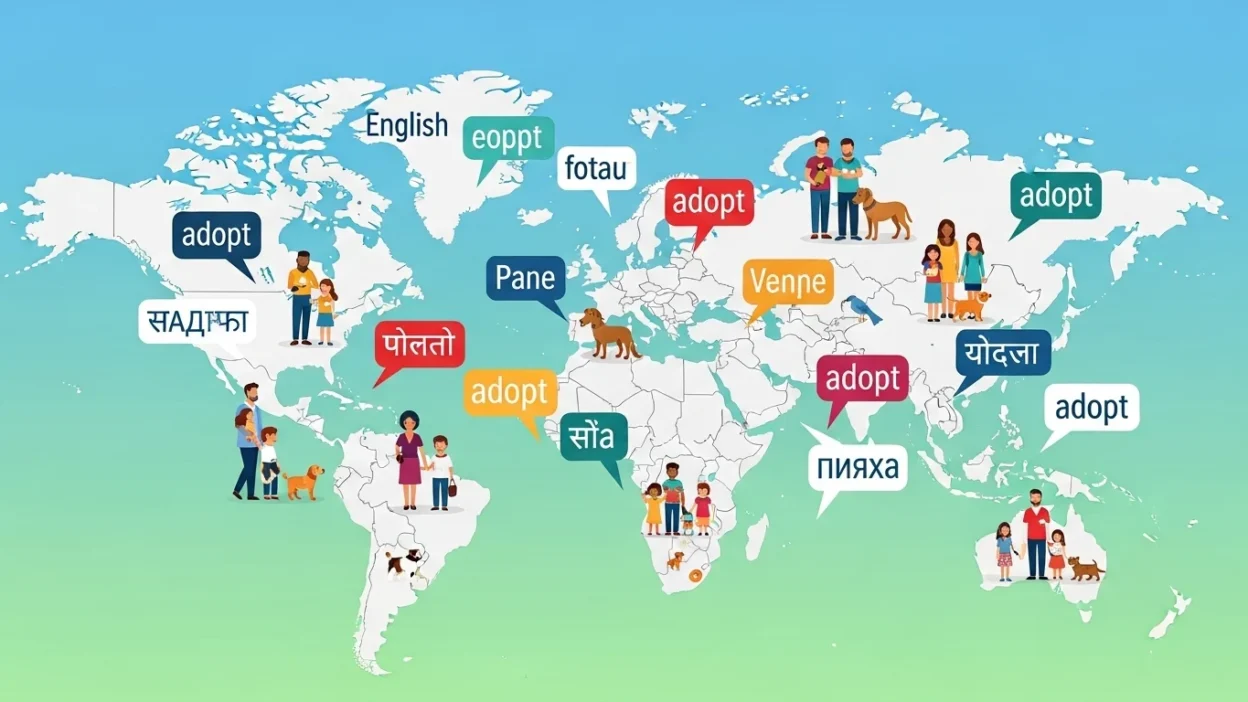
Understanding how to say “adopt” in different languages is useful for travelers, language learners, writers, and anyone interested in global communication.
Whether you’re discussing adoption of a child, a pet, or even ideas and habits, knowing these translations helps you connect across cultures.
In this guide, you’ll discover 70 languages, each with pronunciation and a real-life example sentence. This makes it easier to understand how the word is used naturally in everyday conversations.
Adopt in All Languages
| Language | Pronunciation | Example |
| English | uh-DOPT | They decided to adopt a child. (Meaning: They chose to legally take a child as their own.) |
| Spanish | ah-dohp-TAR | Ellos decidieron adoptar un niño. (Meaning: They decided to adopt a child.) |
| French | ah-dop-TAY | Ils ont décidé d’adopter un enfant. (Meaning: They decided to adopt a child.) |
| German | ah-dop-TEE-ren | Sie beschlossen, ein Kind zu adoptieren. (Meaning: They decided to adopt a child.) |
| Italian | ah-dot-TAH-reh | Hanno deciso di adottare un bambino. (Meaning: They decided to adopt a child.) |
| Portuguese | ah-dohp-TAR | Eles decidiram adotar uma criança. (Meaning: They decided to adopt a child.) |
| Dutch | ah-DOP-teh-ren | Ze besloten een kind te adopteren. (Meaning: They decided to adopt a child.) |
| Russian | ah-dap-TEE-ro-vat | Они решили усыновить ребёнка. (Meaning: They decided to adopt a child.) |
| Chinese (Mandarin) | shōu-yǎng | 他们决定收养一个孩子。 (Meaning: They decided to adopt a child.) |
| Japanese | yō-shi ni suru | 彼らは子供を養子にすることにした。 (Meaning: They decided to adopt a child.) |
| Korean | yang-ja hada | 그들은 아이를 입양하기로 결정했다. (Meaning: They decided to adopt a child.) |
| Arabic | taban-na | قرروا تبني طفل. (Meaning: They decided to adopt a child.) |
| Hindi | god lena | उन्होंने एक बच्चे को गोद लिया। (Meaning: They adopted a child.) |
| Urdu | god lena | انہوں نے ایک بچے کو گود لیا۔ (Meaning: They adopted a child.) |
| Turkish | evlat edinmek | Bir çocuk evlat edinmeye karar verdiler. (Meaning: They decided to adopt a child.) |
| Greek | yio-the-TEO | Αποφάσισαν να υιοθετήσουν ένα παιδί. (Meaning: They decided to adopt a child.) |
| Polish | ah-dop-TO-vach | Postanowili adoptować dziecko. (Meaning: They decided to adopt a child.) |
| Swedish | ah-dop-TE-ra | De bestämde sig för att adoptera ett barn. (Meaning: They decided to adopt a child.) |
| Norwegian | ah-dop-TE-re | De bestemte seg for å adoptere et barn. (Meaning: They decided to adopt a child.) |
| Danish | ah-dop-TE-re | De besluttede at adoptere et barn. (Meaning: They decided to adopt a child.) |
| Finnish | ah-dop-TOI-da | He päättivät adoptoida lapsen. (Meaning: They decided to adopt a child.) |
| Czech | ah-dop-TO-vat | Rozhodli se adoptovat dítě. (Meaning: They decided to adopt a child.) |
| Hungarian | ah-dop-TAL-ni | Úgy döntöttek, hogy örökbe fogadnak egy gyereket. (Meaning: They decided to adopt a child.) |
| Romanian | ah-dop-TA | Au decis să adopte un copil. (Meaning: They decided to adopt a child.) |
| Bulgarian | ah-dop-TEE-ram | Те решиха да осиновят дете. (Meaning: They decided to adopt a child.) |
| Thai | rap-liang | พวกเขาตัดสินใจรับเลี้ยงเด็ก (Meaning: They decided to adopt a child.) |
| Vietnamese | nhan nuoi | Họ quyết định nhận nuôi một đứa trẻ. (Meaning: They decided to adopt a child.) |
| Indonesian | ah-dop-see | Mereka memutuskan untuk mengadopsi anak. (Meaning: They decided to adopt a child.) |
| Malay | ah-dop-see | Mereka memutuskan untuk mengambil anak angkat. (Meaning: They decided to adopt a child.) |
| Filipino | am-PO-nin | Nagpasya silang mag-ampon ng bata. (Meaning: They decided to adopt a child.) |
| Swahili | ah-dop-TO | Waliamua kuasili mtoto. (Meaning: They decided to adopt a child.) |
| Zulu | yam-u-KEL-a | Banquma ukwamukela ingane. (Meaning: They decided to adopt a child.) |
| Afrikaans | ah-dop-TEER | Hulle het besluit om ’n kind aan te neem. (Meaning: They decided to adopt a child.) |
| Hebrew | le-ah-METZ | הם החליטו לאמץ ילד. (Meaning: They decided to adopt a child.) |
| Persian | sar-paras-ti | آنها تصمیم گرفتند کودکی را به سرپرستی بگیرند. (Meaning: They decided to adopt a child.) |
| Bengali | go-d neoa | তারা একটি শিশুকে দত্তক নেওয়ার সিদ্ধান্ত নিয়েছে। (Meaning: They decided to adopt a child.) |
| Tamil | thath-thu e-du | அவர்கள் ஒரு குழந்தையை தத்தெடுக்க முடிவு செய்தனர். (Meaning: They decided to adopt a child.) |
| Telugu | thath-thu | వారు ఒక బిడ్డను దత్తత తీసుకోవాలని నిర్ణయించారు. (Meaning: They decided to adopt a child.) |
| Marathi | dat-tak ghe-ne | त्यांनी मूल दत्तक घेण्याचा निर्णय घेतला. (Meaning: They decided to adopt a child.) |
| Gujarati | dat-tak levu | તેઓએ બાળક દત્તક લેવાનો નિર્ણય લીધો. (Meaning: They decided to adopt a child.) |
| Punjabi | goad lena | ਉਹਨਾਂ ਨੇ ਬੱਚਾ ਗੋਦ ਲੈਣ ਦਾ ਫੈਸਲਾ ਕੀਤਾ। (Meaning: They decided to adopt a child.) |
| Nepali | go-d li-nu | उनीहरूले बच्चा गोद लिने निर्णय गरे। (Meaning: They decided to adopt a child.) |
| Sinhala | hadaa gan-na | ඔවුන් දරුවෙකු හදාගන්න තීරණය කළා. (Meaning: They decided to adopt a child.) |
| Khmer | toh-nia | ពួកគេបានសម្រេចចិត្តទទួលយកកុមារ។ (Meaning: They decided to adopt a child.) |
| Lao | rap liang | ພວກເຂົາຕັດສິນໃຈຮັບລ້ຽງເດັກ. (Meaning: They decided to adopt a child.) |
| Burmese | hnit-sa | သူတို့က ကလေးတစ်ယောက်ကို မွေးစားဖို့ ဆုံးဖြတ်ခဲ့တယ်။ (Meaning: They decided to adopt a child.) |
| Mongolian | adop-tloh | Тэд хүүхэд үрчилж авахаар шийдсэн. (Meaning: They decided to adopt a child.) |
| Kazakh | ah-dop-TI-ro-vat | Олар баланы асырап алуға шешім қабылдады. (Meaning: They decided to adopt a child.) |
| Uzbek | ah-dop-TI-ro-vat | Ular bola asrab olishga qaror qilishdi. (Meaning: They decided to adopt a child.) |
| Ukrainian | ah-dop-TOO-va-ty | Вони вирішили усиновити дитину. (Meaning: They decided to adopt a child.) |
| Serbian | ah-dop-TEE-ra-ti | Odlučili su da usvoje dete. (Meaning: They decided to adopt a child.) |
| Croatian | ah-dop-TEE-ra-ti | Odlučili su usvojiti dijete. (Meaning: They decided to adopt a child.) |
| Slovak | ah-dop-TO-vat | Rozhodli sa adoptovať dieťa. (Meaning: They decided to adopt a child.) |
| Slovenian | ah-dop-TEE-ra-ti | Odločili so se posvojiti otroka. (Meaning: They decided to adopt a child.) |
| Estonian | ah-dop-TEE-ri-da | Nad otsustasid lapse adopteerida. (Meaning: They decided to adopt a child.) |
| Latvian | ah-dop-TEET | Viņi nolēma adoptēt bērnu. (Meaning: They decided to adopt a child.) |
| Lithuanian | ah-dop-TUO-ti | Jie nusprendė įsivaikinti vaiką. (Meaning: They decided to adopt a child.) |
| Icelandic | ah-dop-TE-ra | Þeir ákváðu að ættleiða barn. (Meaning: They decided to adopt a child.) |
| Irish | uh-dop-TU | Shocraigh siad leanbh a uchtú. (Meaning: They decided to adopt a child.) |
| Welsh | uh-dop-TIO | Penderfynon nhw fabwysiadu plentyn. (Meaning: They decided to adopt a child.) |
| Albanian | ah-dop-TOJ | Ata vendosën të adoptojnë një fëmijë. (Meaning: They decided to adopt a child.) |
| Macedonian | ah-dop-TEE-ra-ti | Тие решија да посвојат дете. (Meaning: They decided to adopt a child.) |
| Armenian | vor-de-grel | Նրանք որոշեցին որդեգրել երեխա։ (Meaning: They decided to adopt a child.) |
| Georgian | as-shvi-le-ba | მათ გადაწყვიტეს ბავშვის აყვანა. (Meaning: They decided to adopt a child.) |
How to Say “Adopt” in Different Languages
Learning how to say “adopt” in different languages helps you communicate across cultures more effectively. While many European languages use variations of “adopt,” Asian and African languages often use entirely different native terms.
Why Learning “Adopt” Translations Matters
Understanding “adopt” translations is useful in real-life situations such as:
- International adoption processes
- Talking about adopting pets abroad
- Understanding global news and stories
- Learning new languages faster
It also helps you better understand how cultures view family and care.
Adopt Around the World
The meaning of “adopt” stays similar globally, but usage can vary:
- Some languages distinguish between legal and informal adoption
- Others use the same word for adopting habits or ideas
- Cultural context often influences how the word is used
This makes learning “adopt” in all languages both practical and culturally insightful.
Conclusion
Now you’ve explored 70 ways to say “adopt” in different languages, along with pronunciation and real-life examples. This knowledge can improve your communication skills, cultural awareness, and language learning journey.
FAQs
1. What is the most common translation of “adopt” worldwide?
Most European languages use variations of “adopt,” such as adopter (French) or adoptar (Spanish).
2. How do you say adopt in Asian languages?
In Chinese, it’s shōu yǎng, and in Japanese, it’s yōshi ni suru.
3. Does “adopt” have the same meaning in every language?
The core meaning is similar, but cultural and legal differences may affect usage.
4. Can “adopt” mean something other than taking a child?
Yes, it can also mean adopting ideas, habits, or lifestyles.
5. Why should I learn adopt in different languages?
It helps with communication, travel, and understanding global cultures.

Marak Robort is a content writer and researcher with a strong interest in language, meanings, and digital information. His work focuses on presenting clear, easy-to-understand explanations that help readers quickly grasp complex ideas.