
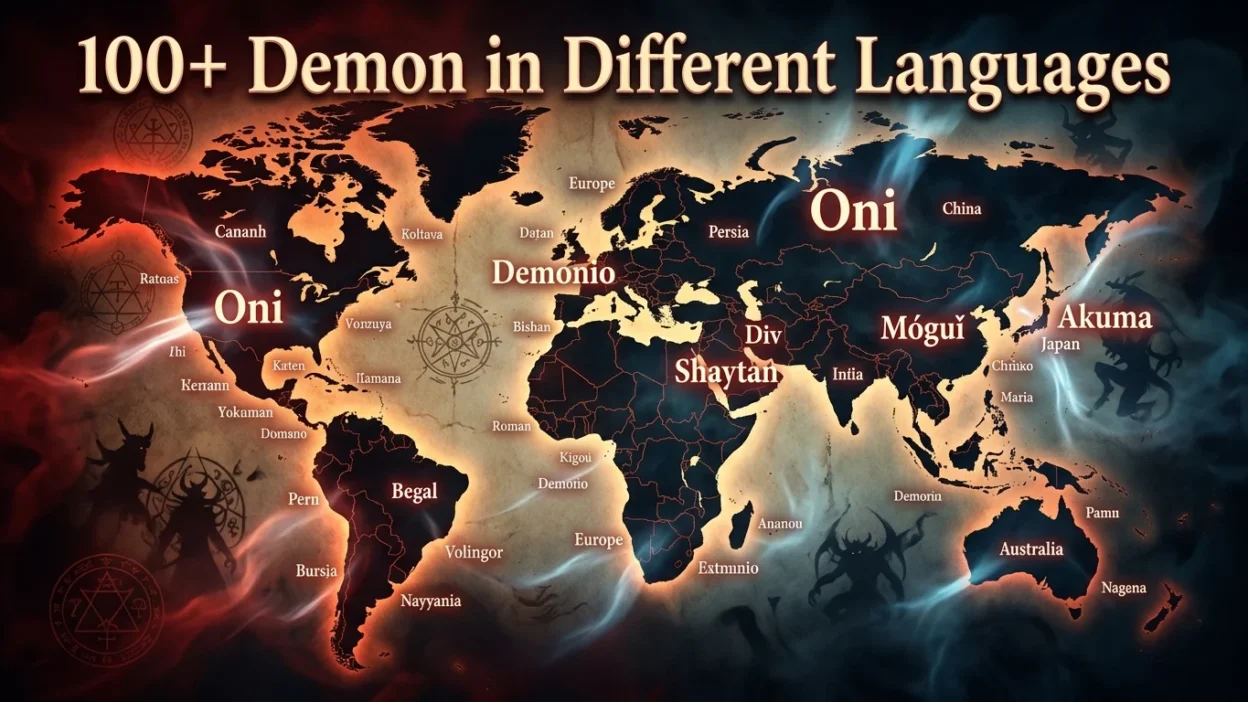
The word “demon” appears in myths, religions, movies, literature, and daily conversations across many cultures. People often search for “demon in different languages” to learn translations, improve vocabulary, write fantasy stories, study mythology, or understand global beliefs and folklore.
Demon in Different Languages
| Language | Pronunciation | Example |
| English | Dee-muhn | The old story speaks about a dangerous demon. (Meaning: The old story talks about an evil spirit.) |
| Spanish | Deh-moh-nee-oh | El demonio apareció en la película. (Meaning: The demon appeared in the movie.) |
| French | Deh-mon | Le démon vivait dans la légende. (Meaning: The demon lived in the legend.) |
| German | Day-mohn | Der Dämon bewachte die Burg. (Meaning: The demon guarded the castle.) |
| Italian | Deh-moh-nyo | Il demone era molto potente. (Meaning: The demon was very powerful.) |
| Portuguese | Deh-moh-nee-oh | O demônio assustou as pessoas. (Meaning: The demon frightened the people.) |
| Russian | Dyee-mon | Демон появился ночью. (Meaning: The demon appeared at night.) |
| Arabic | Shay-tan | ظهر الشيطان في القصة. (Meaning: The demon appeared in the story.) |
| Hindi | Pishaach | कहानी में पिशाच रहता था। (Meaning: A demon lived in the story.) |
| Urdu | Shaytan | شیطان نے لوگوں کو ڈرایا۔ (Meaning: The demon scared the people.) |
| Chinese (Mandarin) | Mó-guǐ | 魔鬼出现在传说中。 (Meaning: The demon appeared in the legend.) |
| Japanese | Oni | 鬼が山に住んでいた。 (Meaning: The demon lived in the mountain.) |
| Korean | Ak-ma | 악마가 갑자기 나타났다. (Meaning: The demon suddenly appeared.) |
| Turkish | Shey-tan | Şeytan eski evdeydi. (Meaning: The demon was in the old house.) |
| Greek | Dhee-mo-nas | Ο δαίμονας εμφανίστηκε ξαφνικά. (Meaning: The demon appeared suddenly.) |
| Latin | Day-mon | Daemon in silva habitabat. (Meaning: The demon lived in the forest.) |
| Dutch | Day-moon | De demon zat in het verhaal. (Meaning: The demon was in the story.) |
| Polish | Deh-mon | Demon pojawił się nocą. (Meaning: The demon appeared at night.) |
| Swedish | Deh-mon | Demonen skrämde barnen. (Meaning: The demon scared the children.) |
| Norwegian | Deh-mon | Demonen bodde i hulen. (Meaning: The demon lived in the cave.) |
| Danish | Day-mon | Dæmonen var meget stærk. (Meaning: The demon was very strong.) |
| Finnish | Deh-moh-nee | Demoni ilmestyi tarinaan. (Meaning: The demon appeared in the story.) |
| Hungarian | Day-mon | A démon veszélyes volt. (Meaning: The demon was dangerous.) |
| Czech | Deh-mon | Démon stál před domem. (Meaning: The demon stood in front of the house.) |
| Slovak | Deh-mon | Démon prišiel v noci. (Meaning: The demon came at night.) |
| Romanian | Deh-mon | Demonul era în pădure. (Meaning: The demon was in the forest.) |
| Bulgarian | Deh-mon | Демонът се появи внезапно. (Meaning: The demon appeared suddenly.) |
| Serbian | Deh-mon | Demon je bio veoma moćan. (Meaning: The demon was very powerful.) |
| Croatian | Deh-mon | Demon je čuvao vrata. (Meaning: The demon guarded the gate.) |
| Slovenian | Deh-mon | Demon je živel v jami. (Meaning: The demon lived in the cave.) |
| Ukrainian | Deh-mon | Демон прийшов уночі. (Meaning: The demon came at night.) |
| Belarusian | Dyeh-mon | Дэман з’явіўся ў легендзе. (Meaning: The demon appeared in the legend.) |
| Lithuanian | Deh-mo-nas | Demonas buvo pavojingas. (Meaning: The demon was dangerous.) |
| Latvian | Deh-mo-ns | Dēmons dzīvoja pilī. (Meaning: The demon lived in the castle.) |
| Estonian | Deh-mon | Deemon ilmus ootamatult. (Meaning: The demon appeared unexpectedly.) |
| Albanian | Deh-mon | Demoni ishte shumë i frikshëm. (Meaning: The demon was very scary.) |
| Georgian | Deh-moh-nee | დემონი ღამით მოვიდა. (Meaning: The demon came at night.) |
| Armenian | Deh-mon | Դևը հայտնվեց պատմությունում։ (Meaning: The demon appeared in the story.) |
| Persian | Div | دیو در کوه زندگی میکرد. (Meaning: The demon lived in the mountain.) |
| Hebrew | Shed | השד הופיע לפתע. (Meaning: The demon appeared suddenly.) |
| Thai | Pee-sard | ปีศาจอยู่ในตำนาน. (Meaning: The demon was in the legend.) |
| Vietnamese | Ác quỷ | Ác quỷ xuất hiện trong phim. (Meaning: The demon appeared in the movie.) |
| Indonesian | Deh-mon | Demon itu sangat kuat. (Meaning: The demon was very strong.) |
| Malay | Deh-mon | Demon itu muncul malam tadi. (Meaning: The demon appeared last night.) |
| Filipino | Deh-mon-yo | Ang demonyo ay nakakatakot. (Meaning: The demon is frightening.) |
| Bengali | Pi-shach | পিশাচটি রাতে এসেছিল। (Meaning: The demon came at night.) |
| Punjabi | Shaytan | ਸ਼ੈਤਾਨ ਕਹਾਣੀ ਵਿੱਚ ਸੀ। (Meaning: The demon was in the story.) |
| Tamil | Pisaasu | பிசாசு வீட்டில் இருந்தது. (Meaning: The demon was in the house.) |
| Telugu | Pishaachi | పిశాచి రాత్రి వచ్చింది. (Meaning: The demon came at night.) |
| Kannada | Pishaachi | ಪಿಶಾಚಿ ತುಂಬಾ ಭಯಾನಕವಾಗಿತ್ತು. (Meaning: The demon was very scary.) |
| Malayalam | Pisaach | പിശാച് കാട്ടിൽ ഉണ്ടായിരുന്നു. (Meaning: The demon was in the forest.) |
| Marathi | Pishaach | पिशाच जंगलात होता. (Meaning: The demon was in the forest.) |
| Gujarati | Pishaach | પિશાચ રાત્રે આવ્યો. (Meaning: The demon came at night.) |
| Nepali | Pishaach | पिशाच कथामा थियो। (Meaning: The demon was in the story.) |
| Sinhala | Yakseya | යක්ෂයා ගුහාවේ සිටියේය. (Meaning: The demon was in the cave.) |
| Swahili | Pepo | Pepo alionekana usiku. (Meaning: The demon appeared at night.) |
| Zulu | Idimoni | Idimoni lalinamandla. (Meaning: The demon was powerful.) |
| Afrikaans | Day-mon | Die demoon het verskyn. (Meaning: The demon appeared.) |
| Somali | Jin | Jinku wuxuu yimid habeenkii. (Meaning: The demon came at night.) |
| Amharic | Seytan | ሰይጣኑ በታሪኩ ውስጥ ነበር። (Meaning: The demon was in the story.) |
| Haitian Creole | Deh-mon | Demon an te pè moun yo. (Meaning: The demon frightened the people.) |
| Irish | Day-mon | Bhí an deamhan sa choill. (Meaning: The demon was in the forest.) |
| Scottish Gaelic | Jow-mon | Bha an deamhan anns an uamh. (Meaning: The demon was in the cave.) |
| Welsh | Day-mon | Roedd y cythraul yn gryf. (Meaning: The demon was strong.) |
| Icelandic | Deh-mon | Djöfullinn birtist skyndilega. (Meaning: The demon appeared suddenly.) |
| Maltese | Day-mon | Id-dimonju kien fil-kastell. (Meaning: The demon was in the castle.) |
| Basque | Deh-mon-yo | Deabrua mendian bizi zen. (Meaning: The demon lived in the mountain.) |
| Catalan | Deh-moh-nee | El dimoni va arribar de nit. (Meaning: The demon arrived at night.) |
| Galician | Deh-moh-nyo | O demo apareceu na lenda. (Meaning: The demon appeared in the legend.) |
| Esperanto | Deh-moh-no | La demono estis timiga. (Meaning: The demon was frightening.) |
| Mongolian | Chut-gur | Чөтгөр шөнө гарч ирсэн. (Meaning: The demon appeared at night.) |
| Khmer | A-rak | អារក្សនៅក្នុងរឿងនិទាន។ (Meaning: The demon was in the folktale.) |
| Lao | Phi-sat | ຜີສາດຢູ່ໃນປ່າ. (Meaning: The demon was in the forest.) |
| Burmese | Nat-soe | နတ်ဆိုးက ညမှာ လာတယ်။ (Meaning: The demon came at night.) |
How to Say Demon in Different Languages
The word “demon” changes across cultures and languages, but it often carries similar meanings related to evil spirits, supernatural creatures, dark mythology, or frightening beings. Some languages use words connected to religion, while others connect the term to folklore and legends.
People commonly search for demon translations for:
- Language learning
- Fantasy writing
- Gaming characters
- Mythology research
- Horror stories
- Tattoo meanings
- Cultural studies
Learning demon in all languages also helps improve global vocabulary and pronunciation skills.
Demon Translations Around the World
Different regions describe demons differently depending on cultural beliefs. For example:
- Japanese culture often uses “Oni” for powerful demon-like creatures.
- Arabic and Urdu commonly use “Shaytan,” connected with evil spirits.
- Persian folklore includes “Div,” a famous mythical demon figure.
- European languages usually use variations of the Latin-root word “demon.”
These demon translations around the world show how mythology and language are closely connected.
Why People Search for Demon in All Languages
The keyword “demon in different languages” is popular because users want quick and accurate translations for entertainment, education, and creative projects. Writers, gamers, students, and travelers often look for how to say demon in different languages to create authentic names and better understand world cultures.
This topic is also widely searched by fans of anime, mythology, folklore, and horror fiction.
Conclusion
Understanding demon in different languages helps people explore mythology, culture, storytelling, and language learning in a fun and educational way. The translations above provide a simple and easy reference for anyone searching for demon translations around the world or learning how to say demon in all languages.
FAQs
1. What is demon in different languages?
“Demon” has different translations depending on the language and culture. Examples include Oni in Japanese, Shaytan in Arabic, and Div in Persian.
2. How do you say demon in all languages?
There is no single universal word for demon in all languages. Every language has its own unique translation and pronunciation.
3. What is the Japanese word for demon?
The Japanese word for demon is “Oni,” which is commonly used in folklore and anime.
4. Why are demon translations different around the world?
Different cultures have unique myths, religions, and stories, which influence how demons are described and named.
5. Where is the word demon commonly used?
The word demon is commonly used in mythology, religion, fantasy books, movies, horror stories, games, and folklore.