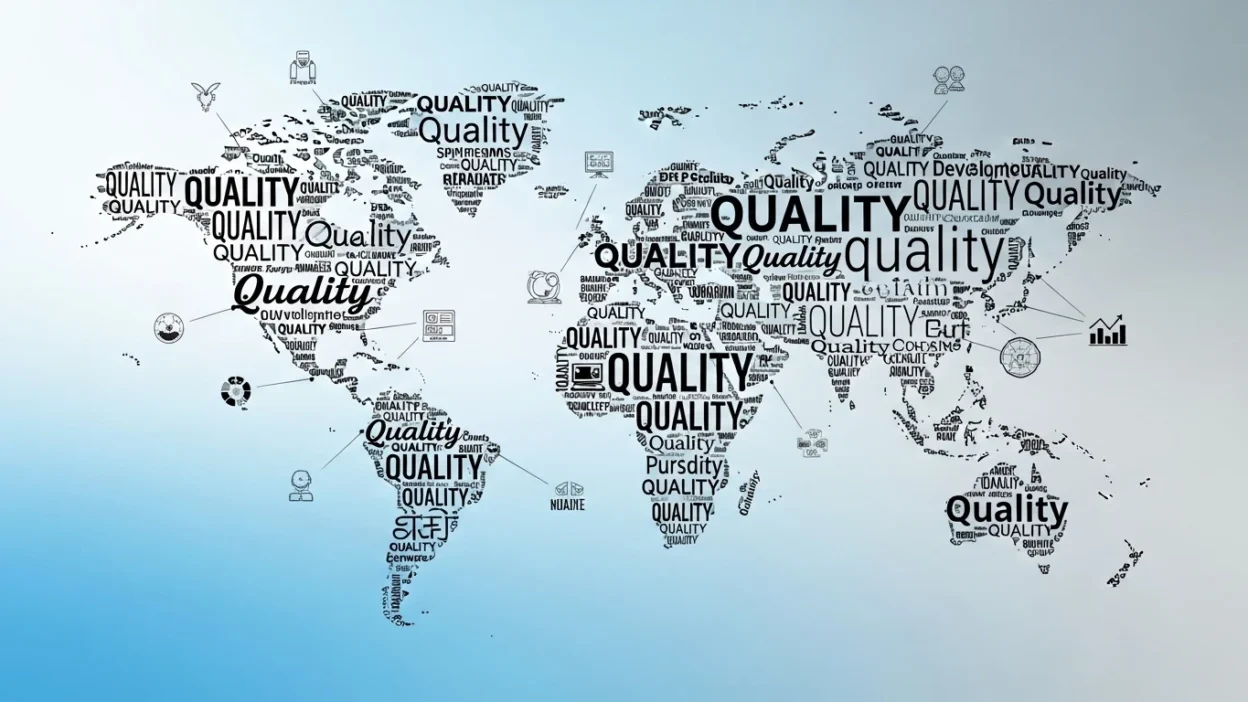
Understanding the concept of quality is essential, whether in work, products, or personal standards. But did you know that expressing quality in different languages not only broadens communication but also helps in learning cultural nuances? Knowing quality translations can be useful for business, travel, or simply appreciating how people worldwide describe excellence.
In this article, you’ll discover how to say quality in different languages, complete with pronunciation and real life example sentences. Whether you’re curious about quality in all languages or want to explore quality around the world, this guide is perfect for you.
Quality in 70 Different Languages
| Language | Pronunciation | Example |
| Arabic | jawda | هذه الشركة تقدم منتجات ذات جودة عالية. |
| Spanish | calidad | La calidad de este vino es excelente. |
| French | qualité | La qualité de ce service est remarquable. |
| German | Qualität | Die Qualität dieses Produkts ist hervorragend. |
| Italian | qualità | La qualità della pasta è eccezionale. |
| Portuguese | qualidade | A qualidade do atendimento é muito boa. |
| Russian | качество | Качество этой мебели высокое. |
| Japanese | 品質 (hinshitsu) | このカメラの品質は素晴らしいです。 |
| Chinese (Simplified) | 质量 (zhì liàng) | 这款手机的质量很好。 |
| Korean | 품질 (pumjil) | 이 제품의 품질은 우수합니다. |
| Hindi | गुणवत्ता (gunwatta) | इस कपड़े की गुणवत्ता बहुत अच्छी है। |
| Bengali | গুণমান (guṇamān) | এই খাবারের গুণমান চমৎকার। |
| Urdu | معیار (mi’yar) | اس گاڑی کا معیار بہترین ہے۔ |
| Turkish | kalite | Bu ürünün kalitesi mükemmel. |
| Greek | ποιότητα (piotita) | Η ποιότητα του κρασιού είναι εξαιρετική. |
| Dutch | kwaliteit | De kwaliteit van deze stoel is uitstekend. |
| Polish | jakość | Jakość tej książki jest bardzo wysoka. |
| Swedish | kvalitet | Kvaliteten på detta tyg är mycket bra. |
| Norwegian | kvalitet | Kvaliteten på tjenesten er imponerende. |
| Danish | kvalitet | Kvaliteten af maden er fremragende. |
| Finnish | laatu | Tämän puhelimen laatu on erinomainen. |
| Thai | คุณภาพ (khunaphap) | คุณภาพของผลิตภัณฑ์นี้ดีมาก |
| Vietnamese | chất lượng | Chất lượng của sản phẩm này tốt. |
| Malay | kualiti | Kualiti perkhidmatan ini sangat baik. |
| Indonesian | kualitas | Kualitas makanan ini luar biasa. |
| Filipino | kalidad | Ang kalidad ng telepono ay mahusay. |
| Hebrew | איכות (eykhut) | איכות המוצר גבוהה מאוד. |
| Swahili | ubora | Ubora wa bidhaa hii ni wa juu. |
| Romanian | calitate | Calitatea acestui serviciu este excelentă. |
| Czech | kvalita | Kvalita tohoto vína je vynikající. |
| Slovak | kvalita | Kvalita tohto produktu je vysoká. |
| Hungarian | minőség | A termék minősége kiváló. |
| Bulgarian | качество (kachestvo) | Качеството на услугата е добро. |
| Serbian | квалитет (kvalitet) | Квалитет овог производа је висок. |
| Croatian | kvaliteta | Kvaliteta ovog proizvoda je izvrsna. |
| Bosnian | kvaliteta | Kvaliteta usluge je vrlo dobra. |
| Slovenian | kakovost | Kakovost tega izdelka je odlična. |
| Albanian | cilësi | Cilësia e këtij produkti është e lartë. |
| Lithuanian | kokybė | Šio produkto kokybė puiki. |
| Latvian | kvalitāte | Šī pakalpojuma kvalitāte ir ļoti laba. |
| Estonian | kvaliteet | Selle toote kvaliteet on kõrge. |
| Icelandic | gæði | Gæði matarins eru framúrskarandi. |
| Maltese | kwalità | Il-kwalità ta’ dan il-prodott hija tajba. |
| Georgian | ხარისხი (khariskhi) | ამ პროდუქტის ხარისხი მაღალია. |
| Armenian | որակ (vorak) | Այս արտադրանքի որակը բարձր է. |
| Nepali | गुणस्तर (gunastar) | यो कपडाको गुणस्तर राम्रो छ। |
| Sinhala | ගුණාත්මකභාවය (gunathmakabhavaya) | මෙම භාණ්ඩයේ ගුණාත්මකභාවය ඉතා හොඳයි. |
| Khmer | គុណភាព (kunaphiep) | គុណភាពនៃទំនិញនេះល្អណាស់។ |
| Lao | ຄຸນນະພາບ (khunnaphap) | ຄຸນນະພາບຂອງສິນຄ້ານີ້ດີຫຼາຍ |
| Burmese | အရည်အသွေး (aray athwei) | ဒီပစ္စည်းရဲ့ အရည်အသွေးက ကောင်းပါတယ်။ |
| Mongolian | чанар (chanar) | Энэ бүтээгдэхүүний чанар өндөр байна. |
| Uzbek | sifat | Ushbu mahsulotning sifati yuqori. |
| Kazakh | сапа (sapa) | Бұл өнімнің сапасы жоғары. |
| Kyrgyz | сапа (sapa) | Бул продукттун сапасы жогору. |
| Tajik | сифат (sifat) | Сифати ин маҳсулот баланд аст. |
| Pashto | کیفیت (keyfiyat) | د دې محصول کیفیت عالي دی. |
| Kurdish (Kurmanji) | kalite | Kalîteya vê malê baş e. |
| Malay (Brunei) | kualiti | Kualiti produk ini sangat baik. |
| Maori | kounga | Ko te kounga o tenei hua he tino pai. |
| Samoan | lelei | O le lelei o lenei oloa e sili atu. |
| Hawaiian | maikaʻi | Maikaʻi ka maikaʻi o kēia huahana. |
| Tahitian | maitai | Te maitai o teie mau mea ra e rahi. |
Why Knowing Quality in Different Languages Matters
Learning how to say quality in different languages can help you:
- Improve communication in international business
- Understand cultural differences in standards
- Travel and shop more confidently
- Use quality translations in marketing for a global audience
By knowing quality around the world, you can connect with people in meaningful ways while respecting their language and culture.
How to Use These Translations
When using quality in all languages, remember to:
- Use proper pronunciation for clarity
- Adapt the phrase to the context of a sentence
- Respect grammatical rules in each language
Short, practical usage examples, like in our table, make it easy to integrate quality translations naturally into conversations.
Conclusion
Exploring quality in different languages shows that excellence is a universal concept, but the way people express it varies. With 70 translations, pronunciations, and examples, you can confidently communicate the idea of quality wherever you go.
Learning these phrases improves language skills, cultural understanding, and professional communication.
FAQs About Quality in Different Languages
1. What is the best way to learn quality in multiple languages?
Practice pronunciation and use real-life examples like those in the table to remember phrases effectively.
2. Can “quality” mean different things in different languages?
Yes, some languages use separate words for “product quality” versus “personal quality” or “service quality.”
3. Are these translations suitable for business use?
Absolutely. They are standard translations commonly used in formal and informal settings.
4. How can I remember all 70 translations?
Group languages by region, use flashcards, or practice in sentences to retain them better.
5. Why is knowing quality around the world useful?
It helps in international business, travel, marketing, and understanding cultural standards.

David William is a language enthusiast, researcher, and content creator at Lingoveb. With a deep passion for words, meanings, and global communication, he focuses on making language simple, clear, and accessible for readers around the world.