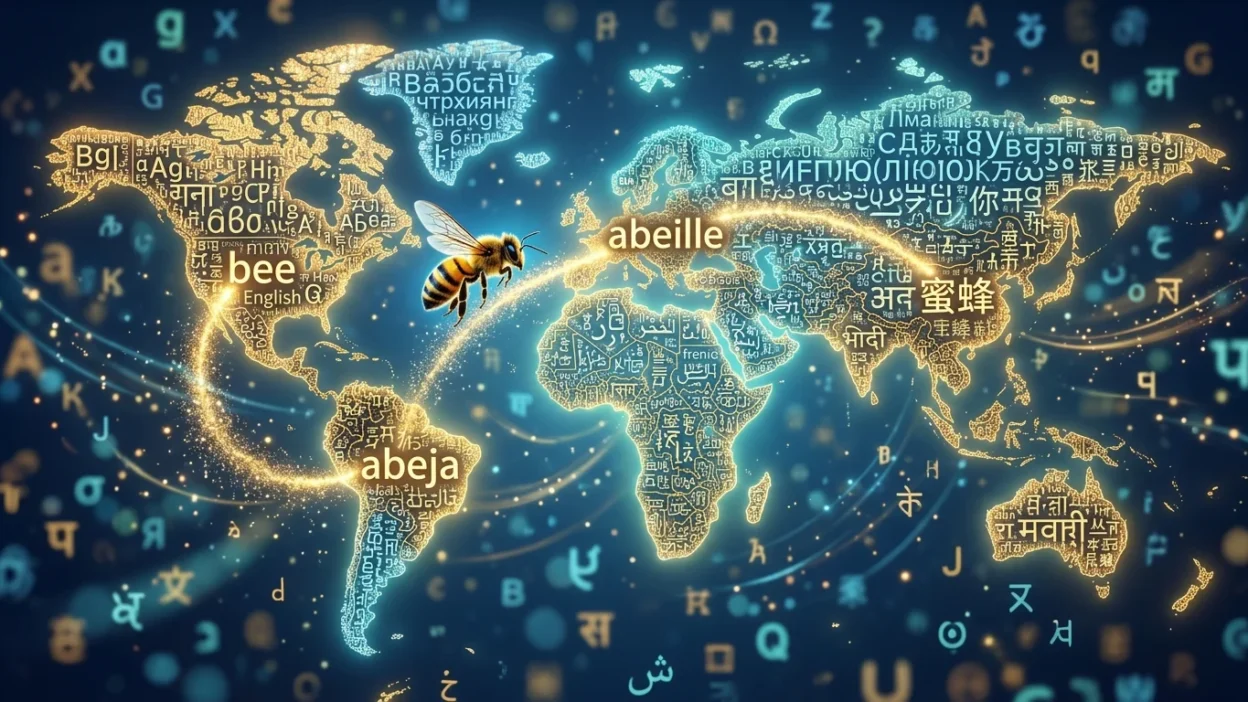
The word bee in different languages is a fascinating topic for language learners, translators, and curious readers. Bees are found across almost every culture, and each language has its own unique way to describe them.
Understanding how to say bee in all languages not only improves vocabulary but also helps explore cultural and linguistic diversity.
In this guide, you will learn how to say bee in different languages, explore bee translations around the world, and see real examples used in everyday sentences.
Bee in Different Languages Around the World
| Language | Pronunciation | Example |
| English | bee /biː/ | The bee is on the flower. Meaning: A bee is sitting on a flower. |
| Spanish | abeja /aˈβexa/ | La abeja produce miel. Meaning: The bee produces honey. |
| French | abeille /a.bɛj/ | L’abeille vole dans le jardin. Meaning: The bee flies in the garden. |
| German | Biene /ˈbiːnə/ | Die Biene sammelt Nektar. Meaning: The bee collects nectar. |
| Italian | ape /ˈaːpe/ | L’ape fa il miele. Meaning: The bee makes honey. |
| Portuguese | abelha /aˈbɛʎɐ/ | A abelha está no jardim. Meaning: The bee is in the garden. |
| Russian | пчела (pchela) /ptʃeˈla/ | Пчела летит к цветку. Meaning: The bee flies to the flower. |
| Chinese (Simplified) | 蜜蜂 (mìfēng) /mi˥ fʊŋ˥/ | 蜜蜂在花上采蜜。 Meaning: The bee collects nectar on flowers. |
| Chinese (Traditional) | 蜜蜂 (mìfēng) /mi˥ fʊŋ˥/ | 蜜蜂在花上采蜜。 Meaning: The bee collects nectar on flowers. |
| Japanese | 蜂 (hachi) /ha.tɕi/ | 蜂が花に来る。 Meaning: The bee comes to the flower. |
| Korean | 벌 (beol) /bʌl/ | 벌이 꽃에 있다. Meaning: The bee is on the flower. |
| Arabic | نحلة (naḥla) /naħla/ | النحلة تجمع العسل. Meaning: The bee collects honey. |
| Hindi | मधुमक्खी /mədʱuˈmʌkːʱiː/ | मधुमक्खी फूल पर बैठी है। Meaning: The bee is sitting on the flower. |
| Urdu | شہد کی مکھی /ʃeːd kiː məkʰiː/ | شہد کی مکھی شہد بناتی ہے۔ Meaning: The bee makes honey. |
| Bengali | মৌমাছি /moumachi/ | মৌমাছি ফুলে বসে আছে। Meaning: The bee is sitting on the flower. |
| Punjabi | ਸ਼ਹਿਦ ਦੀ ਮੱਖੀ /ʃeːd diː məkʰiː/ | ਸ਼ਹਿਦ ਦੀ ਮੱਖੀ ਫੁੱਲਾਂ ਤੋਂ ਰਸ ਲੈਂਦੀ ਹੈ। Meaning: The bee takes nectar from flowers. |
| Persian | زنبور عسل /zæmˈbuːr e æˈsæl/ | زنبور عسل عسل تولید میکند۔ Meaning: The bee produces honey. |
| Turkish | arı /aˈɾɯ/ | Arı çiçeğe kondu. Meaning: The bee landed on the flower. |
| Dutch | bij /bɛi/ | De bij zit op de bloem. Meaning: The bee is on the flower. |
| Greek | μέλισσα /ˈme.lisa/ | Η μέλισσα πετάει στο λουλούδι. Meaning: The bee flies to the flower. |
| Swedish | bi /biː/ | Biet samlar nektar. Meaning: The bee collects nectar. |
| Norwegian | bie /ˈbiːə/ | Bien flyr til blomsten. Meaning: The bee flies to the flower. |
| Danish | bi /biː/ | Bien er på blomsten. Meaning: The bee is on the flower. |
| Finnish | mehiläinen /mehiˈlɑi̯nen/ | Mehiläinen kerää mettä. Meaning: The bee collects nectar. |
| Polish | pszczoła /ˈpʂtʂɔwa/ | Pszczoła zbiera nektar. Meaning: The bee collects nectar. |
| Czech | včela /ˈftʃɛla/ | Včela letí k květu. Meaning: The bee flies to the flower. |
| Slovak | včela /ˈftʃɛla/ | Včela zbiera med. Meaning: The bee collects honey. |
| Hungarian | méh /meːh/ | A méh virágra száll. Meaning: The bee lands on the flower. |
| Romanian | albină /alˈbi.nə/ | Albina face miere. Meaning: The bee makes honey. |
| Bulgarian | пчела /ptʃɛˈla/ | Пчела събира нектар. Meaning: The bee collects nectar. |
| Ukrainian | бджола /bdʒoˈla/ | Бджола летить до квітки. Meaning: The bee flies to the flower. |
| Hebrew | דבורה /dvoˈʁa/ | הדבורה אוספת דבש. Meaning: The bee collects honey. |
| Thai | ผึ้ง /pʰɯ̂ŋ/ | ผึ้งบินไปที่ดอกไม้. Meaning: The bee flies to the flower. |
| Vietnamese | ong /ɔŋ/ | Con ong hút mật. Meaning: The bee sucks nectar. |
| Indonesian | lebah /ləˈbah/ | Lebah mengumpulkan madu. Meaning: The bee collects honey. |
| Malay | lebah /ləˈbah/ | Lebah mengumpulkan madu. Meaning: The bee collects honey. |
| Filipino | bubuyog /bubuˈjog/ | Ang bubuyog ay nasa bulaklak. Meaning: The bee is on the flower. |
| Swahili | nyuki /ˈɲuːki/ | Nyuki hukusanya asali. Meaning: The bee collects honey. |
| Zulu | inyosi /iɲoːsi/ | Inyosi iqoqa uju. Meaning: The bee collects honey. |
| Afrikaans | by /bɛi/ | Die by sit op die blom. Meaning: The bee sits on the flower. |
| Tamil | தேனீ /teːniː/ | தேனீ பூவில் உள்ளது. Meaning: The bee is on the flower. |
| Telugu | తేనెటీగ /teːneʈiːɡa/ | తేనెటీగ పువ్వుపై ఉంది. Meaning: The bee is on the flower. |
| Marathi | मधमाशी /mədʱmaːʃiː/ | मधमाशी फुलावर बसली आहे. Meaning: The bee is sitting on the flower. |
| Gujarati | મધમાખી /mədʱmaːkʰiː/ | મધમાખી ફૂલ પર છે. Meaning: The bee is on the flower. |
| Kannada | ಜೇನುಹುಳು /dʒeːnuˈhulu/ | ಜೇನುಹುಳು ಹೂವಿನ ಮೇಲೆ ಇದೆ. Meaning: The bee is on the flower. |
| Malayalam | തേനീച്ച /teːniːtʃa/ | തേനീച്ച പൂവിൽ ഇരിക്കുന്നു. Meaning: The bee is on the flower. |
| Sinhala | මීමැස්සා /miːmæsːaː/ | මීමැස්සා මල මතයි. Meaning: The bee is on the flower. |
| Nepali | मौरी /mau̯riː/ | मौरी फूलमा छ। Meaning: The bee is on the flower. |
| Burmese | ပျား /pjá/ | ပျား ပန်းပေါ်တွင်ရှိသည်။ Meaning: The bee is on the flower. |
| Khmer | ឃ្មុំ /kʰmum/ | ឃ្មុំ នៅលើផ្កា។ Meaning: The bee is on the flower. |
| Lao | ເຜິ້ງ /pʰɯŋ/ | ເຜິ້ງ ຢູ່ດອກໄມ້. Meaning: The bee is on the flower. |
| Mongolian | зөгий /t͡səˈɡiː/ | Зөгий цэцгэн дээр сууна. Meaning: The bee sits on the flower. |
| Kazakh | ара /ɑrɑ/ | Ара гүлде отыр. Meaning: The bee is on the flower. |
| Uzbek | ari /aˈri/ | Ari gul ustida. Meaning: The bee is on the flower. |
| Kyrgyz | аары /ɑːrɯ/ | Аары гүлдө отурат. Meaning: The bee is on the flower. |
| Icelandic | býfluga /ˈpiːvflʏːɣa/ | Býfluga safnar hunangi. Meaning: The bee collects honey. |
| Irish | beach /bʲax/ | Tá an beach ar an bláth. Meaning: The bee is on the flower. |
| Scottish Gaelic | seillean /ˈʃʲelan/ | Tha an seillean air an fhlùr. Meaning: The bee is on the flower. |
| Welsh | gwenynen /ɡwɛnˈɨnɛn/ | Mae’r gwenynen ar y blodyn. Meaning: The bee is on the flower. |
| Albanian | bletë /blɛtə/ | Bleta mbledh nektar. Meaning: The bee collects nectar. |
| Serbian | пчела /ptʃela/ | Пчела лети ка цвету. Meaning: The bee flies to the flower. |
| Croatian | pčela /ptʃela/ | Pčela skuplja med. Meaning: The bee collects honey. |
| Bosnian | pčela /ptʃela/ | Pčela skuplja med. Meaning: The bee collects honey. |
| Slovenian | čebela /tʃɛˈbɛla/ | Čebela leti k cvetu. Meaning: The bee flies to the flower. |
| Latvian | bite /bite/ | Bite ir uz zieda. Meaning: The bee is on the flower. |
| Lithuanian | bitė /ˈbiːtʲe/ | Bitė renka nektarą. Meaning: The bee collects nectar. |
| Estonian | mesilane /ˈmesiˌlɑne/ | Mesilane lendab lillele. Meaning: The bee flies to the flower. |
| Armenian | մեղու /meˈɣu/ | Մեղուն մեղր է հավաքում. Meaning: The bee collects honey. |
| Georgian | ფუტკარი /putkʰɑri/ | ფუტკარი ყვავილზე ზის. Meaning: The bee sits on the flower. |
| Amharic | ንብ /nɨb/ | ንብ ማር ይሰበስባል። Meaning: The bee collects honey. |
How to Say Bee in Different Languages
Learning bee translations in all languages helps understand how different cultures describe nature. Most languages use a short word connected to honey, flowers, or insects. This makes the term easy to remember.
Bee Translations Around the World: Linguistic Diversity
The word bee around the world shows both similarity and diversity. For example:
- Many European languages use short forms like bi, bee, bij
- Asian languages often use compound meanings like “honey insect”
- African languages describe bees based on their honey-producing behavior
Importance of Learning Bee in All Languages
Understanding how to say bee in different languages helps:
- Improve vocabulary for language learners
- Support translation and communication skills
- Explore cultural connections with nature
- Enhance multilingual education
Conclusion
The word bee in different languages reveals how cultures across the world interpret nature in unique ways. From simple words like bi to complex terms like madhu makkhi, every language adds its own identity to this tiny but important insect.
FAQs
1. What is bee in different languages?
It is the translation of the word “bee” across multiple global languages.
2. How do you say bee in Spanish?
Bee in Spanish is “abeja.”
3. Why is learning bee in all languages useful?
It helps improve language learning, translation skills, and cultural understanding.
4. What is bee called in Hindi and Urdu?
Hindi: मधुमक्खी, Urdu: شہد کی مکھی.
5. Are bee words similar in many languages?
Yes, many languages use short or similar sounding words for bee.

Marak Robort is a content writer and researcher with a strong interest in language, meanings, and digital information. His work focuses on presenting clear, easy-to-understand explanations that help readers quickly grasp complex ideas.