If you are searching for 100+ bird in different languages, bird translations around the world, or how to say bird in different languages, this complete guide is created to help you quickly understand and use the word “bird” in many global languages.
The word “bird” is simple, but it changes beautifully across cultures. Learning it in multiple languages helps with travel, language learning, education, and improving vocabulary for global communication.
Bird in Different Languages
| Language | Pronunciation | Example (Sentence + English Meaning) |
| English | burd | I saw a bird in the sky. (Meaning: I saw a bird flying in the sky.) |
| Spanish | pájaro | Vi un pájaro en el cielo. (Meaning: I saw a bird in the sky.) |
| French | oiseau | J’ai vu un oiseau dans le ciel. (Meaning: I saw a bird in the sky.) |
| German | vogel | Ich sah einen Vogel am Himmel. (Meaning: I saw a bird in the sky.) |
| Italian | uccello | Ho visto un uccello nel cielo. (Meaning: I saw a bird in the sky.) |
| Portuguese | pássaro | Vi um pássaro no céu. (Meaning: I saw a bird in the sky.) |
| Dutch | vogel | Ik zag een vogel in de lucht. (Meaning: I saw a bird in the sky.) |
| Russian | ptitsa | Я видел птицу в небе. (Meaning: I saw a bird in the sky.) |
| Ukrainian | ptakh | Я бачив птаха в небі. (Meaning: I saw a bird in the sky.) |
| Polish | ptak | Widziałem ptaka na niebie. (Meaning: I saw a bird in the sky.) |
| Czech | pták | Viděl jsem ptáka na obloze. (Meaning: I saw a bird in the sky.) |
| Slovak | vták | Videl som vtáka na oblohe. (Meaning: I saw a bird in the sky.) |
| Hungarian | madár | Láttam egy madarat az égen. (Meaning: I saw a bird in the sky.) |
| Romanian | pasăre | Am văzut o pasăre pe cer. (Meaning: I saw a bird in the sky.) |
| Greek | πουλί (pouli) | Είδα ένα πουλί στον ουρανό. (Meaning: I saw a bird in the sky.) |
| Turkish | kuş | Gökyüzünde bir kuş gördüm. (Meaning: I saw a bird in the sky.) |
| Arabic | طائر (ta’ir) | رأيت طائراً في السماء. (Meaning: I saw a bird in the sky.) |
| Hebrew | tzipor | ראיתי ציפור בשמיים. (Meaning: I saw a bird in the sky.) |
| Persian | parandeh | یک پرنده در آسمان دیدم. (Meaning: I saw a bird in the sky.) |
| Hindi | pakshi | मैंने आकाश में एक पक्षी देखा। (Meaning: I saw a bird in the sky.) |
| Urdu | parinda | میں نے آسمان میں ایک پرندہ دیکھا۔ (Meaning: I saw a bird in the sky.) |
| Bengali | pakhi | আমি আকাশে একটি পাখি দেখেছি। (Meaning: I saw a bird in the sky.) |
| Punjabi | panchhi | ਮੈਂ ਆਕਾਸ਼ ਵਿੱਚ ਇੱਕ ਪੰਛੀ ਵੇਖਿਆ। (Meaning: I saw a bird in the sky.) |
| Tamil | paravai | நான் வானில் ஒரு பறவையை பார்த்தேன். (Meaning: I saw a bird in the sky.) |
| Telugu | pakshi | నేను ఆకాశంలో ఒక పక్షిని చూశాను. (Meaning: I saw a bird in the sky.) |
| Malayalam | pakshi | ഞാൻ ആകാശത്തിൽ ഒരു പക്ഷിയെ കണ്ടു. (Meaning: I saw a bird in the sky.) |
| Kannada | hakki | ನಾನು ಆಕಾಶದಲ್ಲಿ ಒಂದು ಹಕ್ಕಿಯನ್ನು ನೋಡಿದೆ. (Meaning: I saw a bird in the sky.) |
| Marathi | pakshi | मी आकाशात एक पक्षी पाहिला. (Meaning: I saw a bird in the sky.) |
| Gujarati | pakshi | મેં આકાશમાં એક પક્ષી જોયું. (Meaning: I saw a bird in the sky.) |
| Nepali | chara | मैले आकाशमा एउटा चरा देखेँ। (Meaning: I saw a bird in the sky.) |
| Sinhala | kurulla | මම අහසේ කුරුල්ලෙක් දැක්කා. (Meaning: I saw a bird in the sky.) |
| Thai | nok | ฉันเห็นนกในท้องฟ้า (Meaning: I saw a bird in the sky.) |
| Lao | nok | ຂ້ອຍເຫັນນົກໃນທ້ອງຟ້າ. (Meaning: I saw a bird in the sky.) |
| Khmer | chhkae | ខ្ញុំបានឃើញបក្សីនៅលើមេឃ។ (Meaning: I saw a bird in the sky.) |
| Vietnamese | chim | Tôi thấy một con chim trên bầu trời. (Meaning: I saw a bird in the sky.) |
| Indonesian | burung | Saya melihat burung di langit. (Meaning: I saw a bird in the sky.) |
| Malay | burung | Saya melihat burung di langit. (Meaning: I saw a bird in the sky.) |
| Filipino | ibon | Nakita ko ang isang ibon sa langit. (Meaning: I saw a bird in the sky.) |
| Chinese (Mandarin) | niǎo | 我看到一只鸟在天空中。 (Meaning: I saw a bird in the sky.) |
| Cantonese | niu | 我見到一隻雀仔喺天空。 (Meaning: I saw a bird in the sky.) |
| Japanese | tori | 空に鳥を見ました。 (Meaning: I saw a bird in the sky.) |
| Korean | sae | 나는 하늘에서 새를 보았다. (Meaning: I saw a bird in the sky.) |
| Mongolian | shuvuu | Би тэнгэрт шувуу харсан. (Meaning: I saw a bird in the sky.) |
| Swahili | ndege | Niliona ndege angani. (Meaning: I saw a bird in the sky.) |
| Yoruba | eye | Mo ri eye ni ọrun. (Meaning: I saw a bird in the sky.) |
| Igbo | nnụnụ | Ahụrụ m nnụnụ na mbara igwe. (Meaning: I saw a bird in the sky.) |
| Zulu | inyoni | Ngibone inyoni esibhakabhakeni. (Meaning: I saw a bird in the sky.) |
| Afrikaans | voël | Ek het ’n voël in die lug gesien. (Meaning: I saw a bird in the sky.) |
| Somali | shimbir | Waxaan arkay shimbir cirka. (Meaning: I saw a bird in the sky.) |
| Amharic | wof | አንድ ወፍ በሰማይ አየሁ። (Meaning: I saw a bird in the sky.) |
| Hausa | tsuntsu | Na ga tsuntsu a sama. (Meaning: I saw a bird in the sky.) |
| Icelandic | fugl | Ég sá fugl á himninum. (Meaning: I saw a bird in the sky.) |
| Norwegian | fugl | Jeg så en fugl på himmelen. (Meaning: I saw a bird in the sky.) |
| Swedish | fågel | Jag såg en fågel på himlen. (Meaning: I saw a bird in the sky.) |
| Danish | fugl | Jeg så en fugl på himlen. (Meaning: I saw a bird in the sky.) |
| Finnish | lintu | Näin linnun taivaalla. (Meaning: I saw a bird in the sky.) |
| Estonian | lind | Ma nägin lindu taevas. (Meaning: I saw a bird in the sky.) |
| Latvian | putns | Es redzēju putnu debesīs. (Meaning: I saw a bird in the sky.) |
| Lithuanian | paukštis | Mačiau paukštį danguje. (Meaning: I saw a bird in the sky.) |
| Serbian | ptica | Видео сам птицу на небу. (Meaning: I saw a bird in the sky.) |
| Croatian | ptica | Vidio sam pticu na nebu. (Meaning: I saw a bird in the sky.) |
| Bosnian | ptica | Vidio sam pticu na nebu. (Meaning: I saw a bird in the sky.) |
| Slovenian | ptica | Videl sem ptico na nebu. (Meaning: I saw a bird in the sky.) |
| Albanian | zog | Pashë një zog në qiell. (Meaning: I saw a bird in the sky.) |
| Armenian | թռչուն (t’rrchun) | Ես տեսա թռչուն երկնքում։ (Meaning: I saw a bird in the sky.) |
| Georgian | mzeviti | ცაში ჩიტი დავინახე. (Meaning: I saw a bird in the sky.) |
| Kazakh | qus | Мен аспанда құс көрдім. (Meaning: I saw a bird in the sky.) |
| Uzbek | qush | Men osmonda qush ko‘rdim. (Meaning: I saw a bird in the sky.) |
| Kyrgyz | куш | Мен асманда куш көрдүм. (Meaning: I saw a bird in the sky.) |
| Turkmen | guş | Men asmanyň içinde guş gördüm. (Meaning: I saw a bird in the sky.) |
Why Learning “Bird” in Different Languages Matters
Learning bird translations in different languages helps improve:
- Vocabulary for travel and communication
- Cultural understanding
- Language learning speed
- Educational knowledge for kids and students
It also makes it easier to recognize how nature words are shared globally.
Bird in Different Languages Around the World
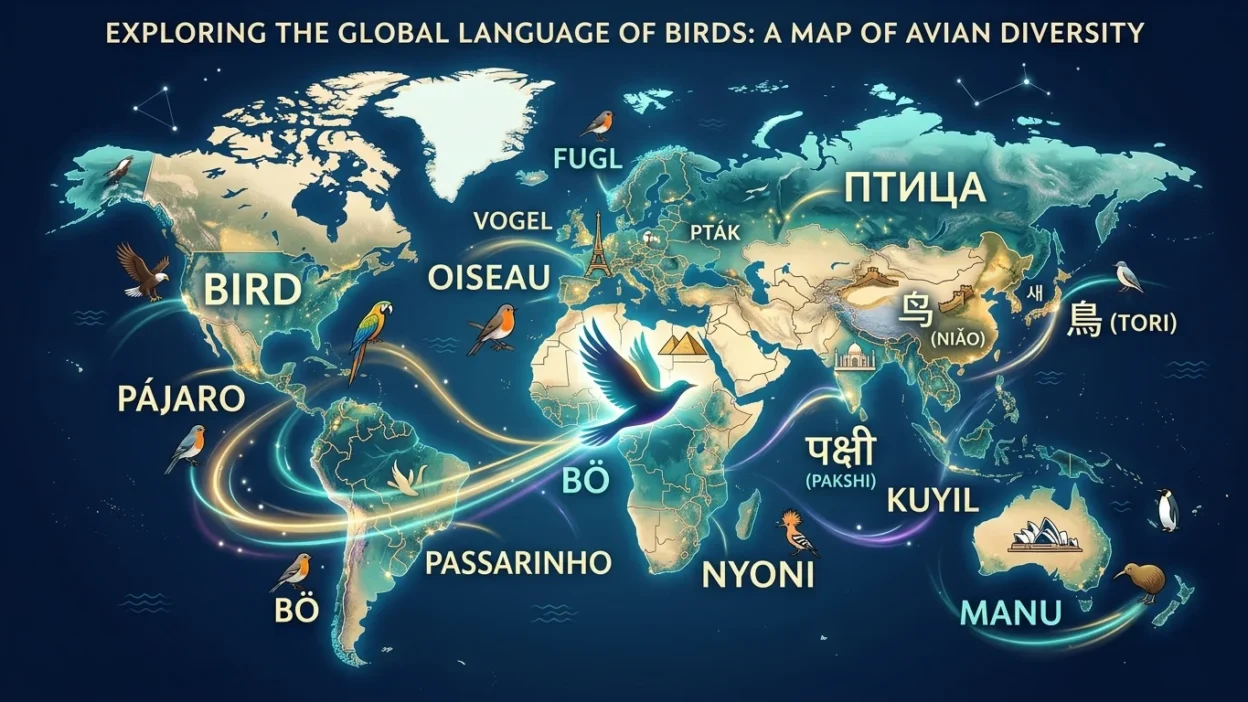
The word “bird” appears in many forms like vogel, pájaro, ptica, pakshi, and tori. Despite differences in sound and spelling, the meaning remains the same—showing how human language connects with nature worldwide.
Conclusion
The word “bird” is simple but globally diverse. Learning 100+ bird in different languages (and 70 common ones here) helps expand your linguistic knowledge and understand how cultures describe nature. Whether you are a student, traveler, or language enthusiast, this guide gives you a strong foundation for global vocabulary.
FAQs
1. What is bird in different languages?
Bird is translated into many forms like pájaro (Spanish), oiseau (French), and vogel (German).
2. How do you say bird in 70 languages?
Each language has a unique word, such as tori in Japanese, pakshi in Hindi, and ptica in Serbian.
3. Why do bird words differ in languages?
Because each language evolves independently based on culture and history.
4. What is the most common word for bird globally?
Words like vogel, pájaro, and pakshi are widely used across regions.
5. Is learning bird in different languages useful?
Yes, it helps improve vocabulary, travel communication, and language learning skills.

Marak Robort is a content writer and researcher with a strong interest in language, meanings, and digital information. His work focuses on presenting clear, easy-to-understand explanations that help readers quickly grasp complex ideas.