If you are searching for 100+ brain in different languages, this complete guide will help you understand how the word “brain” is translated, pronounced, and used across different cultures.
Whether you are a language learner, content creator, or just curious about global vocabulary, knowing how to say brain in different languages improves your communication skills and cultural knowledge.
This article provides a structured list of brain translations in languages, along with pronunciation and real-life example sentences to help you understand usage in context.
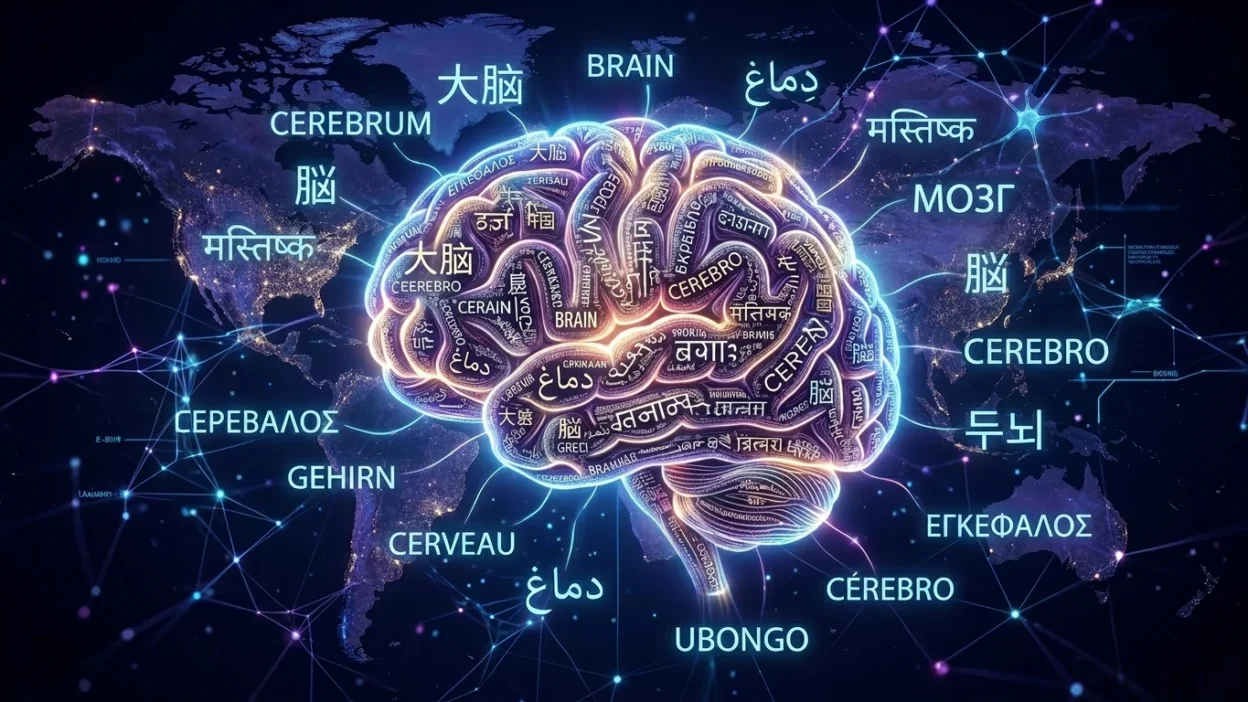
Brain in Different Languages Around the World
| Language | Pronunciation & Word for Brain | Example Sentence | English Meaning |
| English | brain (breyn) | The brain controls the human body. | The brain controls the human body. |
| Spanish | cerebro (seh-reh-bro) | El cerebro es muy poderoso. | The brain is very powerful. |
| French | cerveau (ser-voh) | Le cerveau dirige le corps. | The brain controls the body. |
| German | Gehirn (geh-heern) | Das Gehirn steuert den Körper. | The brain controls the body. |
| Italian | cervello (cher-vel-lo) | Il cervello è complesso. | The brain is complex. |
| Portuguese | cérebro (seh-leh-bro) | O cérebro controla o corpo. | The brain controls the body. |
| Dutch | hersenen (her-seh-nen) | De hersenen werken snel. | The brain works fast. |
| Swedish | hjärna (yair-na) | Hjärnan är viktig. | The brain is important. |
| Norwegian | hjerne (yar-neh) | Hjernen styrer kroppen. | The brain controls the body. |
| Danish | hjerne (hyair-neh) | Hjernen er stærk. | The brain is strong. |
| Finnish | aivot (ai-vot) | Aivot toimivat nopeasti. | The brain works fast. |
| Polish | mózg (moozg) | Mózg kontroluje ciało. | The brain controls the body. |
| Czech | mozek (mo-zek) | Mozek je důležitý. | The brain is important. |
| Slovak | mozog (mo-zog) | Mozog riadi telo. | The brain controls the body. |
| Hungarian | agy (odj) | Az agy nagyon fontos. | The brain is very important. |
| Romanian | creier (kray-er) | Creierul este puternic. | The brain is powerful. |
| Bulgarian | мозък (mo-zuk) | Мозъкът управлява тялото. | The brain controls the body. |
| Greek | εγκέφαλος (en-ke-fa-los) | Ο εγκέφαλος είναι έξυπνος. | The brain is intelligent. |
| Russian | мозг (mozg) | Мозг управляет телом. | The brain controls the body. |
| Ukrainian | мозок (mo-zok) | Мозок керує тілом. | The brain controls the body. |
| Turkish | beyin (bay-in) | Beyin çok önemlidir. | The brain is very important. |
| Arabic | دماغ (dimagh) | الدماغ يتحكم بالجسم. | The brain controls the body. |
| Hebrew | מוח (mo’ach) | המוח חזק מאוד. | The brain is very strong. |
| Persian | مغز (maghz) | مغز بدن را کنترل میکند. | The brain controls the body. |
| Hindi | दिमाग (dimaag) | दिमाग बहुत शक्तिशाली है। | The brain is very powerful. |
| Urdu | دماغ (dimagh) | دماغ جسم کو کنٹرول کرتا ہے۔ | The brain controls the body. |
| Bengali | মস্তিষ্ক (môstishko) | মস্তিষ্ক শরীর নিয়ন্ত্রণ করে। | The brain controls the body. |
| Punjabi | ਦਿਮਾਗ (dimaag) | ਦਿਮਾਗ ਬਹੁਤ ਮਹੱਤਵਪੂਰਨ ਹੈ। | The brain is very important. |
| Tamil | மூளை (moolai) | மூளை செயல்படுகிறது. | The brain functions. |
| Telugu | మెదడు (medadu) | మెదడు చాలా శక్తివంతమైనది. | The brain is very powerful. |
| Marathi | मेंदू (mendu) | मेंदू शरीर नियंत्रित करतो. | The brain controls the body. |
| Gujarati | મગજ (magaj) | મગજ ખૂબ મહત્વનું છે. | The brain is very important. |
| Kannada | ಮೆದುಳು (medulu) | ಮೆದುಳು ಶಕ್ತಿಶಾಲಿಯಾಗಿದೆ. | The brain is powerful. |
| Malayalam | മസ്തിഷ്കം (mastishkam) | മസ്തിഷ്കം ശരീരത്തെ നിയന്ത്രിക്കുന്നു. | The brain controls the body. |
| Sinhala | මොළය (molaya) | මොළය ශක්තිමත් වේ. | The brain is strong. |
| Nepali | मस्तिष्क (mastisk) | मस्तिष्क शरीर नियन्त्रण गर्छ। | The brain controls the body. |
| Thai | สมอง (sa-mong) | สมองทำงานเร็วมาก | The brain works very fast. |
| Lao | ສະຫມອງ (sa-mong) | ສະຫມອງຄວບຄຸມຮ່າງກາຍ | The brain controls the body. |
| Vietnamese | não (now) | Não điều khiển cơ thể. | The brain controls the body. |
| Indonesian | otak (o-tak) | Otak sangat penting. | The brain is very important. |
| Malay | otak (o-tak) | Otak mengawal badan. | The brain controls the body. |
| Filipino | utak (oo-tak) | Ang utak ay mahalaga. | The brain is important. |
| Chinese (Simplified) | 大脑 (dànǎo) | 大脑控制身体。 | The brain controls the body. |
| Chinese (Traditional) | 大腦 (dànǎo) | 大腦非常重要。 | The brain is very important. |
| Japanese | 脳 (nō) | 脳は体を制御する。 | The brain controls the body. |
| Korean | 뇌 (noe) | 뇌는 매우 중요하다. | The brain is very important. |
| Mongolian | тархи (tarkhi) | Тархи биеийг удирддаг. | The brain controls the body. |
| Swahili | ubongo (u-bongo) | Ubongo ni muhimu sana. | The brain is very important. |
| Zulu | ubuchopho (u-bo-cho-fo) | Ubuchopho buyasebenza. | The brain works. |
| Afrikaans | brein (brayn) | Die brein is belangrik. | The brain is important. |
| Amharic | አእምሮ (a-emro) | አእምሮ ሰውነትን ይቆጣጠራል። | The brain controls the body. |
| Somali | maskax (mas-kax) | Maskaxdu waa muhiim. | The brain is important. |
| Hausa | kwakwalwa (kwa-kwal-wa) | Kwakwalwa tana aiki. | The brain works. |
| Yoruba | ọpọlọ (o-po-lo) | Ọpọlọ n ṣiṣẹ. | The brain is working. |
| Igbo | ụbụrụ (u-bu-ru) | Ụbụrụ na-arụ ọrụ. | The brain is working. |
| Maori | roro (ro-ro) | Roro he mea nui. | The brain is important. |
| Samoan | faiʻai (fai-ai) | Faiʻai e pulea le tino. | The brain controls the body. |
| Icelandic | heili (hay-li) | Heilinn er sterkur. | The brain is strong. |
| Latvian | smadzenes (sma-dze-nes) | Smadzenes kontrolē ķermeni. | The brain controls the body. |
| Lithuanian | smegenys (sme-ge-nys) | Smegenys yra svarbios. | The brain is important. |
| Estonian | aju (a-yu) | Aju töötab kiiresti. | The brain works fast. |
| Albanian | truri (tru-ri) | Truri kontrollon trupin. | The brain controls the body. |
| Macedonian | мозок (mo-zok) | Мозокот е важен. | The brain is important. |
| Serbian | мозак (mo-zak) | Мозак ради брзо. | The brain works fast. |
| Croatian | mozak (mo-zak) | Mozak upravlja tijelom. | The brain controls the body. |
| Bosnian | mozak (mo-zak) | Mozak je važan. | The brain is important. |
| Slovenian | možgani (mo-zha-ni) | Možgani delujejo hitro. | The brain works fast. |
| Georgian | ტვინი (t’vini) | ტვინი ძალიან ძლიერია. | The brain is very strong. |
| Armenian | ուղեղ (u-gehgh) | Ուղեղը կառավարում է մարմինը։ | The brain controls the body. |
| Kurdish | mejî (me-ji) | Mejî zanyar e. | The brain is intelligent. |
How to Say Brain in Different Languages
Learning how to say brain in different languages helps improve vocabulary, communication skills, and cultural awareness. Each language reflects unique pronunciation and structure, making language learning more interesting and practical.
Brain Translations Around the World
The word “brain” is translated differently across regions. In Europe, it is often similar (like brain, cerveau, Gehirn), while Asian and African languages use more diverse phonetic structures such as dimaag, otak, or ubongo.
Why Learning Brain Vocabulary Matters
Understanding brain translations in all languages helps students, travelers, and researchers improve multilingual communication and language learning efficiency.
Conclusion
The word “brain” appears in many forms across the world, but its meaning remains universally important. Learning brain in different languages helps expand vocabulary and strengthens global understanding of human communication.
FAQs
1. What is brain in different languages?
It is the translation of the word “brain” into multiple global languages.
2. How do you say brain in Spanish and French?
Spanish: cerebro, French: cerveau.
3. Why learn brain translations?
It helps in language learning, education, and communication skills.
4. Is brain spelled the same in all languages?
No, each language has its own pronunciation and spelling.
5. Which language has the easiest word for brain?
Languages like English, Afrikaans, and Malay have simple forms like “brain” or “brein/otak”.

David William is a language enthusiast, researcher, and content creator at Lingoveb. With a deep passion for words, meanings, and global communication, he focuses on making language simple, clear, and accessible for readers around the world.