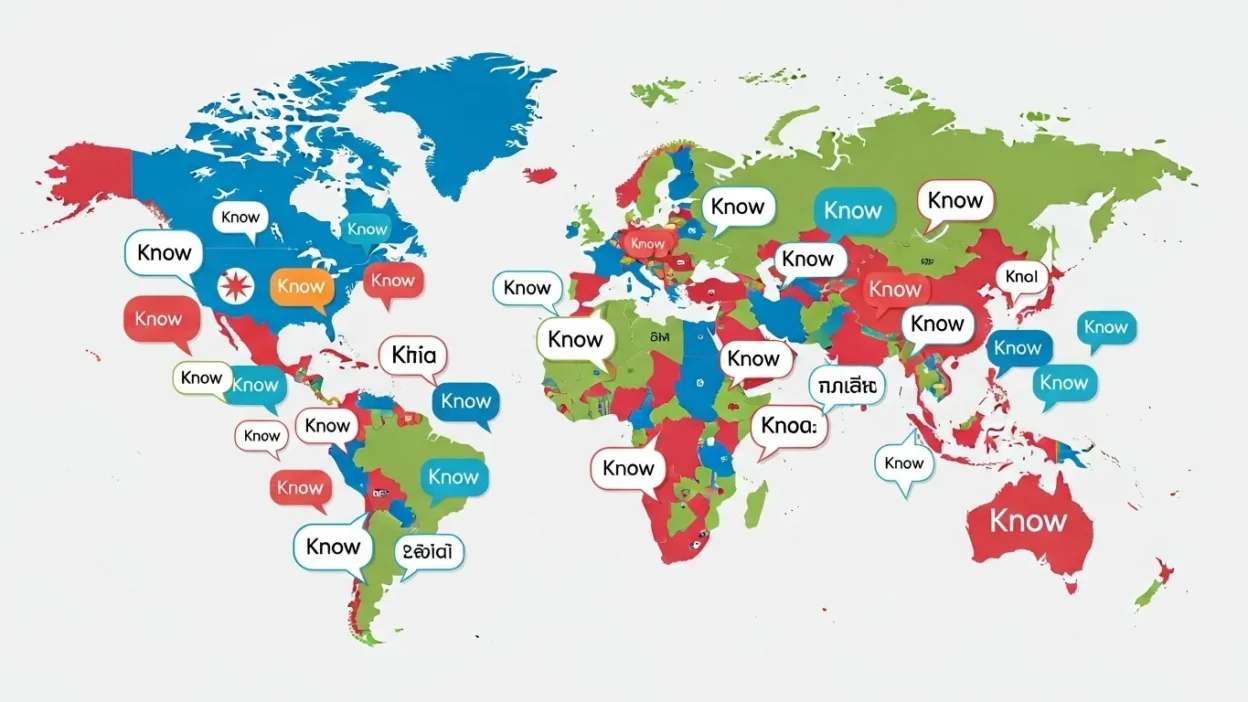
Do you ever wonder how to express the simple word “know” in languages from every corner of the globe? Whether you’re traveling, learning a new language, or just curious, knowing how to say this everyday word can open doors to better communication and understanding.
In this guide, we’ll explore how to say “know” in different languages, complete with pronunciation tips and real life examples so you can use them confidently.
Discover “know in all languages”, “know translations”, and how this single word connects people across cultures.
70 Languages: Know, Pronunciation, and Example Sentences
| Language | Pronunciation | Example |
| Spanish | saber | Yo sé la respuesta. |
| I know the answer. | ||
| French | savoir | Je sais parler français. |
| I know how to speak French. | ||
| German | wissen | Ich weiß die Wahrheit. |
| I know the truth. | ||
| Italian | sapere | So cucinare la pasta. |
| I know how to cook pasta. | ||
| Portuguese | saber | Eu sei a hora do encontro. |
| I know the meeting time. | ||
| Russian | знать | Я знаю этот город. |
| I know this city. | ||
| Chinese (Mandarin) | 知道 (zhīdào) | 我知道你的名字。 |
| I know your name. | ||
| Japanese | 知る (shiru) | 彼の住所を知っています。 |
| I know his address. | ||
| Korean | 알다 (alda) | 나는 그를 알아요. |
| I know him. | ||
| Arabic | يعرف (ya‘rif) | أنا أعرف الطريق. |
| I know the way. | ||
| Hindi | जानना (jānna) | मैं सच जानता हूँ। |
| I know the truth. | ||
| Bengali | জানা (jāna) | আমি তার নাম জানি। |
| I know his name. | ||
| Urdu | جاننا (jānna) | میں سچ جانتا ہوں۔ |
| I know the truth. | ||
| Turkish | bilmek | Onu tanıyorum, onu biliyorum. |
| I know him. | ||
| Persian | دانستن (dānestan) | من جواب را میدانم. |
| I know the answer. | ||
| Greek | ξέρω (xéro) | Ξέρω την αλήθεια. |
| I know the truth. | ||
| Dutch | weten | Ik weet het antwoord. |
| I know the answer. | ||
| Polish | wiedzieć | Wiem, gdzie jest sklep. |
| I know where the store is. | ||
| Swedish | veta | Jag vet hans namn. |
| I know his name. | ||
| Norwegian | vite | Jeg vet veien. |
| I know the way. | ||
| Danish | vide | Jeg ved sandheden. |
| I know the truth. | ||
| Finnish | tietää | Tiedän vastauksen. |
| I know the answer. | ||
| Hungarian | tudni | Tudom a választ. |
| I know the answer. | ||
| Czech | vědět | Vím, kde je škola. |
| I know where the school is. | ||
| Slovak | vedieť | Viem, čo chceš. |
| I know what you want. | ||
| Romanian | a ști | Știu adevărul. |
| I know the truth. | ||
| Bulgarian | знам (znam) | Знам този човек. |
| I know this person. | ||
| Serbian | знати (znati) | Знам где је он. |
| I know where he is. | ||
| Croatian | znati | Znam njegovu adresu. |
| I know his address. | ||
| Bosnian | znati | Znam odgovor. |
| I know the answer. | ||
| Slovenian | vedeti | Vem njegovo ime. |
| I know his name. | ||
| Maltese | jaf | Jaf ir-ritratt. |
| He knows the picture. | ||
| Icelandic | vita | Ég veit svarið. |
| I know the answer. | ||
| Filipino | malaman | Alam ko ang sagot. |
| I know the answer. | ||
| Malay | tahu | Saya tahu jawabannya. |
| I know the answer. | ||
| Indonesian | tahu | Aku tahu tempatnya. |
| I know the place. | ||
| Swahili | kujua | Najua jibu. |
| I know the answer. | ||
| Zulu | ukwazi | Ngiyakwazi indlela. |
| I know the way. | ||
| Xhosa | ukwazi | Ndiyakwazi igama lakhe. |
| I know his name. | ||
| Hausa | sani | Na san amsar. |
| I know the answer. | ||
| Yoruba | mọ | Mo mọ ọna. |
| I know the way. | ||
| Igbo | ịma | Ama m ụzọ ahụ. |
| I know the way. | ||
| Nepali | जान्नु (jānnu) | म उसको नाम जान्दछु। |
| I know his name. | ||
| Sinhala | දැන සිටින්න (dæna sitinna) | මම ඇයගේ නම දන්නවා. |
| I know her name. | ||
| Tamil | தெரிந்து கொள் (terintu koḷ) | நான் பதிலை அறிவேன். |
| I know the answer. | ||
| Telugu | తెలుసు (telusu) | నేను సత్యాన్ని తెలుసు. |
| I know the truth. | ||
| Kannada | ತಿಳಿದುಕೊಳ್ಳಿ (tiḷidukoḷḷi) | ನಾನು ಸತ್ಯವನ್ನು ತಿಳಿದುಕೊಳ್ಳುತ್ತೇನೆ. |
| I know the truth. | ||
| Marathi | जाणणे (jāṇṇe) | मी त्याला ओळखतो. |
| I know him. | ||
| Gujarati | જાણવું (jāṇavuṁ) | હું સાચાઈ જાણું છું. |
| I know the truth. | ||
| Punjabi | ਜਾਣਨਾ (jāṇnā) | ਮੈਂ ਸੱਚ ਜਾਣਦਾ ਹਾਂ। |
| I know the truth. | ||
| Mongolian | мэдэх (medekh) | Би үнэн мэднэ. |
| I know the truth. | ||
| Kazakh | білу (bilu) | Мен оны білемін. |
| I know him. | ||
| Uzbek | bilmoq | Men javobni bilaman. |
| I know the answer. | ||
| Kyrgyz | билүү (bilu) | Мен аны билем. |
| I know him. | ||
| Tajik | донистан (donistan) | Ман ҷавоб медонам. |
| I know the answer. | ||
| Pashto | پوهیدل (pohēdal) | زه حقیقت پوهیږم. |
| I know the truth. | ||
| Kurdish (Kurmanji) | zanîn | Ez rastî dizanim. |
| I know the truth. | ||
| Armenian | իմանալ (imanal) | Ես գիտեմ ճշմարտությունը։ |
| I know the truth. | ||
| Georgian | ცოდნა (ts’odna) | მე ვიცი პასუხი. |
| I know the answer. |
How to Use “Know” Around the World
Knowing how to say “know” in different languages is more than a vocabulary exercise. It allows you to:
- Build better personal connections
- Understand cultural expressions
- Navigate travel, work, or study situations
Using real life example sentences like the ones above makes learning faster and more practical.
Conclusion
Learning how to say “know” in different languages is an easy way to improve communication and cultural understanding. Whether you’re speaking Spanish, Japanese, Swahili, or any of the 70 languages listed, a single word can bridge the gap between cultures.
FAQs
1. What is the best way to remember “know” in different languages?
Practice with real-life sentences and use them daily. Flashcards and language apps also help.
2. Can “know” have different meanings in other languages?
Yes, some languages distinguish between “knowing facts” and “knowing people or skills.”
3. Is pronunciation important when saying “know” in other languages?
Absolutely. Correct pronunciation ensures you are understood and shows respect for the language.
4. Are there languages where “know” is rarely used?
In every language, a version of “know” exists, but context and frequency may vary.
5. How can I practice using “know” around the world?
Engage in conversations, watch media in the target language, and mimic the examples above.

Ely Joseph is a language researcher, writer, and contributor who specializes in words, meanings, and multilingual communication. With a strong interest in how language shapes understanding across cultures, Ely focuses on creating clear, accurate, and reader-friendly content for a global audience.