
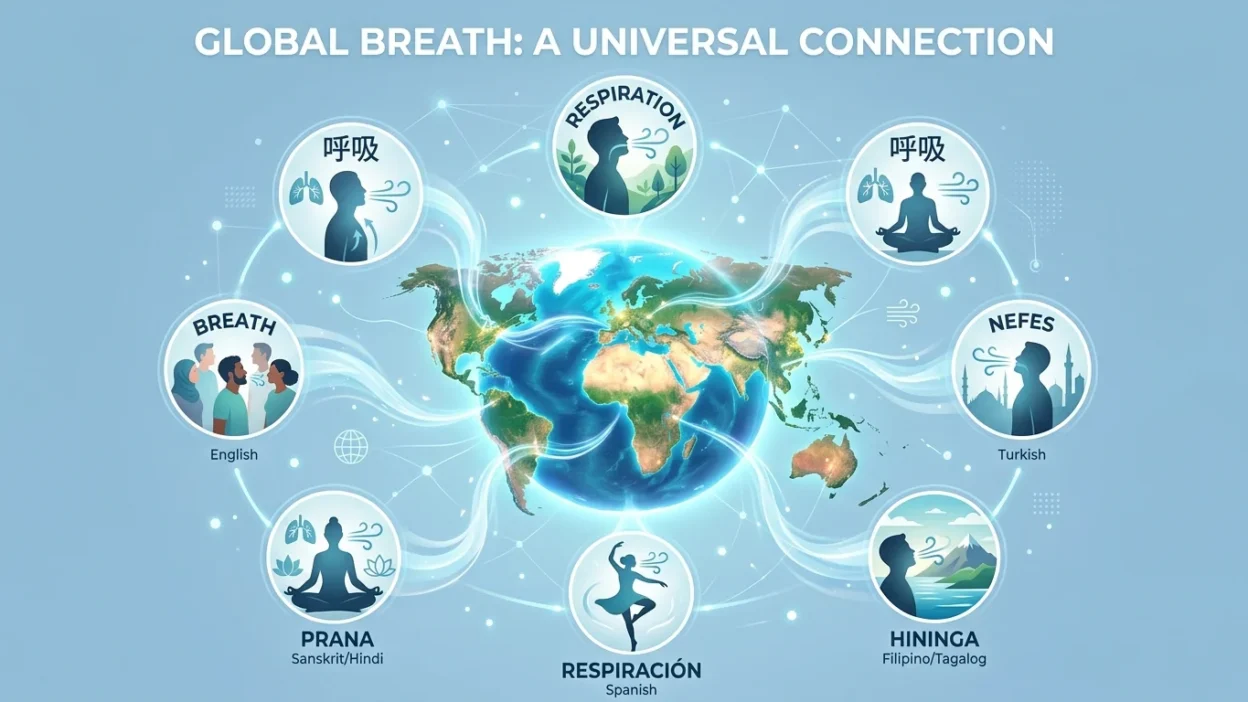
Understanding 100+ breath in different languages helps language learners, writers, translators, and travelers explore how one simple human word is expressed globally. The word “breath” is deeply connected to life, health, and emotion, and every language has its own unique way to describe it.
In this guide, you will learn how to say breath in different languages, see breath translations, and understand breath around the world through real examples.
Breath in Different Languages
| Language | Pronunciation | Example |
| English | breath | Take a deep breath before speaking. — Take a deep breath before speaking. |
| Spanish | aliento | Tomó un aliento profundo antes de hablar. — He took a deep breath before speaking. |
| French | souffle | Elle prend un souffle profond. — She takes a deep breath. |
| German | Atem | Er nimmt einen tiefen Atem. — He takes a deep breath. |
| Italian | respiro | Fai un respiro profondo. — Take a deep breath. |
| Portuguese | respiração | Ele fez uma respiração profunda. — He took a deep breath. |
| Dutch | adem | Neem een diepe adem. — Take a deep breath. |
| Russian | дыхание (dykhanie) | Он сделал глубокое дыхание. — He took a deep breath. |
| Ukrainian | дихання | Вона зробила глибоке дихання. — She took a deep breath. |
| Polish | oddech | Weź głęboki oddech. — Take a deep breath. |
| Czech | dech | Udělej hluboký dech. — Take a deep breath. |
| Slovak | dych | Urob hlboký dych. — Take a deep breath. |
| Hungarian | lélegzet | Vegyél mély lélegzetet. — Take a deep breath. |
| Romanian | respirație | Ia o respirație adâncă. — Take a deep breath. |
| Greek | αναπνοή (anapnoi) | Πάρε μια βαθιά αναπνοή. — Take a deep breath. |
| Turkish | nefes | Derin bir nefes al. — Take a deep breath. |
| Arabic | نفس (nafas) | خذ نفسًا عميقًا. — Take a deep breath. |
| Persian | نفس | یک نفس عمیق بکش. — Take a deep breath. |
| Hindi | सांस | गहरी सांस लो। — Take a deep breath. |
| Urdu | سانس | گہری سانس لیں۔ — Take a deep breath. |
| Bengali | শ্বাস | গভীর শ্বাস নাও। — Take a deep breath. |
| Punjabi | ਸਾਹ | ਗਹਿਰਾ ਸਾਹ ਲਵੋ। — Take a deep breath. |
| Tamil | சுவாசம் | ஆழமான சுவாசம் எடு. — Take a deep breath. |
| Telugu | శ్వాస | లోతైన శ్వాస తీసుకో. — Take a deep breath. |
| Kannada | ಉಸಿರಾಟ | ಆಳವಾದ ಉಸಿರಾಟ ತೆಗೆದುಕೊಳ್ಳಿ. — Take a deep breath. |
| Malayalam | ശ്വാസം | ആഴത്തിലുള്ള ശ്വാസം എടുക്കുക. — Take a deep breath. |
| Sinhala | ශ්වසනය | ගැඹුරු ශ්වසනයක් ගන්න. — Take a deep breath. |
| Nepali | सास | गहिरो सास लिनुहोस्। — Take a deep breath. |
| Gujarati | શ્વાસ | ઊંડો શ્વાસ લો. — Take a deep breath. |
| Marathi | श्वास | खोल श्वास घ्या. — Take a deep breath. |
| Chinese (Simplified) | 呼吸 (hūxī) | 深呼吸一下。— Take a deep breath. |
| Chinese (Traditional) | 呼吸 | 深呼吸一下。— Take a deep breath. |
| Japanese | 呼吸 (kokyū) | 深呼吸をする。— Take a deep breath. |
| Korean | 호흡 (hoheup) | 깊게 호흡하세요. — Take a deep breath. |
| Vietnamese | hơi thở | Hít một hơi thở sâu. — Take a deep breath. |
| Thai | ลมหายใจ | หายใจเข้าลึก ๆ — Take a deep breath. |
| Indonesian | napas | Ambil napas dalam. — Take a deep breath. |
| Malay | nafas | Tarik nafas dalam. — Take a deep breath. |
| Filipino | hininga | Huminga nang malalim. — Take a deep breath. |
| Swahili | pumzi | Pumua kwa kina. — Take a deep breath. |
| Yoruba | ẹmi | Gba ẹmi jinlẹ. — Take a deep breath. |
| Igbo | ume | Were ume miri emi. — Take a deep breath. |
| Zulu | umoya | Thatha umoya ojulile. — Take a deep breath. |
| Somali | neef | Qaado neef qoto dheer. — Take a deep breath. |
| Amharic | እስትንፋስ | ጥልቅ እስትንፋስ ውሰድ። — Take a deep breath. |
| Hebrew | נשימה | קח נשימה עמוקה. — Take a deep breath. |
| Icelandic | andardráttur | Taktu djúpan andardrátt. — Take a deep breath. |
| Finnish | hengitys | Ota syvä hengitys. — Take a deep breath. |
| Swedish | andning | Ta ett djupt andetag. — Take a deep breath. |
| Norwegian | pust | Ta et dypt pust. — Take a deep breath. |
| Danish | åndedræt | Tag en dyb indånding. — Take a deep breath. |
| Lithuanian | kvėpavimas | Giliai įkvėpk. — Take a deep breath. |
| Latvian | elpa | Dziļi ieelpo. — Take a deep breath. |
| Estonian | hingamine | Hinga sügavalt sisse. — Take a deep breath. |
| Slovenian | dih | Vzemi globok dih. — Take a deep breath. |
| Croatian | disanje | Udahni duboko. — Take a deep breath. |
| Serbian | дисање | Удахни дубоко. — Take a deep breath. |
| Bosnian | disanje | Udahni duboko. — Take a deep breath. |
| Bulgarian | дишане | Поеми дълбоко дишане. — Take a deep breath. |
| Macedonian | дишење | Земи длабоко дишење. — Take a deep breath. |
| Armenian | շնչառություն | Խորը շնչառություն վերցրու։ — Take a deep breath. |
| Georgian | სუნთქვა | ღრმა სუნთქვა აიღე. — Take a deep breath. |
| Albanian | frymëmarrje | Merr frymë thellë. — Take a deep breath. |
| Kurdish | هەناسە (hanasa) | هەناسەی قووڵ بگرە. — Take a deep breath. |
| Lao | ຫາຍໃຈ | ຫາຍໃຈເຂົ້າເລິກໆ. — Take a deep breath. |
| Mongolian | амьсгал | Гүн амьсгал ав. — Take a deep breath. |
| Kazakh | тыныс алу | Терең тыныс ал. — Take a deep breath. |
| Uzbek | nafas olish | Chuqur nafas oling. — Take a deep breath. |
| Tibetan | དབུགས | དབུགས་ཟབ་བླངས། — Take a deep breath. |
Why Learning “Breath” in Different Languages Matters
Learning breath translations in different languages is useful because:
- It improves communication in travel and daily life
- It helps in yoga, meditation, and wellness practices
- It enhances language learning and vocabulary building
- It shows cultural differences in expressing human life concepts
How to Say Breath in Different Languages Easily
If you want to quickly learn how to say breath in different languages, focus on:
- Similar root sounds (many languages use “naf / resp / bre” patterns)
- Practice with example sentences
- Listening to native pronunciation
Breath Around the World: A Universal Human Word
The concept of breath is universal. Whether it is called nefes, respiración, or hininga, it always connects to life, calmness, and survival. This makes “breath” one of the most meaningful words across cultures.
Conclusion
The word “breath” exists in every language, but each culture expresses it differently. Learning 100+ breath in different languages helps you understand both language structure and human connection across the world.
FAQs
1. What is breath in different languages?
Breath is expressed as words like “nefes” (Turkish), “respiración” (Spanish), and “呼吸” (Chinese).
2. How do you say breath in most languages?
Most languages use variations of words meaning air, life, or breathing like “respire,” “nefes,” or “saans.”
3. Why is breath important in language learning?
It is a basic human concept that helps learners connect vocabulary with daily life.
4. Is breath the same word in all languages?
No, but many languages share similar roots or meanings related to air and life.
5. How can I learn breath translations faster?
Practice with tables, pronunciation guides, and example sentences regularly.

Ely Joseph is a language researcher, writer, and contributor who specializes in words, meanings, and multilingual communication. With a strong interest in how language shapes understanding across cultures, Ely focuses on creating clear, accurate, and reader-friendly content for a global audience.