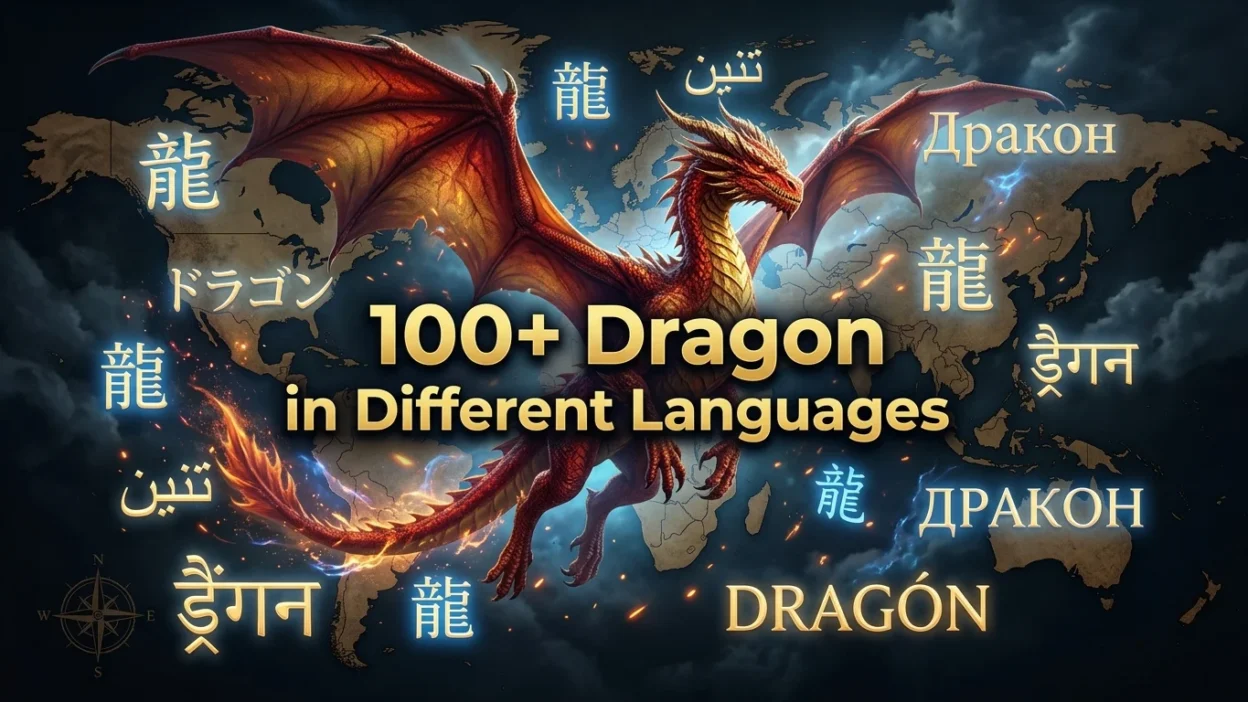
Dragons are among the most fascinating mythical creatures in human history. From Asian legends to European folklore, the word “dragon” appears in hundreds of cultures and languages worldwide. If you are searching for dragon in different languages, this guide will help you discover how people say and use the word across the globe.
Whether you are learning languages, writing fantasy stories, creating game characters, naming pets, or exploring mythology, these dragon translations will give you a deeper understanding of how the legendary creature is represented worldwide.
Below is a complete table showing how to say dragon in different languages, along with pronunciation and real life example sentences for each language.
Dragon in Different Languages
| Language | Pronunciation | Example |
| English | Drag-un | The dragon guards the ancient treasure. (English meaning: A dragon protects old treasure.) |
| Spanish | Dra-gon | El dragón vuela sobre la montaña. (English meaning: The dragon flies over the mountain.) |
| French | Dra-gon | Le dragon protège le château. (English meaning: The dragon protects the castle.) |
| German | Dra-che | Der Drache schläft in der Höhle. (English meaning: The dragon sleeps in the cave.) |
| Italian | Dra-go | Il drago sputa fuoco. (English meaning: The dragon breathes fire.) |
| Portuguese | Dra-gão | O dragão aparece no céu. (English meaning: The dragon appears in the sky.) |
| Dutch | Draa-kon | De draak bewaakt het goud. (English meaning: The dragon guards the gold.) |
| Russian | Dra-kon | Дракон летит ночью. (English meaning: The dragon flies at night.) |
| Ukrainian | Dra-hon | Дракон живе в лісі. (English meaning: The dragon lives in the forest.) |
| Polish | Smohk | Smok zieje ogniem. (English meaning: The dragon breathes fire.) |
| Czech | Drahk | Drak chrání poklad. (English meaning: The dragon protects the treasure.) |
| Slovak | Drahk | Drak lieta nad mestom. (English meaning: The dragon flies over the city.) |
| Hungarian | Sahr-kany | A sárkány erős. (English meaning: The dragon is strong.) |
| Romanian | Dra-gon | Dragonul păzește castelul. (English meaning: The dragon guards the castle.) |
| Bulgarian | Zmey | Змеят е огромен. (English meaning: The dragon is enormous.) |
| Greek | Drah-kon | Ο δράκος κοιμάται. (English meaning: The dragon is sleeping.) |
| Turkish | Ej-der-ha | Ejderha mağarada yaşıyor. (English meaning: The dragon lives in the cave.) |
| Arabic | Tin-neen | التنين يحرس المدينة. (English meaning: The dragon guards the city.) |
| Hebrew | Ta-neen | התנין עף בשמיים. (English meaning: The dragon flies in the sky.) |
| Persian | Azh-da-ha | اژدها آتش میدمد. (English meaning: The dragon breathes fire.) |
| Hindi | Naag | नाग पहाड़ पर है। (English meaning: The dragon is on the mountain.) |
| Urdu | Azhdaha | اژدہا غار میں رہتا ہے۔ (English meaning: The dragon lives in the cave.) |
| Bengali | Dra-gon | ড্রাগন আকাশে উড়ছে। (English meaning: The dragon is flying in the sky.) |
| Punjabi | Azhdaha | ਅਜ਼ਦਹਾ ਬਹੁਤ ਤਾਕਤਵਰ ਹੈ। (English meaning: The dragon is very powerful.) |
| Gujarati | Dra-gon | ડ્રેગન આગ ફેંકે છે। (English meaning: The dragon throws fire.) |
| Marathi | Dra-gon | ड्रॅगन जंगलात राहतो. (English meaning: The dragon lives in the forest.) |
| Tamil | Tiraagan | டிராகன் கோட்டையை காக்கிறது. (English meaning: The dragon protects the fort.) |
| Telugu | Dra-gan | డ్రాగన్ మంటలు ఊదుతుంది. (English meaning: The dragon blows flames.) |
| Kannada | Dra-gan | ಡ್ರಾಗನ್ ಗುಹೆಯಲ್ಲಿ ಇದೆ. (English meaning: The dragon is in the cave.) |
| Malayalam | Dra-gon | ഡ്രാഗൺ പറക്കുന്നു. (English meaning: The dragon is flying.) |
| Sinhala | Dra-ga-na | ඩ්රැගන් ගින්න පිටකරයි. (English meaning: The dragon spits fire.) |
| Nepali | Dra-gon | ड्रागन आकाशमा उड्छ। (English meaning: The dragon flies in the sky.) |
| Chinese (Mandarin) | Long | 龙很强大。 (English meaning: The dragon is very powerful.) |
| Japanese | Ryu | 龍は海に住んでいます。 (English meaning: The dragon lives in the sea.) |
| Korean | Yong | 용이 하늘을 난다. (English meaning: The dragon flies in the sky.) |
| Vietnamese | Rong | Con rồng rất lớn. (English meaning: The dragon is very big.) |
| Thai | Mang-korn | มังกรบินได้. (English meaning: The dragon can fly.) |
| Indonesian | Na-ga | Naga menjaga kuil. (English meaning: The dragon guards the temple.) |
| Malay | Na-ga | Naga itu kuat. (English meaning: The dragon is strong.) |
| Filipino | Dra-gon | Ang dragon ay mabangis. (English meaning: The dragon is fierce.) |
| Swahili | Jo-ka | Joka anaishi mlimani. (English meaning: The dragon lives on the mountain.) |
| Zulu | Udrago | Udrago uyandiza. (English meaning: The dragon is flying.) |
| Afrikaans | Draa-k | Die draak slaap. (English meaning: The dragon is sleeping.) |
| Somali | Mas | Masduulaagu waa weyn yahay. (English meaning: The dragon is huge.) |
| Hausa | Maciji | Macijin yana da ƙarfi. (English meaning: The dragon is powerful.) |
| Yoruba | Dra-gon | Dragon naa n fo. (English meaning: The dragon is flying.) |
| Igbo | Dra-gon | Dragon ahụ buru ibu. (English meaning: The dragon is big.) |
| Amharic | Werq | ድራጎኑ እሳት ይተነፍሳል። (English meaning: The dragon breathes fire.) |
| Finnish | Lohi-karme | Lohikäärme lentää. (English meaning: The dragon flies.) |
| Swedish | Dra-ke | Draken vaktar skatten. (English meaning: The dragon guards the treasure.) |
| Norwegian | Dra-ke | Dragen bor i fjellet. (English meaning: The dragon lives in the mountain.) |
| Danish | Dra-ge | Dragen er stærk. (English meaning: The dragon is strong.) |
| Icelandic | Dreki | Drekinn flýgur hátt. (English meaning: The dragon flies high.) |
| Irish | Dra-gun | Tá an dragan mór. (English meaning: The dragon is big.) |
| Welsh | Draig | Mae’r ddraig yn gryf. (English meaning: The dragon is powerful.) |
| Scottish Gaelic | Dra-ga-n | Tha an dràgon mòr. (English meaning: The dragon is huge.) |
| Latin | Dra-co | Draco ignem spirat. (English meaning: The dragon breathes fire.) |
| Esperanto | Dra-ko | La drako flugas. (English meaning: The dragon is flying.) |
| Albanian | Dra-goi | Dragoi jeton në shpellë. (English meaning: The dragon lives in the cave.) |
| Serbian | Zmaj | Zmaj leti iznad grada. (English meaning: The dragon flies above the city.) |
| Croatian | Zmaj | Zmaj čuva blago. (English meaning: The dragon guards the treasure.) |
| Slovenian | Zmaj | Zmaj bruha ogenj. (English meaning: The dragon breathes fire.) |
| Bosnian | Zmaj | Zmaj je opasan. (English meaning: The dragon is dangerous.) |
| Lithuanian | Sli-bi-nas | Slibinas miega oloje. (English meaning: The dragon sleeps in the cave.) |
| Latvian | Pūķis | Pūķis lido debesīs. (English meaning: The dragon flies in the sky.) |
| Estonian | Lohe | Lohe kaitseb lossi. (English meaning: The dragon protects the castle.) |
| Georgian | Gveleshapi | გველეშაპი დიდია. (English meaning: The dragon is huge.) |
| Armenian | Vishap | Վիշապը կրակ է շնչում։ (English meaning: The dragon breathes fire.) |
| Mongolian | Luu | Луу хүчтэй. (English meaning: The dragon is powerful.) |
| Kazakh | Ai-da-har | Айдаһар ұшады. (English meaning: The dragon flies.) |
| Uzbek | Azhdar | Ajdar olov purkaydi. (English meaning: The dragon spits fire.) |
| Azerbaijani | Əjdaha | Əjdaha mağarada yaşayır. (English meaning: The dragon lives in the cave.) |
| Kurdish | Ezdeha | Ezdeha gelek mezin e. (English meaning: The dragon is very large.) |
| Pashto | Azhdaha | اژدها اور باسي. (English meaning: The dragon breathes fire.) |
| Maori | Tarakona | Kei te rere te tarakona. (English meaning: The dragon is flying.) |
How to Say Dragon in Different Languages
The word “dragon” changes greatly from one culture to another. In Western cultures, dragons are often giant fire-breathing monsters. In Eastern traditions, especially in China and Japan, dragons symbolize wisdom, power, and good fortune.
Learning dragon in all languages can help with:
- Language learning
- Fantasy writing
- Video game character names
- Tattoo ideas
- Cultural research
- Mythology studies
Dragon Translations Around the World
Different regions describe dragons in unique ways:
- Chinese dragons are usually wise and lucky.
- European dragons are often fierce guardians.
- Japanese dragons are linked to water and weather.
- Slavic dragons appear in heroic legends and folklore.
These global differences make dragon around the world a fascinating topic for language lovers and mythology fans.
Why People Search for Dragon in Different Languages
Many users search for how to say dragon in different languages for creative and educational purposes. Popular reasons include:
- Choosing fantasy usernames
- Naming pets or gaming characters
- Writing novels or comics
- Creating tattoos
- Learning cultural meanings
- Translating mythical terms
Because dragons appear in nearly every major culture, their names carry unique meanings and symbolism.
Conclusion
Exploring dragon in different languages is a fun way to learn about world cultures, mythology, and language diversity. From the Chinese “Long” to the Welsh “Draig,” every translation reflects local traditions and legends. These dragon translations also show how one mythical creature connects people around the globe.
FAQs
1. How do you say dragon in different languages?
Dragon is translated differently worldwide, such as “Long” in Chinese, “Ryu” in Japanese, “Drache” in German, and “Ejderha” in Turkish.
2. What is dragon in Chinese?
The Chinese word for dragon is “Long,” which symbolizes luck, strength, and wisdom.
3. How do Europeans describe dragons?
European dragons are commonly portrayed as fire-breathing creatures guarding treasure and castles.
4. Why are dragon translations popular online?
People search dragon translations for gaming names, tattoos, fantasy stories, language learning, and cultural interest.
5. Which cultures consider dragons lucky?
Chinese, Japanese, and several East Asian cultures often see dragons as symbols of power, prosperity, and good fortune.

David William is a language enthusiast, researcher, and content creator at Lingoveb. With a deep passion for words, meanings, and global communication, he focuses on making language simple, clear, and accessible for readers around the world.