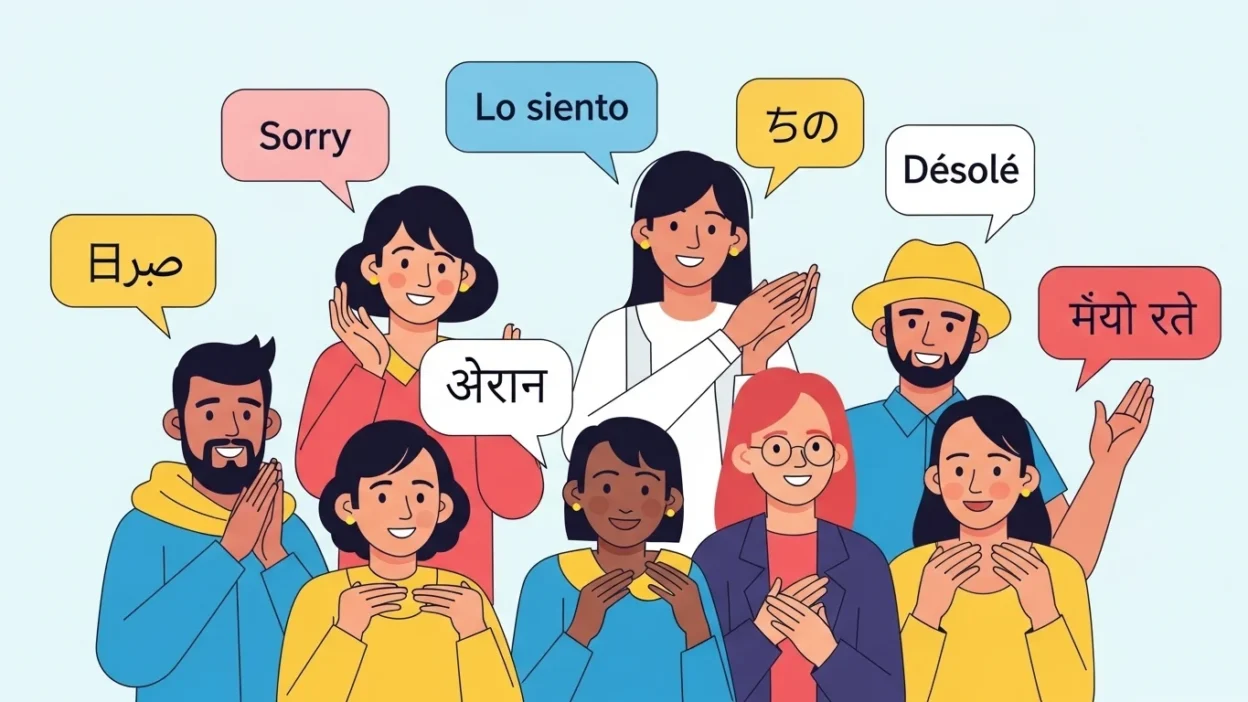
Learning how to say “sorry” in different languages is more than just memorizing words it’s a bridge to understanding cultures, expressing empathy, and improving communication. Whether you’re traveling, making friends internationally, or simply curious about language, knowing how to apologize politely can make a big difference.
Sorry in Different Languages: 70 Examples
| Language | Pronunciation | Example |
| Arabic | آسف (Aasif) | آسف على التأخير |
| Spanish | Lo siento | Lo siento por el error |
| French | Désolé | Je suis désolé pour ça |
| German | Es tut mir leid | Es tut mir leid für mein Verhalten |
| Italian | Mi dispiace | Mi dispiace per il ritardo |
| Portuguese | Desculpe | Desculpe pelo inconveniente |
| Russian | Извини (Izvini) | Извини за опоздание |
| Japanese | ごめんなさい (Gomen nasai) | ごめんなさい、遅れました |
| Chinese (Mandarin) | 对不起 (Duìbuqǐ) | 对不起,我忘了 |
| Hindi | माफ़ कीजिए (Maaf kijiye) | माफ़ कीजिए, मैं देर हो गया |
| Korean | 미안합니다 (Mianhamnida) | 미안합니다, 늦었어요 |
| Turkish | Özür dilerim | Özür dilerim, rahatsız ettim |
| Dutch | Sorry | Sorry voor het ongemak |
| Swedish | Förlåt | Förlåt att jag stör |
| Norwegian | Beklager | Beklager at jeg kom for sent |
| Danish | Undskyld | Undskyld for fejlen |
| Greek | Συγγνώμη (Signómi) | Συγγνώμη για την καθυστέρηση |
| Polish | Przepraszam | Przepraszam za spóźnienie |
| Czech | Promiň | Promiň, že jsem se zpozdil |
| Hungarian | Sajnálom | Sajnálom a hibát |
| Finnish | Anteeksi | Anteeksi, että myöhästyin |
| Romanian | Îmi pare rău | Îmi pare rău pentru greșeală |
| Bulgarian | Съжалявам (Săzhalyavam) | Съжалявам за закъснението |
| Serbian | Жао ми је (Žao mi je) | Жао ми је што сам закасао |
| Croatian | Oprostite | Oprostite na grešci |
| Bosnian | Žao mi je | Žao mi je zbog greške |
| Slovak | Prepáč | Prepáč, že som meškal |
| Slovenian | Opravičujem se | Opravičujem se za zamudo |
| Lithuanian | Atsiprašau | Atsiprašau už vėlavimą |
| Latvian | Piedod | Piedod, ka es nokavēju |
| Estonian | Vabandust | Vabandust hilinemise pärast |
| Maltese | Jiddispjacini | Jiddispjacini għall-iżball |
| Thai | ขอโทษ (Khǎaw-thôot) | ขอโทษที่มาสาย |
| Vietnamese | Xin lỗi | Xin lỗi về sự nhầm lẫn |
| Indonesian | Maaf | Maaf atas keterlambatan |
| Filipino | Pasensya na | Pasensya na sa pagka-late |
| Malay | Maaf | Maaf atas kesilapan |
| Swahili | Samahani | Samahani kwa kuchelewa |
| Zulu | Ngiyaxolisa | Ngiyaxolisa ngokufika sekwephuzile |
| Xhosa | Ndicela uxolo | Ndicela uxolo ngokulibazisa |
| Amharic | ይቅርታ (Yiqirta) | ይቅርታ ስለመዘገየት |
| Somali | Waan ka xumahay | Waan ka xumahay khaladka |
| Hebrew | סליחה (Slicha) | סליחה על העיכוב |
| Persian | متاسفم (Motasefam) | متاسفم برای تاخیر |
| Urdu | معاف کیجیے (Maaf kijiye) | معاف کیجیے، میں دیر ہو گیا |
| Bengali | দুঃখিত (Dukhito) | দুঃখিত, আমি দেরি হয়ে গেলাম |
| Punjabi | ਮਾਫ਼ ਕਰਨਾ (Maaf karna) | ਮਾਫ਼ ਕਰਨਾ, ਮੈਂ ਦੇਰ ਕਰ ਦਿੱਤੀ |
| Marathi | माफ करा (Maaf kara) | माफ करा, उशीर झाला |
| Tamil | மன்னிக்கவும் (Mannikkavum) | மன்னிக்கவும், நான் தாமதமாக வந்தேன் |
| Telugu | క్షమించండి (Kshaminchandi) | క్షమించండి, నేను ఆలస్యమయ్యాను |
| Kannada | ಕ್ಷಮಿಸಿ (Kshamisi) | ಕ್ಷಮಿಸಿ, ನಾನು ತಡವಾಗಿ ಬಂದೆ |
| Malayalam | ക്ഷമിക്കണം (Kshamikkanam) | ക്ഷമിക്കണം, ഞാൻ വൈകി |
| Sinhala | සමාවෙන්න (Samāvenna) | සමාවෙන්න, මම ප්රමාද වුණා |
| Nepali | माफ गर्नुहोस् (Maaf garnuhos) | माफ गर्नुहोस्, म ढिलो भएँ |
| Mongolian | Уучлаарай (Uuchlaarai) | Уучлаарай, би оройтлоо |
| Georgian | ბოდიში (Bodishi) | ბოდიში დაგვიანებისთვის |
| Kazakh | Кешіріңіз (Keshiriniz) | Кешіріңіз, мен кешіктім |
| Uzbek | Kechirasiz | Kechirasiz, men kech qoldim |
| Kyrgyz | Кечиресиз (Kechiresiz) | Кечиресиз, мен кеч калдым |
| Tajik | Бубахшед (Bubakhshid) | Бубахшед барои таъхир |
| Burmese | ဆောရီး (Sauri) | ဆောရီး၊ ကျွန်တော်နောက်ကျနေပြီ |
| Khmer | សូមទោស (Soum tos) | សូមទោសដែលខ្ញុំយឺត |
| Lao | ຂໍໂທດ (Khaw thot) | ຂໍໂທດທີ່ມາຊ້າ |
| Tibetan | སོ་སོར་ཡོད (So sor yod) | སོ་སོར་ཡོད། ང་སྔོན་འགྲོས |
How to Use “Sorry” in Different Situations
Knowing sorry translations is useful, but context matters. Some languages have formal and casual forms. For example, Japanese has ごめんなさい (gomen nasai) for casual apologies and 申し訳ありません (mōshiwake arimasen) for formal contexts. Understanding when and how to use these phrases makes your apology more sincere and effective.
Tips for Learning Sorry in All Languages
- Practice pronunciation slowly and clearly.
- Listen to native speakers to catch tone and emotion.
- Learn context-specific phrases, such as for being late, mistakes, or small annoyances.
- Repeat regularly apologizing is universal, but language nuances differ.
Conclusion
Mastering how to say sorry in different languages can improve relationships, show respect, and make travel experiences smoother. By learning these 70 languages, you’re ready to express empathy and politeness around the world.
FAQs
1. What is the easiest way to remember “sorry” in many languages?
Use mnemonic devices, flashcards, or language apps to link the pronunciation with the meaning.
2. Are there formal and informal ways to say sorry in every language?
Many languages, including Japanese, Korean, and French, have formal and casual versions depending on context.
3. Can I use a literal translation of sorry in any language?
Literal translations may work, but using culturally appropriate expressions is more effective.
4. How important is pronunciation for apologizing in different languages?
Very important. Even minor mispronunciations can change tone or meaning.
5. Why should I learn how to apologize in multiple languages?
Apologizing correctly builds trust, avoids misunderstandings, and shows respect for different cultures.