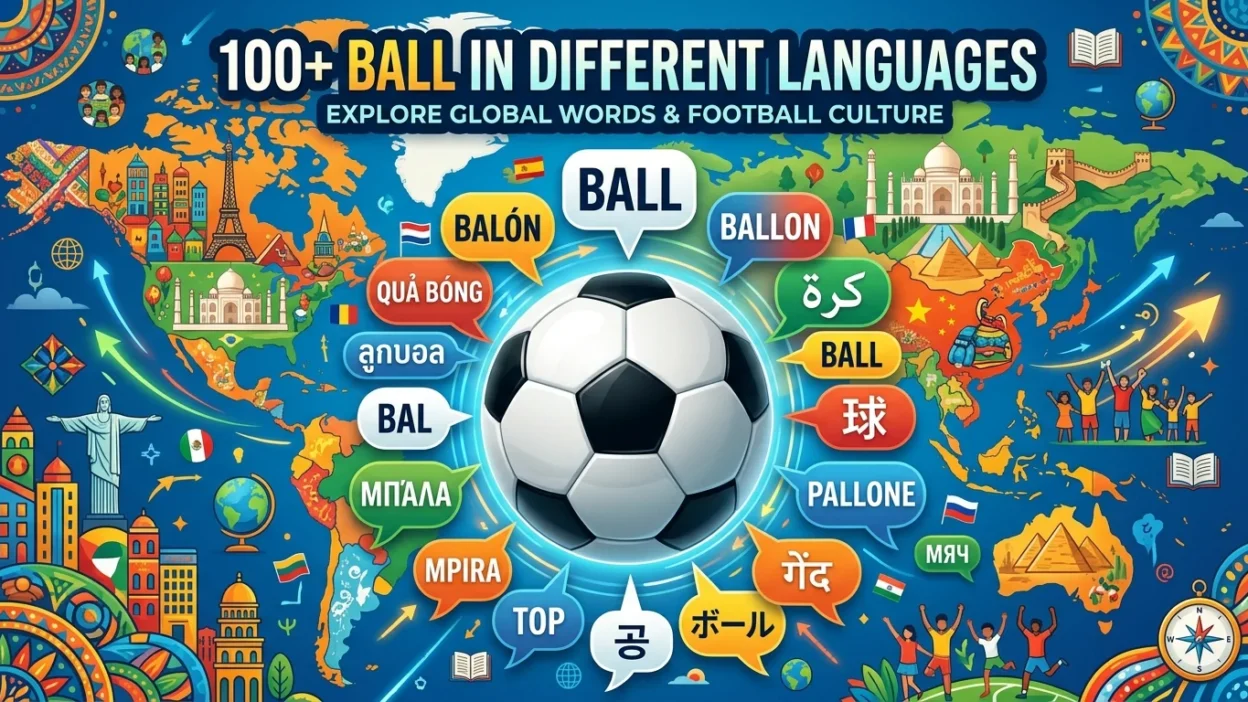
A ball is one of the most common objects used in sports, games, and everyday life. Whether you are learning a new language, traveling abroad, teaching children, or exploring global vocabulary, knowing how to say “ball” in different languages can be both fun and useful.
In this guide, you will discover translations of the word “ball” from around the world. You will also learn pronunciation tips and real life example sentences to improve your understanding.
This article is designed for anyone searching for “100+ ball in different languages,” “how to say ball in different languages,” or “ball translations around the world.”
Ball in Different Languages
| Language | Pronunciation | Example |
| English | Ball | I kicked the ball across the field. (Meaning: I kicked the ball across the field.) |
| Spanish | Pelota | El niño lanzó la pelota. (Meaning: The boy threw the ball.) |
| French | Balle | La balle est rouge. (Meaning: The ball is red.) |
| German | Ball | Der Ball ist im Garten. (Meaning: The ball is in the garden.) |
| Italian | Palla | La palla è grande. (Meaning: The ball is big.) |
| Portuguese | Bola | A bola caiu na rua. (Meaning: The ball fell on the street.) |
| Dutch | Bal | De bal rolde weg. (Meaning: The ball rolled away.) |
| Russian | Мяч (Myach) | Мяч лежит на полу. (Meaning: The ball is on the floor.) |
| Ukrainian | М’яч (Myach) | М’яч у коробці. (Meaning: The ball is in the box.) |
| Polish | Piłka | Piłka jest nowa. (Meaning: The ball is new.) |
| Czech | Míč | Míč spadl dolů. (Meaning: The ball fell down.) |
| Slovak | Lopta | Lopta je modrá. (Meaning: The ball is blue.) |
| Hungarian | Labda | A labda kicsi. (Meaning: The ball is small.) |
| Romanian | Minge | Mingea este aici. (Meaning: The ball is here.) |
| Bulgarian | Топка (Topka) | Топката е чиста. (Meaning: The ball is clean.) |
| Greek | Μπάλα (Bala) | Η μπάλα είναι δίπλα μου. (Meaning: The ball is beside me.) |
| Turkish | Top | Top bahçede. (Meaning: The ball is in the garden.) |
| Arabic | كرة (Kura) | الكرة كبيرة. (Meaning: The ball is big.) |
| Persian | توپ (Toop) | توپ روی میز است. (Meaning: The ball is on the table.) |
| Hebrew | כדור (Kadur) | הכדור חדש. (Meaning: The ball is new.) |
| Hindi | गेंद (Gend) | गेंद मैदान में है। (Meaning: The ball is in the field.) |
| Urdu | گیند (Gaind) | گیند نیلی ہے۔ (Meaning: The ball is blue.) |
| Punjabi | ਗੇਂਦ (Gend) | ਗੇਂਦ ਜ਼ਮੀਨ ਤੇ ਹੈ। (Meaning: The ball is on the ground.) |
| Bengali | বল (Bol) | বলটি ছোট। (Meaning: The ball is small.) |
| Tamil | பந்து (Panthu) | பந்து அறையில் உள்ளது. (Meaning: The ball is in the room.) |
| Telugu | బంతి (Banthi) | బంతి పెద్దది. (Meaning: The ball is big.) |
| Kannada | ಚೆಂಡು (Chendu) | ಚೆಂಡು ಹೊಸದು. (Meaning: The ball is new.) |
| Malayalam | പന്ത് (Panth) | പന്ത് മേശപ്പുറത്ത് ഉണ്ട്. (Meaning: The ball is on the table.) |
| Marathi | चेंडू (Chendu) | चेंडू हिरवा आहे. (Meaning: The ball is green.) |
| Gujarati | બોલ (Bol) | બોલ અહીં છે. (Meaning: The ball is here.) |
| Nepali | बल (Bal) | बल ठूलो छ। (Meaning: The ball is big.) |
| Sinhala | බෝලය (Bolaya) | බෝලය පහලට වැටුණා. (Meaning: The ball fell down.) |
| Chinese | 球 (Qiú) | 球在桌子上。 (Meaning: The ball is on the table.) |
| Japanese | ボール (Bōru) | ボールは白いです。 (Meaning: The ball is white.) |
| Korean | 공 (Gong) | 공이 의자 아래에 있어요. (Meaning: The ball is under the chair.) |
| Thai | ลูกบอล (Luk Bon) | ลูกบอลอยู่ในห้อง. (Meaning: The ball is in the room.) |
| Vietnamese | Bóng | Quả bóng màu đỏ. (Meaning: The ball is red.) |
| Indonesian | Bola | Bola ada di taman. (Meaning: The ball is in the park.) |
| Malay | Bola | Bola itu bulat. (Meaning: The ball is round.) |
| Filipino | Bola | Ang bola ay malinis. (Meaning: The ball is clean.) |
| Swahili | Mpira | Mpira uko mezani. (Meaning: The ball is on the table.) |
| Zulu | Ibhola | Ibhola likhulu. (Meaning: The ball is big.) |
| Afrikaans | Bal | Die bal is geel. (Meaning: The ball is yellow.) |
| Somali | Kubad | Kubaddu waa cusub. (Meaning: The ball is new.) |
| Amharic | ኳስ (Kuas) | ኳሱ ትልቅ ነው። (Meaning: The ball is big.) |
| Hausa | Kwallo | Kwallon tana nan. (Meaning: The ball is here.) |
| Yoruba | Bọọlu | Bọọlu wa lori ilẹ. (Meaning: The ball is on the ground.) |
| Igbo | Bọọlụ | Bọọlụ ahụ dị ọhụrụ. (Meaning: The ball is new.) |
| Finnish | Pallo | Pallo on pöydällä. (Meaning: The ball is on the table.) |
| Swedish | Boll | Bollen är liten. (Meaning: The ball is small.) |
| Norwegian | Ball | Ballen er rund. (Meaning: The ball is round.) |
| Danish | Bold | Bolden er tung. (Meaning: The ball is heavy.) |
| Icelandic | Bolti | Boltinn er nýr. (Meaning: The ball is new.) |
| Estonian | Pall | Pall on roheline. (Meaning: The ball is green.) |
| Latvian | Bumba | Bumba ir sarkana. (Meaning: The ball is red.) |
| Lithuanian | Kamuolys | Kamuolys yra didelis. (Meaning: The ball is big.) |
| Serbian | Lopta | Lopta je ovde. (Meaning: The ball is here.) |
| Croatian | Lopta | Lopta je mala. (Meaning: The ball is small.) |
| Bosnian | Lopta | Lopta je ispod stola. (Meaning: The ball is under the table.) |
| Slovenian | Žoga | Žoga je nova. (Meaning: The ball is new.) |
| Albanian | Top | Topi është i bardhë. (Meaning: The ball is white.) |
| Georgian | ბურთი (Burti) | ბურთი დიდია. (Meaning: The ball is big.) |
| Armenian | Գնդակ (Gndak) | Գնդակը կարմիր է։ (Meaning: The ball is red.) |
| Azerbaijani | Top | Top masanın üstündədir. (Meaning: The ball is on the table.) |
| Kazakh | Доп (Dop) | Доп жаңа. (Meaning: The ball is new.) |
| Uzbek | To‘p | To‘p katta. (Meaning: The ball is big.) |
| Mongolian | Бөмбөг (Bömbög) | Бөмбөг жижиг байна. (Meaning: The ball is small.) |
| Khmer | បាល់ (Bal) | បាល់នៅលើតុ។ (Meaning: The ball is on the table.) |
| Lao | ບານ (Ban) | ບານໃໝ່. (Meaning: The ball is new.) |
| Burmese | ဘောလုံး (Baw Lone) | ဘောလုံးကကြီးတယ်။ (Meaning: The ball is big.) |
| Maori | Pōro | He pōro whero tēnei. (Meaning: This is a red ball.) |
| Hawaiian | Pōpō kinipōpō | Nui ka pōpō kinipōpō. (Meaning: The ball is big.) |
| Latin | Pila | Pila in terra est. (Meaning: The ball is on the ground.) |
Why Learn Ball Translations in Different Languages?
Learning “ball” in all languages helps improve vocabulary and cultural understanding. Since sports and games are universal, this word is commonly used worldwide. Students, travelers, teachers, and language learners often search for ball translations to communicate more naturally.
Knowing how to say “ball” in different languages can also help with:
- Language learning practice
- School projects
- Travel communication
- Sports conversations
- Multilingual teaching materials
How to Say Ball in Different Languages Easily
The easiest way to remember ball translations around the world is to group similar languages together. For example:
- Spanish, Portuguese, and Filipino use similar forms like “Bola”
- Serbian, Croatian, and Bosnian use “Lopta”
- English and German both use “Ball”
Repeating short example sentences can also improve pronunciation and memory.
Ball Around the World in Everyday Use
The word “ball” is used daily in sports such as football, basketball, cricket, baseball, and tennis. Children also learn this word early because it is linked to games and play activities.
Different cultures may use slightly different words depending on the type of ball, but the general meaning remains the same across languages.
Conclusion
Learning how to say “ball” in different languages is a fun and practical way to expand your vocabulary. From Europe to Asia and Africa to the Americas, this simple word connects people through sports, games, and daily conversations. Use this guide to improve your language skills and explore ball translations around the world with confidence.
FAQs
1. How do you say ball in different languages?
You can say ball in many ways, such as “Pelota” in Spanish, “Balle” in French, “Bola” in Portuguese, and “球” in Chinese.
2. What is the most common translation of ball around the world?
Words like “Bola,” “Ball,” and “Top” are commonly used in many languages worldwide.
3. Why do people search for ball in all languages?
People search for ball translations for travel, education, sports communication, and language learning purposes.
4. How can I remember ball translations easily?
You can remember them by practicing short sentences, grouping similar languages, and repeating pronunciations regularly.
5. Is the word ball similar in many languages?
Yes, several languages use similar words for ball because of shared linguistic roots and cultural influence.

David William is a language enthusiast, researcher, and content creator at Lingoveb. With a deep passion for words, meanings, and global communication, he focuses on making language simple, clear, and accessible for readers around the world.