Understanding how to say “above” in different languages is useful for travelers, students, and anyone exploring global communication.
In this guide, you’ll discover “above” in all languages, including pronunciation and real-life examples. This matches informational search intent and helps you clearly understand how the word is used worldwide.
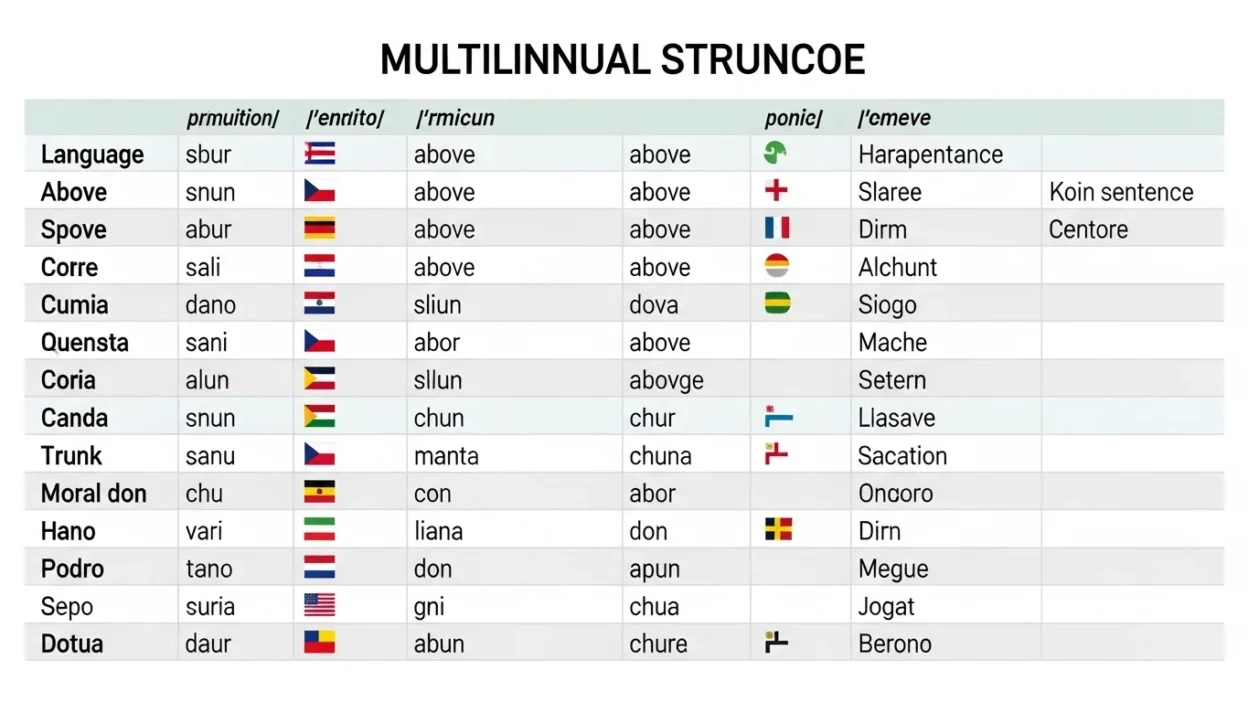
“Above” in All Languages
| Language | Pronunciation & Example | English Meaning |
| English | uh-buhv – The bird flew above the trees. | The bird flew higher than the trees. |
| Spanish | en-SEE-ma – El avión está encima de las nubes. | The plane is above the clouds. |
| French | oh-DESSU – Le chat est au-dessus de la table. | The cat is above the table. |
| German | OH-ben – Das Bild hängt oben an der Wand. | The picture is above on the wall. |
| Italian | SO-pra – Il lampadario è sopra il tavolo. | The chandelier is above the table. |
| Portuguese | soh-bra – O avião está sobre a cidade. | The plane is above the city. |
| Russian | VY-she – Samolyot vyshe oblakov. | The plane is above the clouds. |
| Chinese (Simplified) | shàng-miàn – 飞机在云上面。 | The plane is above the clouds. |
| Japanese | ue – 鳥は木の上にいる。 | The bird is above the tree. |
| Korean | wi – 새가 나무 위에 있다. | The bird is above the tree. |
| Arabic | fawq – الطائرة فوق السحاب. | The plane is above the clouds. |
| Hindi | oo-par – पक्षी पेड़ के ऊपर है। | The bird is above the tree. |
| Urdu | oo-par – پرندہ درخت کے اوپر ہے۔ | The bird is above the tree. |
| Bengali | oo-por – পাখি গাছের উপরে। | The bird is above the tree. |
| Punjabi | oo-par – پرندہ درخت دے اوپر اے۔ | The bird is above the tree. |
| Turkish | us-tun-de – Kuş ağacın üstünde. | The bird is above the tree. |
| Persian | ba-la – پرنده بالای درخت است. | The bird is above the tree. |
| Greek | a-NO – To vivlio einai pano sto trapezi. | The book is above the table. |
| Dutch | BO-ven – De lamp hangt boven de tafel. | The lamp is above the table. |
| Swedish | O-van – Fågeln är ovanför trädet. | The bird is above the tree. |
| Danish | O-ven-for – Fuglen er ovenfor træet. | The bird is above the tree. |
| Norwegian | O-ven-for – Fuglen er ovenfor treet. | The bird is above the tree. |
| Finnish | Y-la-puo-lel-la – Lintu on puun yläpuolella. | The bird is above the tree. |
| Polish | PO-nad – Ptak jest ponad drzewem. | The bird is above the tree. |
| Czech | nad – Pták je nad stromem. | The bird is above the tree. |
| Slovak | NAD – Vták je nad stromom. | The bird is above the tree. |
| Hungarian | fe-lett – A madár a fa felett van. | The bird is above the tree. |
| Romanian | de-a-SU-pra – Pasărea este deasupra copacului. | The bird is above the tree. |
| Bulgarian | NAD – Ptitsata e nad darvoto. | The bird is above the tree. |
| Ukrainian | NAD – Ptakh nad derevom. | The bird is above the tree. |
| Hebrew | meh-AL – הציפור מעל העץ. | The bird is above the tree. |
| Thai | khang-bon – นกอยู่ข้างบนต้นไม้ | The bird is above the tree. |
| Vietnamese | tren – Con chim ở trên cây. | The bird is above the tree. |
| Indonesian | di a-tas – Burung di atas pohon. | The bird is above the tree. |
| Malay | di a-tas – Burung di atas pokok. | The bird is above the tree. |
| Filipino | sa i-ta-as – Ang ibon ay nasa itaas ng puno. | The bird is above the tree. |
| Swahili | juu – Ndege iko juu ya mti. | The bird is above the tree. |
| Zulu | phe-zu-lu – Inyoni iphezulu kwesihlahla. | The bird is above the tree. |
| Afrikaans | BO-ven – Die voël is bo die boom. | The bird is above the tree. |
| Amharic | be-lay – ወፉ በላይ ነው። | The bird is above the tree. |
| Somali | ko-r – Shimbirtu waxay kor ka tahay geedka. | The bird is above the tree. |
| Hausa | sa-ma – Tsuntsu yana sama da itace. | The bird is above the tree. |
| Yoruba | lo-ke – Ẹyẹ wa loke igi. | The bird is above the tree. |
| Igbo | ne-lu – Nnụnụ dị n’elu osisi. | The bird is above the tree. |
| Malagasy | am-bo-ny – Ny vorona eo ambony hazo. | The bird is above the tree. |
| Nepali | ma-thi – चर रूखमाथि छ। | The bird is above the tree. |
| Sinhala | i-ha-ta – කුරුල්ලා ගස ඉහත ඇත. | The bird is above the tree. |
| Tamil | me-le – பறவை மரத்தின் மேல் உள்ளது. | The bird is above the tree. |
| Telugu | pai-na – పక్షి చెట్టు పై ఉంది. | The bird is above the tree. |
| Kannada | me-le – ಹಕ್ಕಿ ಮರದ ಮೇಲೆ ಇದೆ. | The bird is above the tree. |
| Marathi | var – पक्षी झाडावर आहे. | The bird is above the tree. |
| Gujarati | u-par – પક્ષી ઝાડ ઉપર છે. | The bird is above the tree. |
| Khmer | ler – បក្សីនៅលើដើមឈើ | The bird is above the tree. |
| Lao | thoeng – ນົກຢູ່ເທິງຕົ້ນໄມ້ | The bird is above the tree. |
| Burmese | a-paw – ငှက်သည်သစ်ပင်ပေါ်တွင်ရှိသည် | The bird is above the tree. |
| Mongolian | deer – Shuvuu modon deer baina. | The bird is above the tree. |
| Kazakh | zho-ga-ry – Qus ağashtyn jogarynda. | The bird is above the tree. |
| Uzbek | yu-qo-ri – Qush daraxt ustida. | The bird is above the tree. |
| Azerbaijani | us-tun-de – Quş ağacın üstündədir. | The bird is above the tree. |
| Georgian | ze-da – Chiti ze-da aris. | The bird is above the tree. |
| Armenian | ve-ra – Trchun vere tsari vra e. | The bird is above the tree. |
| Albanian | si-per – Zogu është sipër pemës. | The bird is above the tree. |
| Macedonian | nad – Ptitsa e nad drvoto. | The bird is above the tree. |
| Serbian | nad – Ptica je nad drvetom. | The bird is above the tree. |
| Croatian | iz-nad – Ptica je iznad stabla. | The bird is above the tree. |
| Bosnian | iz-nad – Ptica je iznad drveta. | The bird is above the tree. |
| Slovenian | nad – Ptica je nad drevesom. | The bird is above the tree. |
| Estonian | ule – Lind on puu üleval. | The bird is above the tree. |
| Latvian | virs – Putns ir virs koka. | The bird is above the tree. |
| Lithuanian | virs – Paukštis yra virš medžio. | The bird is above the tree. |
| Icelandic | yf-ir – Fuglin er yfir trénu. | The bird is above the tree. |
| Irish | o-si-onn – Tá an t-éan os cionn an chrainn. | The bird is above the tree. |
| Welsh | uwch-ben – Mae’r aderyn uwchben y goeden. | The bird is above the tree. |
Why Learn “Above” in Different Languages?
Learning how to say “above” in different languages improves communication and cultural understanding. It’s especially useful for:
- Travelers navigating directions
- Students learning vocabulary
- Content creators targeting global audiences
How “Above” Is Used Around the World
The word “above” generally refers to position or level, but its usage can vary:
- Physical position (above the table)
- Abstract meaning (above expectations)
- Directional context (look above)
Tips for Using “Above” Translations Correctly
When using “above translations”:
- Consider context (location vs metaphor)
- Learn pronunciation for better communication
- Avoid direct translation in complex sentences
- Understand cultural usage differences
Conclusion
Now you know how to say “above” in all languages with useful translations, pronunciations, and examples.
Understanding “above in different languages” makes your language skills more practical and globally relevant.
FAQs
1. What does “above” mean in different languages?
“Above” generally means something higher in position, but translations vary slightly depending on context and language.
2. How do you say “above” in the most popular languages?
Examples include Spanish (encima), French (au-dessus), and German (oben).
3. Why are “above” translations different across languages?
Languages have unique grammar and cultural expressions, so meanings may shift slightly.
4. Is “above” used the same way worldwide?
Not always. Some languages use different words for physical vs abstract meanings.
5. How can I learn “above” in multiple languages easily?
Use tables, practice sentences, and real life examples like the ones above.

David William is a language enthusiast, researcher, and content creator at Lingoveb. With a deep passion for words, meanings, and global communication, he focuses on making language simple, clear, and accessible for readers around the world.