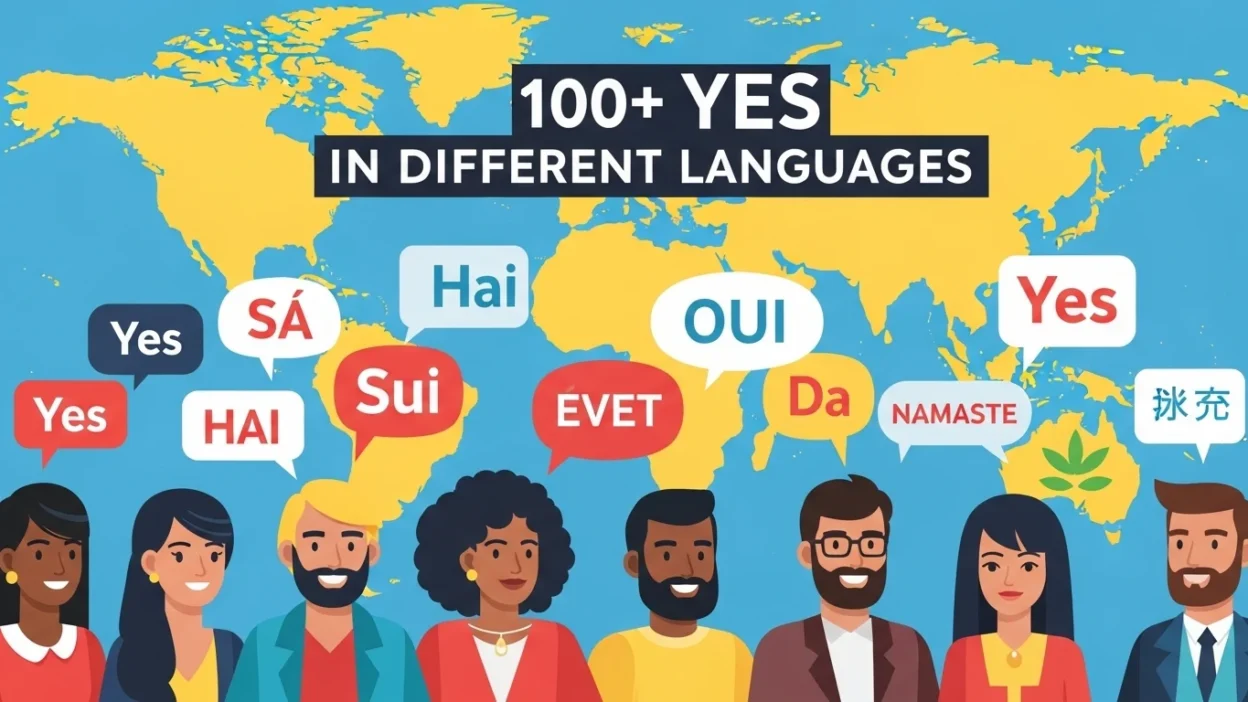
Understanding how to say “yes” in different languages is one of the simplest and most powerful ways to connect with people globally. Whether you’re traveling, learning a new language, or just curious, knowing how to express agreement across cultures can instantly build rapport.
In this guide, you’ll discover “100+ yes in different languages” with real-life examples, pronunciations, and meanings. This makes it easy to learn, remember, and actually use these phrases in everyday conversations.
How to Say “Yes” in Different Languages
| Language | Pronunciation | Example |
| English | Yes (yes) | Yes, I understand. |
| Spanish | Sí (see) | Sí, puedo ayudarte. |
| French | Oui (wee) | Oui, je suis prêt. |
| German | Ja (yah) | Ja, ich komme mit. |
| Italian | Sì (see) | Sì, va bene. |
| Portuguese | Sim (seem) | Sim, eu concordo. |
| Dutch | Ja (yah) | Ja, dat klopt. |
| Russian | Да (da) | Да, я согласен. |
| Chinese (Mandarin) | 是 (shì) | 是,我知道。 |
| Japanese | はい (hai) | はい、分かりました。 |
| Korean | 네 (ne) | 네, 알겠습니다. |
| Arabic | نعم (na’am) | نعم، هذا صحيح. |
| Hindi | हाँ (haan) | हाँ, मैं आऊँगा। |
| Urdu | ہاں (haan) | ہاں، میں تیار ہوں۔ |
| Turkish | Evet (eh-vet) | Evet, kabul ediyorum. |
| Greek | Ναι (neh) | Ναι, φυσικά. |
| Polish | Tak (tahk) | Tak, zrobię to. |
| Swedish | Ja (yah) | Ja, det går bra. |
| Danish | Ja (yah) | Ja, jeg vil gerne. |
| Norwegian | Ja (yah) | Ja, jeg forstår. |
| Finnish | Kyllä (kuhl-lah) | Kyllä, voin auttaa. |
| Czech | Ano (ah-no) | Ano, souhlasím. |
| Slovak | Áno (aa-no) | Áno, je to pravda. |
| Hungarian | Igen (ee-gen) | Igen, megértem. |
| Romanian | Da (da) | Da, sigur. |
| Bulgarian | Да (da) | Да, съгласен съм. |
| Ukrainian | Так (tak) | Так, я згоден. |
| Hebrew | כן (ken) | כן, אני מבין. |
| Persian | بله (baleh) | بله، درست است. |
| Thai | ใช่ (chai) | ใช่, เข้าใจแล้ว |
| Vietnamese | Vâng (vung) | Vâng, tôi đồng ý. |
| Indonesian | Ya (yah) | Ya, saya setuju. |
| Malay | Ya (yah) | Ya, boleh. |
| Filipino | Oo (oh-oh) | Oo, tama ka. |
| Swahili | Ndiyo (n-dee-yo) | Ndiyo, nakubali. |
| Zulu | Yebo (yeh-boh) | Yebo, kunjalo. |
| Afrikaans | Ja (yah) | Ja, ek stem saam. |
| Icelandic | Já (yow) | Já, ég skil. |
| Irish | Tá (taw) | Tá, tuigim. |
| Welsh | Ie (yeh) | Ie, rwy’n cytuno. |
| Scottish Gaelic | Tha (ha) | Tha, tha mi ag aontachadh. |
| Lithuanian | Taip (type) | Taip, suprantu. |
| Latvian | Jā (yaa) | Jā, es piekrītu. |
| Estonian | Jah (yah) | Jah, ma saan aru. |
| Slovenian | Da (da) | Da, razumem. |
| Croatian | Da (da) | Da, slažem se. |
| Serbian | Da (da) | Da, u redu. |
| Bosnian | Da (da) | Da, naravno. |
| Macedonian | Да (da) | Да, разбирам. |
| Albanian | Po (po) | Po, jam dakord. |
| Armenian | Այո (ayo) | Այո, հասկանում եմ։ |
| Georgian | დიახ (diakh) | დიახ, ვეთანხმები. |
| Mongolian | Тийм (teem) | Тийм, зөв. |
| Nepali | हो (ho) | हो, म सहमत छु। |
| Sinhala | ඔව් (ov) | ඔව්, මට තේරෙනවා. |
| Tamil | ஆம் (aam) | ஆம், நான் சம்மதிக்கிறேன். |
| Telugu | అవును (avunu) | అవును, నేను అంగీకరిస్తున్నాను. |
| Kannada | ಹೌದು (howdu) | ಹೌದು, ಸರಿ. |
| Bengali | হ্যাঁ (haan) | হ্যাঁ, আমি রাজি। |
| Punjabi | ਹਾਂ (haan) | ਹਾਂ, ਮੈਂ ਸਹਿਮਤ ਹਾਂ। |
| Marathi | हो (ho) | हो, मला कळले. |
| Gujarati | હા (haa) | હા, હું સહમત છું. |
| Khmer | បាទ (baat) | បាទ, ខ្ញុំយល់ព្រម។ |
| Lao | ແມ່ນ (maen) | ແມ່ນ, ຂ້ອຍເຫັນດີ |
| Burmese | ဟုတ်ကဲ့ (ho-keh) | ဟုတ်ကဲ့၊ သဘောတူပါတယ်။ |
| Malagasy | Eny (eh-nee) | Eny, marina izany. |
| Haitian Creole | Wi (wee) | Wi, mwen dakò. |
| Esperanto | Jes (yes) | Jes, mi konsentas. |
Why Learn “Yes” Translations Around the World?
Learning “yes” translations is more than memorizing words it’s about communication. This simple word is used in daily conversations, business, travel, and relationships.
When you know how to say “yes in all languages”, you:
- Show respect for different cultures
- Improve travel experiences
- Build quick connections
- Enhance language learning speed
Tips to Remember “Yes” in Different Languages
To easily remember how to say “yes in different languages”, try these techniques:
- Group similar sounds (like “Ja” in Germanic languages)
- Practice with real-life sentences
- Repeat daily in short sessions
- Use flashcards or notes
Consistency helps you retain these “yes around the world” translations faster.
When to Use “Yes” in Different Cultures
While “yes” usually means agreement, in some cultures it can also signal politeness or acknowledgment. For example:
- In Japan, “はい (hai)” can mean “I hear you”
- In some cultures, saying yes doesn’t always mean full agreement
Understanding context improves communication beyond just knowing the word.
Conclusion
Mastering “100+ yes in different languages” is a small step with a big impact. It helps you communicate across cultures, travel confidently, and expand your global awareness. Start with a few languages and build gradually every new word brings you closer to the world.
FAQs
1. How many ways are there to say yes in different languages?
There are hundreds of ways, as nearly every language has its own version of “yes.”
2. What is the most common translation of yes worldwide?
Words like “Ja,” “Sí,” and “Oui” are among the most widely recognized.
3. Is “yes” the same in all languages?
No, each language has a unique word, pronunciation, and usage.
4. Why is learning “yes” in different languages important?
It helps with basic communication, especially when traveling or meeting new people.
5. What is the easiest way to learn yes translations?
Practice daily, use examples, and group similar languages together.

Ely Joseph is a language researcher, writer, and contributor who specializes in words, meanings, and multilingual communication. With a strong interest in how language shapes understanding across cultures, Ely focuses on creating clear, accurate, and reader-friendly content for a global audience.