Many people feel confused when they see the words presense and presence. They look very similar, sound almost the same, and are often used in writing by students, English learners, and even native speakers.
The confusion usually happens because English spelling is not always easy. Sometimes we write words the way they sound, and that can lead to mistakes. Since “presense” sounds close to “presence,” many people accidentally spell it incorrectly.
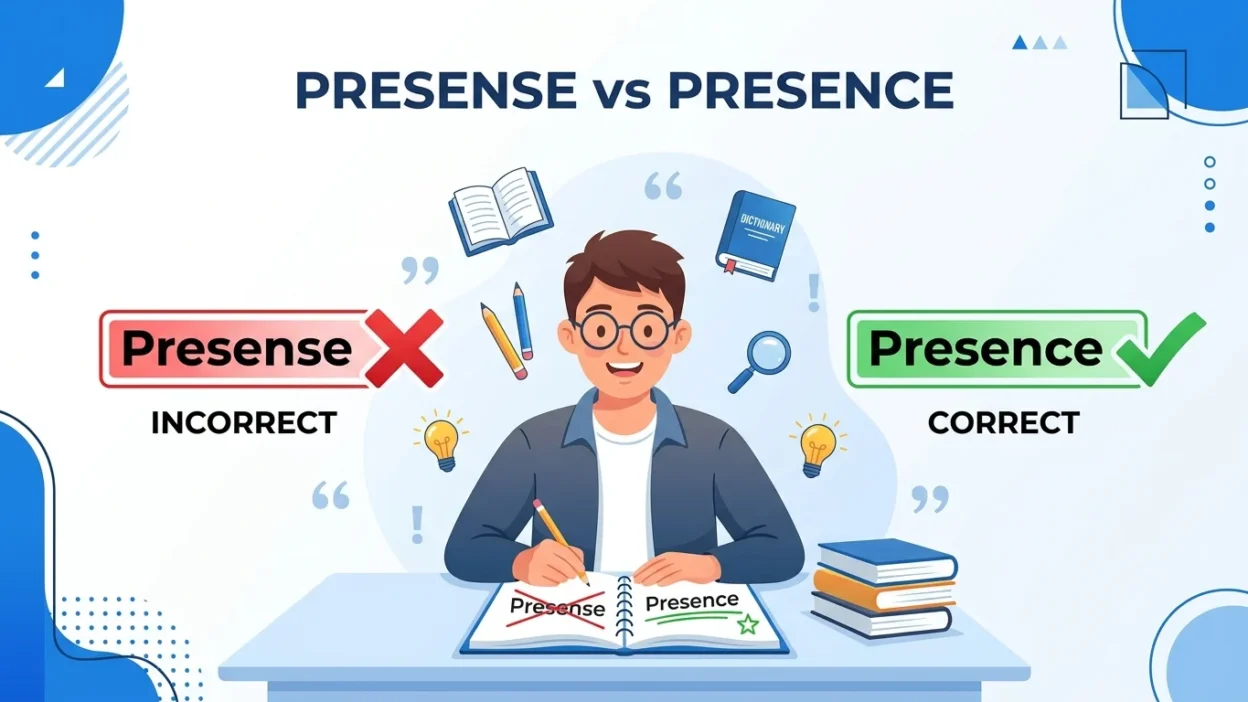
The good news is that the difference is very simple:
One word is correct, and the other is not.
Once you understand this, you will never have to wonder which spelling to use again.
Quick Answer
- Presence is the correct English word.
- Presense is a spelling mistake.
- Use presence whenever you want to talk about being somewhere or existing in a place.
- Avoid using presense in school assignments, emails, reports, or any formal writing.
- If you see presense, it should usually be corrected to presence.
Quick Example
✅ Her presence made everyone feel comfortable.
❌ Her presense made everyone feel comfortable.
The first sentence is correct.
Simple Origin or Background Explanation
The word presence has been part of the English language for a very long time.
It comes from older words that were connected to the idea of being present, which means being in a place or being there at a particular time.
Over the years, English kept the spelling presence, and it became the accepted form used in dictionaries, schools, books, newspapers, and everyday communication.
The spelling presense never became a standard English word. It is simply an incorrect spelling that people sometimes write by accident.
Clear Explanation of the Difference
The main difference is very easy to remember.
Presence
Presence is a real English noun.
It means:
- Being in a place
- Existing somewhere
- The feeling someone creates when they are around
- Attendance at an event
Examples:
- Your presence is required at the meeting.
- The teacher noticed his presence in class.
- She has a strong presence on stage.
- The company has a growing presence in the market.
Presense
Presense is not a standard English word.
It is considered a spelling error.
Examples:
❌ Thank you for your presense.
❌ The manager’s presense was important.
These sentences should use presence instead.
Easy Rule to Remember
If you are talking about someone being there, attending, existing, or having influence, the correct spelling is always:
Presence
Never write:
Presense
Comparison Table
| Feature | Presence | Presense |
| Correct English word? | Yes | No |
| Found in dictionaries? | Yes | No |
| Accepted in formal writing? | Yes | No |
| Used in schools and exams? | Yes | No |
| Meaning | Being present or existing | None |
| Recommended spelling | Yes | No |
| Example | Your presence matters. | Incorrect spelling |
This table makes it clear that presence is the only correct choice.
Which One to Use and When
You should use presence in all situations where you want to express the idea of being present.
In School
- Student presence was recorded.
- Your presence is required for the exam.
At Work
- The manager’s presence improved the meeting.
- Thank you for your presence today.
At Events
- We appreciate your presence at our wedding.
- Her presence made the celebration special.
Online
- The company has a strong online presence.
- The brand increased its social media presence.
No matter where you use the word, the spelling remains the same:
Presence
Common Mistakes People Make
Many learners make the same mistakes when writing this word.
Mistake 1: Writing It the Way It Sounds
Some people hear the ending sound and write:
❌ presense
✅ presence
Mistake 2: Typing Too Quickly
Fast typing often leads to spelling errors.
Example:
❌ Thank you for your presense.
Correct:
✅ Thank you for your presence.
Mistake 3: Copying Someone Else’s Error
If a friend, classmate, or social media user writes the word incorrectly, others may copy the mistake.
Always double check the spelling.
Mistake 4: Not Using Spell Check
Many writing tools can detect spelling errors.
If you see a warning under presense, it is usually because the correct spelling is presence.
Everyday Real Life Examples
Emails
Correct examples:
- Thank you for your presence at today’s meeting.
- We appreciate your presence during the discussion.
Incorrect examples:
- Thank you for your presense at today’s meeting.
- We appreciate your presense during the discussion.
News
Correct examples:
- Police increased their presence in the area.
- The leader’s presence attracted large crowds.
Social Media
Correct examples:
- She has a strong online presence.
- The company improved its digital presence.
Daily Conversations
Correct examples:
- Your presence makes a difference.
- I enjoyed your presence at the party.
- His presence helped calm the group.
School and College
Correct examples:
- Student presence will be checked.
- The professor requested everyone’s presence.
Short Learning Section for Students and Beginners
If you are learning English, here is a simple way to remember the correct spelling.
Memory Trick
Think about the word:
Present → Presence
Both words start with present.
- present = being there
- presence = the state of being there
Since present uses the letters e-n-t, the related noun is spelled:
presence
Not:
presense
Practice Sentences
Fill in the blank with the correct word.
- Your ________ is important.
- We appreciated her ________ at the event.
- The teacher recorded every student’s ________.
- The company’s online ________ is growing.
Answers:
- presence
- presence
- presence
- presence
Quick Check
Which spelling is correct?
- A) Presence
- B) Presense
Answer:
✅ A) Presence
FAQ
Is presense a real English word?
No. Presense is considered a spelling mistake. The correct word is presence.
Is presence the correct spelling?
Yes. Presence is the correct and accepted spelling in English.
Why do people write presense?
People often spell it based on how it sounds, which can lead to mistakes.
Can I use presense in formal writing?
No. It should always be corrected to presence.
What does presence mean?
It means being present, being somewhere, existing, or having an influence.
Is presence a noun?
Yes. Presence is a noun.
Example:
- Her presence was comforting.
What is the opposite of presence?
A common opposite is absence.
Example:
- The teacher noticed his absence.
- The teacher noticed his presence.
How can I remember the correct spelling?
Remember the connection:
Present → Presence
This simple link helps many learners avoid the mistake.
Conclusion
The difference between presense and presence is actually very simple. Presence is the correct English word, while presense is an incorrect spelling. Whenever you want to talk about someone being there, attending an event, existing in a place, or having influence, you should always use presence.
A useful way to remember this is to connect it with the word present. Since the correct noun comes from present, the correct spelling is presence. Once you learn this rule, you can confidently use the word in emails, school work, social media posts, professional writing, and everyday communication without making the common spelling mistake.

Ely Joseph is a language researcher, writer, and contributor who specializes in words, meanings, and multilingual communication. With a strong interest in how language shapes understanding across cultures, Ely focuses on creating clear, accurate, and reader-friendly content for a global audience.