The confusion around don’ts, donts, correct spelling, and incorrect spelling usually starts with spelling, apostrophe, and missing apostrophe issues in English grammar. The word don’t comes from do not, which is a contraction, and when we add plural formation using -s, it becomes don’ts. Many ESL learners, students, and English learners face confusion, uncertainty, and overthinking because of similarity, spelling mistake, and typing errors, often caused by autocorrect, straight quotes, or simple omission of punctuation.
In formal writing, informal writing, emails, essays, and reports, correct usage improves clarity, professional writing, and communication clarity, while incorrect spelling, grammar mistake, and spelling issues reduce clarity loss. The word follows grammar rules, contraction rules, and essential punctuation, where apostrophe retention is necessary due to missing letter o in do not → don’t, forming a contraction-based noun used in dos and don’ts usage.
In real usage context, don’ts appears in workplace don’ts, social don’ts, classroom don’ts, online learning, and instructions under dos and don’ts, which act as guidelines, avoid actions, and behavior rules in workplace etiquette, social media marketing, public speaking, and job interview preparation (including job interviews example). The meaning reflects actions to avoid, prohibited actions, and behavioral instruction, which is common in education, school, workplace, news, daily conversations, and communication. Variations like cannot, can’t, will not, won’t, is not, isn’t also belong to the contraction list, showing linguistic structure, word formation, and morphology.
Learners use memory tip, practice exercise, quiz, fill in blanks, and learning method to improve spelling accuracy, grammar learning, and correct answers through teacher explanation, grammar test, and multiple choice tasks. This improves writing accuracy, writing, credibility, academic credibility, and communication effectiveness across global usage like United States, United Kingdom, India, and Pakistan.
Quick Answer
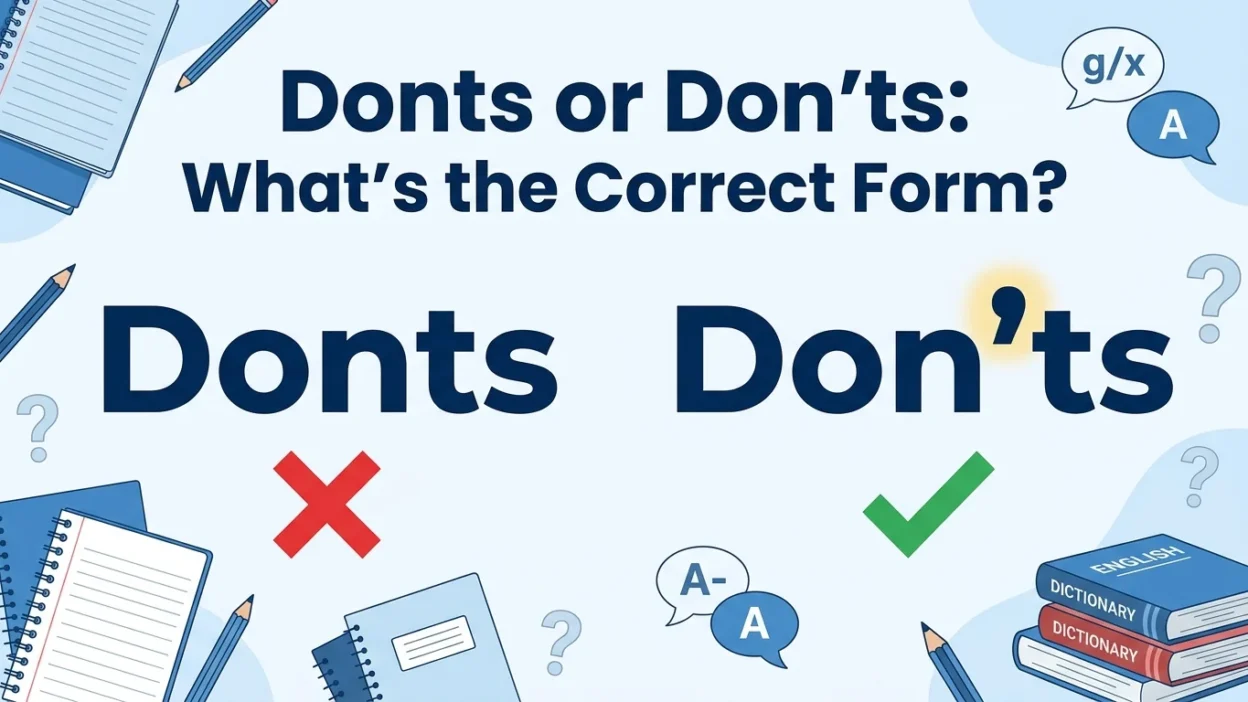
- ✅ Don’ts is the correct spelling.
- ❌ Donts is generally considered incorrect in standard English.
- Don’ts is the plural form of don’t.
- The apostrophe should stay in the word even when making it plural.
- Use don’ts when talking about things people should not do.
Examples:
- Here are some classroom don’ts.
- The article explains the major don’ts of online communication.
- Parents should teach children the basic safety don’ts.
Origin and Background
To understand why don’ts is correct, it helps to know where the word comes from.
The word don’t is a contraction.
It comes from:
- do
- not
When combined, they become:
- do not → don’t
The apostrophe replaces the missing letter o in not.
Later, English speakers began using don’t as a noun when talking about rules or actions that should be avoided.
For example:
- A teacher may talk about classroom dos and don’ts.
- A company may share workplace dos and don’ts.
When more than one “don’t” is mentioned, the plural form becomes don’ts.
The apostrophe remains because it is already part of the original word.
The Difference Between Donts and Don’ts
The difference is very simple.
Don’ts
Don’ts is the correct spelling.
It is the plural form of don’t.
Examples:
- Learn the basic don’ts of business emails.
- The guide lists several travel don’ts.
- These are the safety don’ts every worker should know.
Donts
Donts is usually considered incorrect.
It removes the apostrophe from don’t, which changes the spelling.
Examples:
- ❌ classroom donts
- ❌ social media donts
- ❌ travel donts
In formal writing, school assignments, reports, articles, and professional communication, you should avoid donts.
Comparison Table
| Feature | Don’ts | Donts |
| Correct spelling | Yes | No |
| Contains apostrophe | Yes | No |
| Accepted in standard English | Yes | No |
| Used in academic writing | Yes | No |
| Used in professional writing | Yes | No |
| Means things you should not do | Yes | Intended meaning but incorrect form |
| Recommended for learners | Yes | No |
Which One to Use and When
The rule is easy:
Use “Don’ts”
Use don’ts whenever you are talking about actions, behaviors, or choices that should be avoided.
Examples:
- Interview don’ts
- Classroom don’ts
- Social media don’ts
- Travel don’ts
- Workplace don’ts
Sentences:
- The teacher explained the classroom don’ts.
- The website listed several interview don’ts.
- Parents discussed the safety don’ts with their children.
Avoid “Donts”
Avoid writing donts in:
- School assignments
- Essays
- Business writing
- Emails
- Reports
- Articles
Even if some people use it casually online, it is not considered the standard form.
Common Mistakes People Make
Many learners make similar mistakes with this word.
Forgetting the Apostrophe
Incorrect:
- The donts of social media
Correct:
- The don’ts of social media
Thinking Apostrophes Cannot Be Used in Plurals
Many people learn that apostrophes are not usually used to make words plural.
That rule is generally true.
For example:
- Book → Books
- Car → Cars
- Student → Students
However, don’ts is different because the apostrophe already belongs to the original word don’t.
Copying Informal Online Writing
People often drop punctuation online because it is faster.
For example:
- dont
- cant
- wont
These spellings may appear in casual messages, but they are not correct in standard English.
Mixing Up “Dos and Don’ts”
The common expression is:
dos and don’ts
Not:
- dos and donts
- do’s and dont’s
The standard modern form is:
- ✅ dos and don’ts
Everyday Real Life Examples
Emails
Correct:
- Please review the dos and don’ts before sending company emails.
Correct:
- The manager shared several email don’ts during training.
News Articles
Correct:
- Experts discussed the travel don’ts for tourists.
Correct:
- The report highlighted workplace don’ts.
Social Media
Correct:
- Here are five social media don’ts.
Correct:
- Influencers often share fitness dos and don’ts.
Daily Conversations
Correct:
- My father taught me the basic driving don’ts.
- The coach explained the sports don’ts before the game.
- The guide covered important hiking don’ts.
Learning Section for Students and Beginners
A simple trick can help you remember the correct spelling.
Step 1
Start with:
don’t
Step 2
Make it plural.
The apostrophe stays because it is already part of the word.
Result:
don’t → don’ts
Easy Memory Tip
Think:
- One rule to avoid = don’t
- Many rules to avoid = don’ts
Examples:
- One don’t
- Two don’ts
- Several don’ts
Another helpful reminder:
If the word started with an apostrophe, keep it when making the plural.
Frequently Asked Questions (FAQ)
Is don’ts the correct spelling?
Yes. Don’ts is the correct standard English spelling.
Is donts a real word?
It is sometimes seen online, but it is generally considered incorrect in formal English.
Why does don’ts have an apostrophe?
Because it comes from don’t, which already contains an apostrophe.
Can I write “dos and donts”?
It is better not to. The standard expression is dos and don’ts.
Is don’ts used in professional writing?
Yes. It is commonly used in business, education, journalism, and everyday writing.
What does don’ts mean?
It means actions, behaviors, or choices that people should avoid.
Is don’ts a noun?
Yes. In phrases like “classroom don’ts” or “travel don’ts,” the word acts as a noun.
How can I remember the correct form?
Remember:
- don’t = one thing not to do
- don’ts = many things not to do
Keep the apostrophe because it is already part of the original word.
Conclusion
The confusion between donts and don’ts usually comes from one small punctuation mark. However, the correct choice is clear.
Don’ts is the accepted and standard English spelling. It is the plural form of don’t, and the apostrophe remains because it is already part of the original word.
Donts is generally considered incorrect and should be avoided in school work, professional writing, emails, articles, and formal communication.
If you remember one simple rule, make it this:
Use “don’ts” with the apostrophe whenever you are talking about things people should not do.

Ely Joseph is a language researcher, writer, and contributor who specializes in words, meanings, and multilingual communication. With a strong interest in how language shapes understanding across cultures, Ely focuses on creating clear, accurate, and reader-friendly content for a global audience.